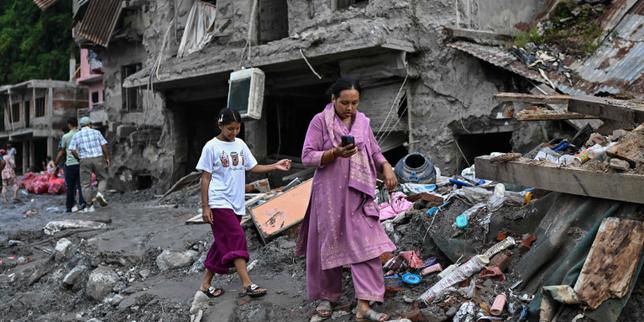
Disaster doesn't wait for paperwork. When torrential monsoon downpours unleashed widespread catastrophe across Nepal and Tibet, more than 80,000 people lost their footing in a matter of hours. Bridges vanished. Roads turned into rushing torrents. Entire communities found themselves cut off from the outside world without clean water, shelter, or food.
The United Nations didn't waste time launching an emergency financial appeal to manage the fallout. But appeals alone don't build temporary shelters or deliver safe drinking water to remote Himalayan villages.
Let's look at what's actually happening on the ground and why this crisis demands immediate international attention.
The Reality of Himalayan Flash Floods
Mountainous regions operate under a different set of rules when disaster strikes. You aren't just dealing with rising water levels in a flat river basin. You are dealing with violent, fast-moving debris flows fueled by steep terrain and melting glaciers.
When cloudbursts hit Nepal and parts of the Tibetan Autonomous Region, the water carved through valleys with terrifying speed. It swept away homes built on generations-old foundations.
Families didn't have days to evacuate. They had minutes.
The scale of the destruction caught local infrastructure completely off guard. Nepal's disaster management agencies stretched their resources to the breaking point within the first twenty-four hours. Search and rescue teams faced blocked mountain passes and destroyed bridges just trying to reach the hardest-hit districts.
That is why international intervention became non-negotiable. Local governments simply lack the fiscal cushion to absorb shocks of this magnitude without external support.
Where the Money Actually Goes
People always ask the same question when an international agency launches a fund: where does the cash actually end up?
Right now, the UN's financial appeal targets immediate survival needs rather than long-term rebuilding efforts. That means priority number one is emergency food security. People stranded in remote pockets of the Himalayas cannot grow crops right now. Their stores are underwater or buried in mud.
Waterborne diseases represent the second major threat. When sanitation systems collapse, cholera and dysentery move faster than rescue helicopters. Funding goes directly toward water purification tablets, mobile filtration units, and emergency medical kits deployed by groups like the World Health Organization and UNICEF.
Temporary shelter materials form the final pillar of this urgent response. Tarpaulins, blankets, and thermal kits matter immensely when you are sleeping outdoors in high-altitude dampness where nighttime temperatures drop sharply.
The Climate Factor Nobody Wants to Ignore
We can't talk about these floods without addressing the underlying driver. The Himalayas are warming at rates well above the global average.
Glacial lake outburst floods, known locally as GLOFs, are becoming an increasingly common nightmare for mountain communities. As glaciers retreat, they leave behind unstable moraine dams holding back massive volumes of water. When those natural walls fail, downstream villages pay the price.
Traditional weather patterns are breaking down. Monsoon rains arrive later or dump unprecedented amounts of water in compressed timeframes. Drainage systems built to handle historical averages are failing because those averages no longer exist.
Governments across South Asia are scrambling to adapt. Early warning systems installed along vulnerable river basins have saved lives by sending automated text messages before floodwaters arrive. But technology only works if people have safe high ground to run to. Many don't.
How to Support Relief Efforts Safely
If you want to contribute to the recovery in Nepal and Tibet, you need to be smart about where your money goes. Scammers love a good disaster.
Stick to established, transparent organizations with boots on the ground. The UN Central Emergency Response Fund coordinates directly with local NGOs that understand the logistics of Himalayan terrain.
Don't send physical goods unless requested. Shipping a box of clothes halfway across the world costs more than buying supplies locally and clogs up already strained transport networks. Cash donations give relief agencies the flexibility to buy what is needed, right when it is needed, from regional markets.
The road to recovery for these 80,000 displaced people will take years, not months. The initial emergency appeal is just the starting line. Stay informed, give where you can, and keep pressure on leaders to fund climate adaptation before the next monsoon hits.