Salt crusts on the steel railings of a tanker deck within three hours of clearing the harbor mouth. You can taste it before you see the coastline—a sharp, metallic tang that sits at the back of your throat while the engine room hums a low, vibration-heavy note through the soles of your boots.
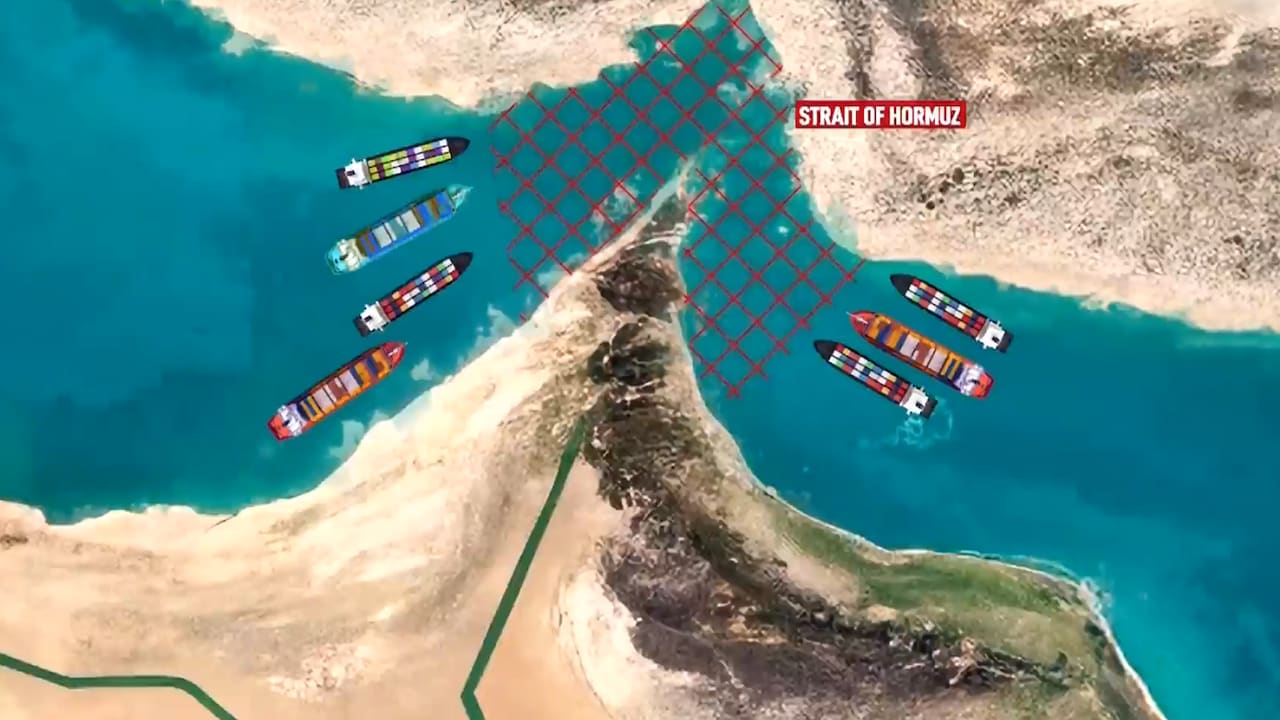
For a hypothetical chief mate named Marcus, standing on the bridge wing of a Very Large Crude Carrier just south of Qeshm Island, the water ahead looks like any other stretch of the Persian Gulf. Flat. Pale green under a bleached morning sky. Deceptively quiet. Yet on his radar screen, the geography tightens into a funnel barely twenty-one nautical miles wide at its narrowest point, split down the middle by shipping lanes that keep the modern world's lights turned on.
This is the Strait of Hormuz. And when diplomats in Tehran warn that they will use all means to counter an American blockade, Marcus is the person who actually has to steer through the math of what that threat means.
Most news reports treat geopolitical standoffs like a high-stakes board game played on glossy maps in air-conditioned war rooms. A politician in Washington floats the idea of tightening naval pressure, intercepting sanctioned oil shipments, or choking off maritime exports to force compliance on nuclear talks or regional proxy conflicts. Hours later, an Iranian official steps up to a podium, adjusts a microphone, and declares that any blockade will be met with total resistance. The headline writes itself. Readers scroll past it over morning coffee, filing it away under distant, abstract noise.
That abstraction is a dangerous illusion.
To understand what happens when a naval blockade meets a cornered maritime nation, you have to stop looking at flags and start looking at supply chains, insurance underwriters, and the physics of narrow water.
The Anatomy of a Chokepoint
Think of the global oil market not as a giant reservoir, but as a high-pressure hydraulic system. It has almost zero slack. Every day, roughly twenty million barrels of crude oil and petroleum products pass through the Strait of Hormuz. That accounts for nearly a fifth of all global petroleum liquids consumption. Liquefied natural gas from Qatar—the lifeblood of European and Asian power grids—has nowhere else to go. There is no back door.
When Washington threatens a blockade, or even aggressive maritime interdiction to enforce sanctions, the intent is surgical. The goal is to squeeze Tehran's treasury by stopping the "dark fleet" of aging tankers that ferry Iranian crude to buyers in East Asia. On paper, it looks like a clean economic lever. Pull the lever, cut the cash flow, and wait for the regime to negotiate.
Tehran sees something entirely different. Under international law, a naval blockade is explicitly defined as an act of war. For a government whose domestic legitimacy and regional survival depend on oil revenue, stopping its ships is indistinguishable from laying siege to its cities.
So when Iranian commanders say they will use "all means" to counter a blockade, they are not promising a symmetrical naval battle. They know their conventional surface fleet cannot survive a head-to-head fight with a United States carrier strike group. They aren't trying to win a duel. They are threatening to break the hydraulic system.
What "All Means" Looks Like on the Water
I have spent years tracking maritime security and energy markets, and the single hardest thing to convey to people outside the shipping industry is how little force it takes to shut down global trade. You do not need to sink twenty supertankers to close the Strait of Hormuz. You only need to make one insurance broker in London hesitate.
Consider what happens next if a standoff escalates from rhetoric to boarding parties.
Iran has spent four decades building a military doctrine specifically tailored for this twenty-one-mile bottleneck. Instead of massive destroyers, they invested in asymmetric swarm tactics. Picture dozens of fast-attack craft, each small enough to disappear into coastal radar clutter, darting out from hidden coves along the jagged Iranian shoreline. Add coastal anti-ship cruise missiles tucked into mountain bunkers, semi-submersible drones, and thousands of naval mines that can be deployed from ordinary commercial dhows under the cover of darkness.
If Marcus, our hypothetical chief mate on the bridge wing, hears over VHF Channel 16 that a nearby vessel has struck a drifting mine or taken fire from a patrol boat, he does not wait for naval escorts to arrive. His company's risk assessment team in Rotterdam or Athens immediately orders him to drop anchor outside the Gulf of Oman.
Within forty-eight hours, war-risk insurance premiums for vessels entering the Persian Gulf skyrocket by five hundred or a thousand percent—if underwriters offer coverage at all. Without insurance, ships do not move. Crew unions refuse to sail into active combat zones. The strait closes not because a physical wall was built across the water, but because the financial architecture that allows modern shipping to function simply evaporates.
The Ripple Effect in Your Living Room
It is easy to feel insulated from a naval standoff seven thousand miles away, especially if you live in a country that produces plenty of its own domestic oil. That comfort relies on a fundamental misunderstanding of how crude oil is priced.
Oil is a fungible global commodity. A barrel pumped out of the ground in West Texas is priced against the same global benchmarks as a barrel loaded at Ras Tanura in Saudi Arabia. If a conflict in the Persian Gulf suddenly removes ten or fifteen million barrels a day from the world market, refineries in Europe and Asia immediately start bidding aggressively for whatever supply remains accessible.
Prices at the pump in Ohio, California, or Florida do not rise because Americans buy Iranian oil. They rise because the entire world is drinking from the exact same bucket.
Within two weeks of a shipping freeze in Hormuz, diesel prices surge. Diesel is the invisible muscle of the modern economy. It moves the combine harvesters that bring in the grain, powers the freight locomotives crossing the Midwest, and fuels the eighteen-wheelers backing up to the loading docks of your local grocery store. A sustained spike in crude prices translates directly into higher freight surcharges, which quietly attach themselves to everything from a carton of milk to the concrete used to pour a new foundation. Central banks, watching inflation flare back to life, freeze interest rate cuts or hike them again, making mortgages, car loans, and small business credit instantly more expensive.
History already gave us a preview of this exact chain reaction. During the Tanker War of the 1980s, when Iran and Iraq attacked commercial shipping in the Gulf, the United States Navy had to reflag Kuwaiti tankers and escort them through minefields. Even with massive naval protection, global shipping suffered hundreds of attacks, insurance rates crippled commerce, and global markets swung violently with every radio distress call. And that was in an era before hyper-connected just-in-time supply chains and modern anti-ship drone swarms.
The Psychology of the Cornered State
To truly grasp why these threats keep recurring—and why they carry such hair-trigger danger—you have to look at the psychology of deterrence.
Both Washington and Tehran are trapped in a feedback loop of signaling. When domestic political pressure mounts in the United States to "get tough" on Iran—whether over nuclear enrichment, regional militias, or domestic crackdowns—tightening the economic noose is always the most attractive option. It feels safer than launching airstrikes. It satisfies the demand for action without immediately putting boots on the ground.
Yet from the perspective of decision-makers in Tehran, maximum economic pressure is a slow-motion existential threat. If they accept a blockade quietly, they signal weakness to their own population and to their regional allies, inviting further escalation. Therefore, their only rational deterrence strategy is to convince Washington that the cost of enforcing a blockade will be catastrophic, immediate, and shared by the entire global economy.
They have to make the threat believable. And the only way to make a threat believable in international politics is to edge closer and closer to the tripwire.
This is where the real danger lives. Not in a calculated decision by either capital to start a full-scale regional war, but in the friction of execution.
Imagine a young Revolutionary Guard boat commander operating on patchy radio communications in choppy seas at two in the morning. Imagine a tired naval watch officer on an American destroyer tracking six fast-moving surface contacts closing at forty knots, having to decide in ninety seconds whether those boats are conducting a routine harassment run or carrying high-explosive warheads.
In that ninety-second window, grand geopolitical strategies vanish. International law vanishes. All that remains is human adrenaline, ambiguous radar blips, and the terrifying speed of modern weaponry. One misread flare, one warning shot that strays too close to a hull, and the diplomatic off-ramps disappear behind a wall of smoke.
Living With the Fragility
We like to believe that the global economy is a permanent, self-correcting machine, too vast and sophisticated to be derailed by regional squabbles. We tap a screen, and goods appear at our doors two days later. We flip a switch, and the room fills with light. The sheer convenience of modern life lulls us into forgetting the physical vulnerability of the corridors that sustain it.
A few months ago, standing on a windy pier overlooking a major container terminal, I watched a harbor pilot climb down a swaying rope ladder from the hull of an incoming cargo ship. The vessel was nearly four hundred meters long, stacked ten containers high with electronics, textiles, and machinery. Yet its safe arrival depended entirely on the steady hands of one person gripping wet hemp rope and the unspoken agreement among dozens of nations that international waters remain open to all.
That agreement is thinner than we care to admit.
When Iran warns that it will use all means to counter a blockade, it is holding a mirror up to our own fragility. It is reminding the world that the arteries of global trade run directly past the shores of nations with very little left to lose. You cannot isolate a country sitting on the edge of the world's most vital energy chokepoint without putting your own hand inside the vise.
Out on the water south of Qeshm Island, the sun drops fast, turning the pale green sea into heavy, dark glass. On the bridge of the tanker, the night watch takes over, eyes fixed on the glowing green sweep of the radar, listening to the static hiss of the open radio channel, waiting to see if the ships ahead keep moving.


