The Caribbean sky above the Florida Straits on February 24, 1996, was blindingly blue. Four thousand feet below, the water shifted from turquoise to a deep, menacing navy. Inside two unarmed Cessna 337 Skymasters, three young pilots and one passenger scanned the endless horizon. They were looking for rafts. For inner tubes. For desperate human beings clinging to makeshift wood, fleeing a suffocating regime in Havana.
Carlos Costa was twenty-nine. Pablo Morales was twenty-nine. Mario de la Peña was twenty-four. Armando Alejandre Jr. was forty-five, a Vietnam veteran who had survived the jungle only to find his destiny in the clouds. They belonged to Hermanos al Rescate. Brothers to the Rescue.
They never came home.
Midway through the afternoon, Cuban MiG-29 fighter jets roared into the same airspace. The contrast was brutal. Light, slow-moving civilian prop planes against supersonic instruments of war. The Cuban pilots did not hesitate. Missiles tore through the sky. In a flash of fire and metal, the two Cessnas vanished. Four lives ended in seconds, scattered across the sea. A third plane, flown by the group’s founder José Basulto, barely escaped, ducking into a cloud bank while the roar of Soviet-engineered engines vibrated through his cockpit.
Decades passed. The international community condemned the act. Bills were signed. Sanctions were tightened. But for the families left behind in Miami, justice remained an abstract noun, a concept locked away in dusty legal briefs and diplomatic stalemates.
Then, twenty-four years later, the ghost of that afternoon re-emerged in Washington.
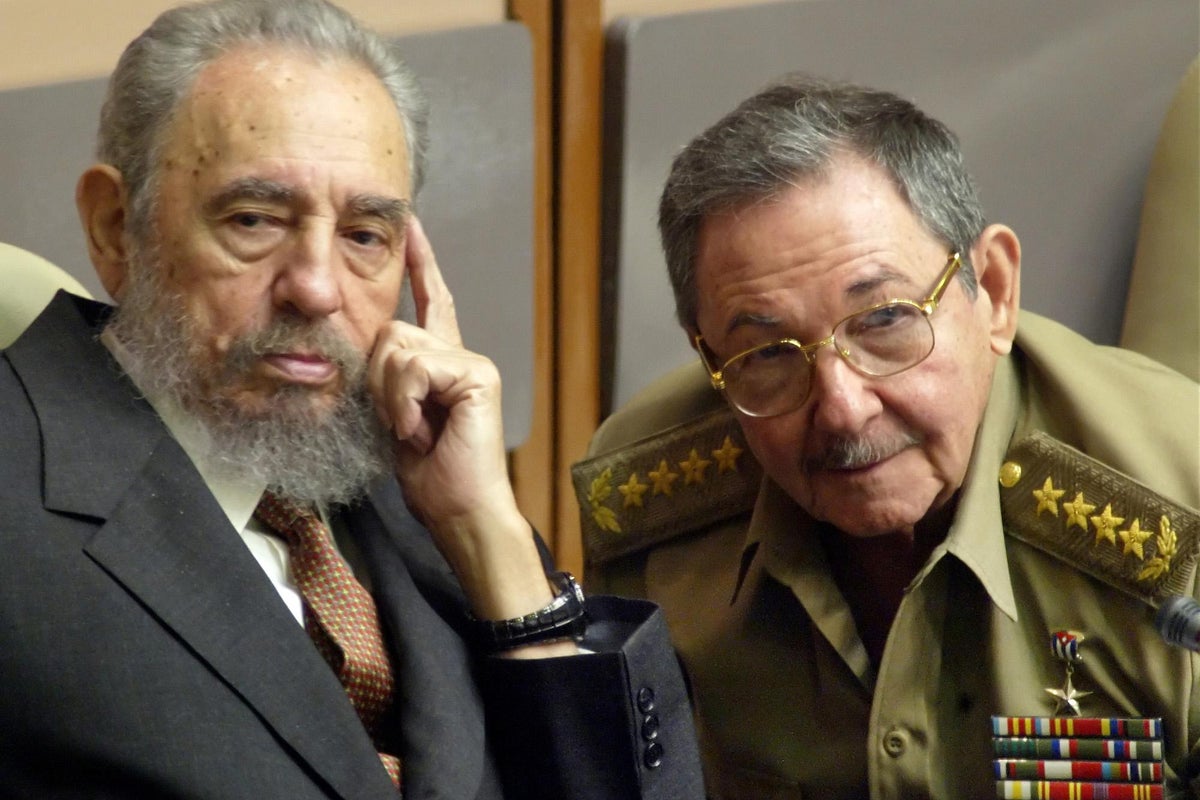
Consider how power shifts, and how old wounds become modern political capital. In the final months of his administration, Donald Trump turned his gaze toward Havana, specifically toward a man who had long operated in the deep background of Cuban history: Raúl Castro. The move was not a mere diplomatic slap on the wrist. It was an aggressive, targeted push to bring formal criminal charges against the former Cuban president for his direct role in ordering the 1996 shootdown.
For years, the narrative around Cuba had settled into a predictable rhythm of embargo talk and travel restrictions. The human cost of the regime’s survival had been filed away under historical inevitability. To understand why this sudden legal assault mattered, one must look past the campaign rallies and the cable news chyrons. You have to look at how international law actually operates when the cameras turn off.
Under international norms, prosecuting a sitting or former head of state is a legal nightmare. It requires navigating a labyrinth of sovereign immunity and geopolitical blowback. But the 1996 attack was different. It happened over international waters. It involved American citizens. Jose Basulto had spent years screaming into the void, pointing out that a federal court in Miami had already found the Cuban government liable in a civil suit, even labeling the shootdown an act of state-sponsored terrorism. Yet, criminal indictments against the highest levels of the Cuban regime had always been stalled by political expediency.
The strategy changed when the Department of Justice began looking at the chain of command. Raúl Castro wasn't just Fidel’s brother; in 1996, he was the Minister of the Revolutionary Armed Forces. The orders to scramble those MiGs, to lock onto civilian targets, and to fire didn't come from a rogue pilot. They came from the top.
Picture a conference room in Washington, lined with binders containing decades of intelligence reports, intercepted radio transmissions, and defector testimonies. The legal team wasn't just building a case against an ideology; they were building a homicide case against an individual. The core argument was simple: sovereign immunity does not extend to the extrajudicial murder of American citizens in international airspace.
But the real problem lay elsewhere. An indictment without an arrest is just a piece of paper. Raúl Castro was safe in Havana, surrounded by a loyal military apparatus. He was never going to sit in a federal courtroom in Miami.
Why pursue a trial that cannot physically happen?
The answer lies in the invisible architecture of global influence. An indictment changes a man from a retired statesman into an international fugitive. It restricts movement. It freezes hidden assets. It sends a chilling message to the next generation of regime leaders: the clock does not run out on murder. It strips away the carefully cultivated aura of revolutionary romance, replacing it with the cold reality of a criminal rap sheet.
Critics viewed the move with skepticism, dismissing it as a calculated play for the crucial South Florida electorate. The timing, right before a major presidential election, invited cynicism. It was easy to see the announcement as a grand gesture designed to ignite passion in Little Havana, where the pain of exile runs through generations like an inherited trauma.
Yet, reducing the event to mere political theater ignores the profound psychological weight carried by the Cuban-American community. For those who lost family members that February afternoon, the political motivations were secondary to a deeper, more primal need. A acknowledgment of the crime.
Mirta Mendez, whose son Carlos died in the attack, had spent nearly a quarter of a century keeping his memory alive. For mothers like her, the passage of time does not heal; it only dulls the sharpest edges of the grief. Every year on February 24, they gathered at monuments, lit candles, and looked out at the ocean. They did not see a geopolitical chess match. They saw empty chairs at Thanksgiving. They saw the lives their sons never got to live.
When news of the potential charges broke, it felt like a sudden tectonic shift in a landscape that had been frozen for decades. It forced a conversation that the world had largely chosen to forget. It reminded a distracted public that the Cuban regime’s survival was built on a foundation of political violence.
The legal push eventually stalled as administrations changed and Washington’s priorities shifted once again. The grand courtroom drama never materialized. Raúl Castro remained in Cuba, growing older in the twilight of his life, insulated from the reach of American marshals.
But the narrative had already been permanently altered. The immunity of the regime had been challenged not just with rhetoric, but with the specific, granular mechanics of criminal law. The case showed that the past is never truly buried; it merely waits for the right political climate to resurface.
Today, the Florida Straits look exactly the same as they did in 1996. The water is still a deep, mesmerizing navy under the midday sun. The Cessnas are gone, replaced by modern patrols and high-tech surveillance. But if you stand on the shores of Key West and look south, you can still feel the weight of those four lost lives, suspended forever between the earth and the sky, waiting for a final reckoning that has yet to arrive.