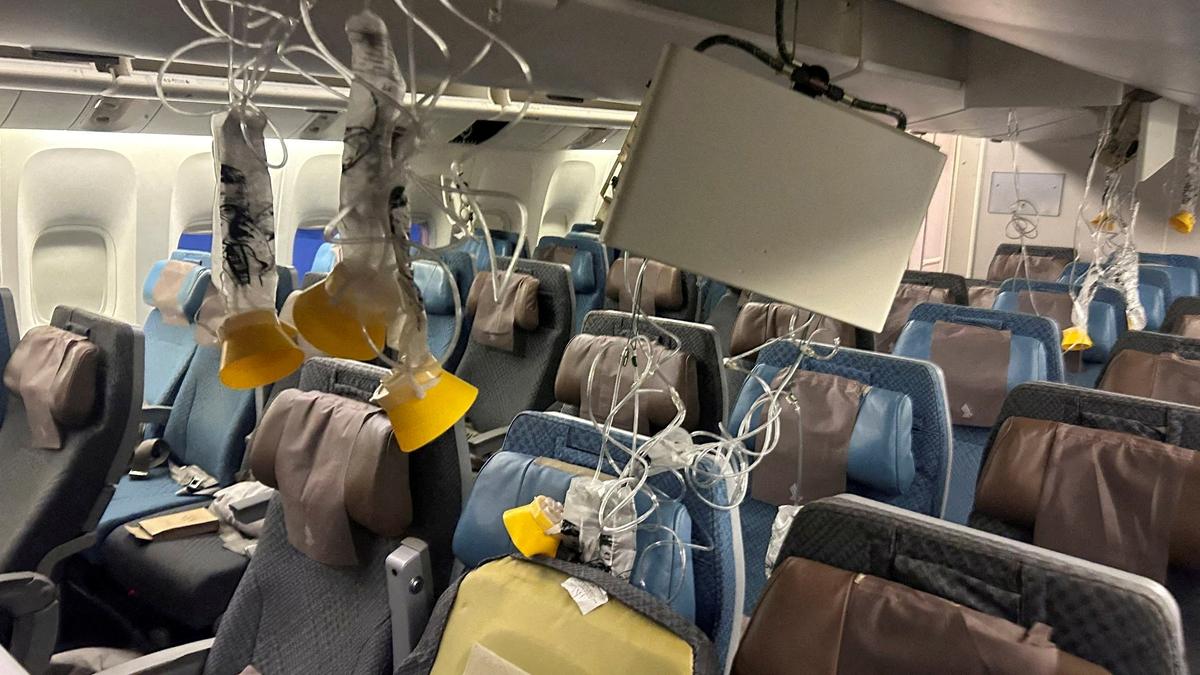
Severe in-flight turbulence incidents represent an acute operational failure within an aviation carrier's risk management architecture. When an Air India flight operating between Phuket and Delhi encounters severe atmospheric instability resulting in passenger injuries and subsequent medical assessments, the event demands a rigorous post-incident evaluation. Aviation safety is not merely a function of meteorological predictability; it is an exercise in human factor engineering, cabin security enforcement, and real-time decision algorithms executed by flight deck crews.
Evaluating this specific disruption requires moving past surface-level reporting to examine the structural variables that dictate whether a routine flight descends into a mass-casualty operational crisis. The mechanics of clear-air turbulence, the economics of route planning, and the strict operational mandates governing passenger restraint systems dictate every outcome in these high-stakes scenarios.
The Operational Mechanics of Atmospheric Instability
Atmospheric turbulence is fundamentally a fluid dynamics problem characterized by chaotic changes in pressure and flow velocity. Commercial aviation relies on predictive meteorological data to avoid convective systems, jet streams, and topographical shear zones. However, clear-air turbulence operates outside standard visual parameters, providing zero radar signature for flight crews.
When an aircraft transitions into an unmapped shear zone, the kinetic energy transfer to the airframe occurs instantaneously. The magnitude of structural G-force experienced inside the cabin depends directly on three primary variables:
- Mass and Velocity Vector: The kinetic energy of the aircraft intersecting the density gradient of the airmass.
- Altitude and Air Density: Higher cruising altitudes place aircraft near the tropopause, where temperature gradients create intense wind shear environments.
- Response Latency: The temporal gap between aerodynamic disruption and the automated or manual stabilization of the flight control surfaces.
Standard operating procedures mandate seatbelt compliance directives when entering known rough air. Yet, the statistical vulnerability of passengers stems from procedural non-compliance during unexpected clear-air events. When the warning system fails to provide lead time, unbelted occupants become projectiles within the cabin envelope, transforming minor airframe oscillations into acute physical trauma events.
Cabin Security and the Human Factor Cost Function
The human cost of an aviation turbulence incident is a direct output of cabin safety enforcement metrics. Aviation regulatory bodies enforce strict fastening protocols, but the enforcement mechanism relies heavily on cabin crew vigilance and passenger adherence.
The injury distribution profile in incidents like the Phuket-Delhi route typically skews toward concussions, spinal compression, and lacerations. These injuries occur almost exclusively among individuals who are unbelted or moving about the cabin during unannounced atmospheric shifts. The cost function of a turbulence event expands exponentially based on three compounding factors:
- Evacuation and Triage Delays: The time required to land the aircraft and transfer injured passengers to ground medical infrastructure.
- Reputational Damage and Yield Management: Passenger perception of safety directly impacts forward booking curves and pricing power for the carrier.
- Regulatory Compliance Audits: Post-incident investigations by civil aviation authorities consume administrative resources and impose mandatory operational modifications.
Carriers that fail to maintain rigorous cabin surveillance during transitional altitude phases experience higher rates of severe injuries. The mitigation strategy relies on predictive communication models, where flight crews issue pre-emptive seatbelt directives based on historical route volatility rather than real-time radar confirmations alone.
Systemic Vulnerabilities in Regional Carrier Operations
Operating international routes across diverse meteorological zones introduces complex operational variables. The Phuket-Delhi corridor traverses regions known for seasonal monsoon transitions and high-altitude thermal currents. Managing these routes requires dynamic flight-path optimization engines that account for real-time Pireps (Pilot Reports) from preceding aircraft.
A critical vulnerability in modern flight operations is the reliance on legacy communication channels between air traffic control and flight decks. When rapid routing adjustments are necessary to bypass emerging turbulence cells, latency in clearance delivery can force an aircraft directly into hazardous air masses.
Furthermore, the post-incident medical assessment protocol dictates the operational recovery timeline. Admitting passengers for medical evaluation is a mandatory legal and safety safeguard, but it triggers immediate asset reallocation issues. Grounded aircraft, displaced crew scheduling, and mandatory maintenance inspections of the airframe for structural stress fractures create cascading delays across the carrier network.
Addressing these systemic risks requires a shift from reactive emergency response to predictive exposure minimization. Airlines must integrate high-resolution predictive turbulence forecasting software directly into their flight management systems, bypassing traditional meteorological reporting lags. Flight deck crews must be empowered to enforce absolute cabin lockdown protocols at the earliest statistical indicator of potential wind shear, prioritizing occupant kinetic stability over passenger convenience. The economic and operational toll of preventative disruption is negligible when measured against the cost of catastrophic cabin injury events.