Presidents always pack their bags for foreign capitals when domestic politics turn sour. Donald Trump’s diplomatic swing through Asia follows a classic Washington playbook designed to trade legislative gridlock and bruised political capital for the commanding optics of global statesmanship. Yet while flying thousands of miles away from Capitol Hill offers immediate relief from unfriendly headlines, the structural realities of American politics and Indo-Pacific trade mean foreign pageantry rarely translates into domestic recovery.
The premise behind this trip is straightforward. When a president faces setbacks in midterm elections, the White House loses unilateral leverage over Congress, making major domestic bills nearly impossible to pass. Foreign policy, by contrast, remains the one arena where the executive branch retains broad constitutional authority to act alone. By stepping onto the tarmac in Tokyo, Seoul, or Beijing, an administration can dominate the news cycle with images of bilateral summits, military reviews, and high-stakes trade negotiations.
The Illusion of the Foreign Policy Reset
History offers plenty of cautionary tales for administrations hoping an overseas tour will reset the domestic narrative. When a party loses ground in the midterms, voters are typically reacting to tangible pocketbook pressures—inflation, housing costs, healthcare expenses, or local job markets. A handshake on the world stage does not lower grocery bills in swing districts.
In fact, foreign travel often highlights the very vulnerabilities a president is trying to outrun. Foreign leaders are astute readers of American polling and congressional math. When a U.S. president arrives in Asia immediately after domestic electoral losses, counterparts in the region recognize that the White House’s ability to ratify formal treaties or secure long-term congressional funding has narrowed.
Consider how diplomatic leverage works in practice. Suppose a hypothetical trade agreement requires congressional approval to lower tariffs on specific industrial goods. If the president’s party just lost key seats in manufacturing states, foreign negotiators know that any promise made at the summit table faces an uphill battle in Washington. Consequently, Asian allies and rivals alike tend to hedge their bets, offering symbolic gestures rather than structural concessions.
What Asian Capitals Actually Want From Washington
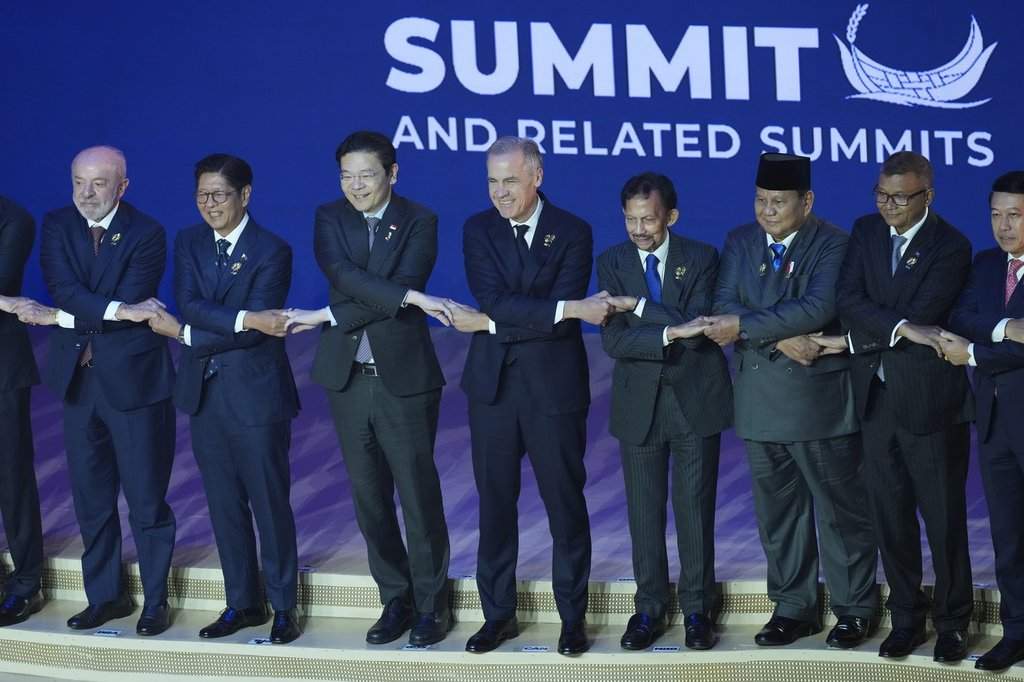
The Indo-Pacific region operates on long timelines that clash with the two-year urgency of American election cycles. Leaders in Tokyo, Seoul, Manila, and Singapore are primarily focused on predictable security guarantees and stable supply chains. They watch Washington not for dramatic rhetoric, but for consistency.
Three core dynamics shape how regional powers approach an American president arriving after a bruising election cycle:
- Security Deterrence vs. Burden Sharing: Allies rely on the U.S. nuclear umbrella and naval presence to counterbalance regional assertiveness from China and North Korea. However, recurring American demands for allies to pay substantially more for hosting U.S. troops create friction. Foreign ministries quietly calculate whether these demands are permanent policy shifts or temporary negotiating tactics meant to play well with domestic voters back home.
- Trade Deficits and Supply Chain Friction: Bilateral trade balances remain a central fixation of Trump’s economic worldview. While tariffs and tough rhetoric play well at domestic rallies, Asian economies are deeply integrated with both American consumers and Chinese manufacturing networks. Pushing allies to decouple entirely from regional supply chains without offering comprehensive market access to the United States leaves many nations reluctant to sign binding commitments.
- The Beijing Factor: China’s leadership views American domestic polarization as a strategic opening. Rather than rushing into lopsided concessions, Beijing typically prefers to wait out political turbulence in Washington, testing whether the White House is eager enough for a headline-grabbing deal to soften its stance on technology export controls or tariff schedules.
The Domestic Trap of Tariff Diplomacy
Trade policy sits at the exact intersection of Trump’s foreign travels and his domestic political base. The administration’s reliance on executive tariff authority allows the president to impose or threaten duties without waiting for Congress. That makes trade the ideal centerpiece for a post-midterm trip. It projects strength, requires zero legislative votes, and directly appeals to core supporters in the Rust Belt.
Yet tariffs cut both ways once the press plane flies home. Economists and supply chain analysts have repeatedly documented that import duties function largely as a tax paid by domestic importers and consumers. When retaliatory tariffs hit American agricultural exports—such as soybeans, pork, or specialty crops—the economic pain lands squarely in rural districts that form the bedrock of conservative electoral coalitions.
A president can announce a framework agreement or a temporary pause in trade hostilities during an overseas summit, generating a brief surge of positive coverage. Still, if those frameworks do not quickly restore lost export markets or bring down input costs for domestic manufacturers, the political sugar high fades within weeks. Voters judge economic policy by their bank accounts, not by joint communiqués issued overseas.
Why Presidential Optics Have Diminished Returns
In the broadcast era, an overseas presidential trip commanded undivided national attention. Three television networks carried the arrival ceremonies live, framing the president as the indispensable leader of the free world above the partisan fray. That media ecosystem no longer exists.
Today, coverage of a presidential trip to Asia splits instantly along partisan lines. Supporter-aligned outlets highlight assertive diplomacy and tough talk on trade imbalances. Opposing media ecosystems focus on diplomatic missteps, allied skepticism, or the domestic problems left behind in Washington. Meanwhile, the vast majority of voters simply tune out foreign policy news altogether unless American troops are directly in harm's way.
This fragmentation strips the foreign trip of its traditional power to change the subject. Rather than unifying the country behind the commander-in-chief, overseas summits tend to reinforce existing opinions. Supporters see a dealmaker fighting for American workers; critics see a leader fleeing domestic accountability. Neither perspective moves the needle enough to alter the fundamental dynamics of the next legislative session.
The Governing Reality Waiting in Washington
Eventually, Air Force One touches down at Joint Base Andrews, and the realities of divided or weakened governance return immediately. A shifted congressional landscape changes the daily mechanics of the presidency in ways no foreign trip can fix.
With opposition lawmakers controlling committee gavels—or even holding narrower margins that empower small factions of dissenting members—the White House faces a surge in oversight hearings, subpoenas, and legislative deadlocks. Nominations for key diplomatic and economic posts stall in the Senate. Routine budget extensions turn into high-stakes brinkmanship over government shutdowns.
In that environment, foreign policy achievements rarely generate useful political currency. A newly announced bilateral working group on maritime security or semiconductor manufacturing will not persuade a skeptical committee chair to drop an investigation, nor will it convince swing-district lawmakers to back an unpopular domestic bill. Members of Congress answer to their own local electorates, and local electorates rarely reward their representatives for supporting a president’s overseas itinerary.
Measuring Substance Over Spectacle
To understand whether Trump’s swing through Asia produces anything beyond temporary theater, observers have to look past the photo opportunities and examine the underlying mechanics of any announced deals. Real diplomatic breakthroughs leave specific, verifiable trails.
First, look for enforceable market access. Memoranda of understanding—non-binding statements of intent—are the standard currency of rushed summits. They allow both sides to claim victory without changing a single tariff line or regulatory rule. Genuine progress requires binding schedules, clear dispute-resolution mechanisms, and immediate reductions in trade barriers that benefit specific American industries.
Second, watch allied defense commitments. Joint statements reaffirming mutual security treaties are routine boilerplate. Substantive shifts involve concrete basing agreements, joint weapons production timelines, and settled cost-sharing formulas that survive legislative review in both countries.
Third, track the reaction of financial markets and commodity prices. Currency traders, agricultural futures markets, and industrial supply chain managers do not care about political spin. If an Asian summit genuinely reduces geopolitical risk or opens export pipelines, commodity prices and shipping indices reflect that reality within hours. If markets yawn, the summit was mostly stagecraft.
Foreign travel remains one of the few levers a president can pull at will when domestic momentum stalls. It provides motion, spectacle, and the unmistakable trappings of power. Yet power abroad cannot substitute for consensus at home, and no amount of diplomatic mileage can outrun the basic arithmetic of American politics.