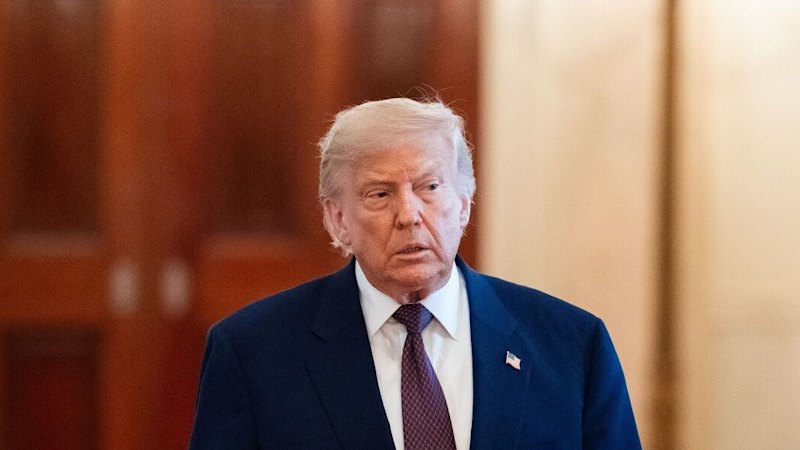
Donald Trump just ripped up the old playbook on the Middle East, and the ripples are hitting Canberra fast. By signing a 14-point memorandum of understanding with Tehran to halt a brewing war, the White House didn't just stun its closest allies. It essentially admitted that the era of unlimited American military underwriting is dead.
If you are sitting in an office in Canberra or Tokyo, the message is loud and clear. Don't expect Washington to bleed for your security if the economic price tag gets too high. Expanding on this idea, you can also read: The Hidden Cost of Belonging.
The deal itself is a massive retreat wrapped in the language of a "major win." Trump openly admitted he acted to prevent a worldwide depression, terrified of what a prolonged naval blockade and rocketing oil prices would do to the global economy. To get the Strait of Hormuz reopened, the US lifted its naval blockade, granted immediate waivers for Iranian crude oil, and paved the way for unfreezing billions in assets. It is a stunning reversal from the maximalist goals of dismantling Iran's missile programs and ending its regional proxy network.
This shifts the entire calculus for middle powers like Australia. For decades, Australian foreign policy has operated on a simple premise. If Canberra pays its dues by joining American coalitions in faraway conflicts, Washington will back Australia when things get rough closer to home. This new pact proves that transactional diplomacy goes both ways, and the US transaction can turn on a dime. Observers at The Washington Post have provided expertise on this situation.
The Mirage of Constant American Backing
Look at what Iran managed to secure in this 60-day ceasefire framework. Tehran didn't give up its ballistic missiles. It didn't agree to dismantle its regional proxy architecture. It even demanded a massive $300 billion reconstruction fund, which Trump claims Gulf states will have to foot.
Meanwhile, US Vice President JD Vance basically told furious Israeli officials to quiet down, reminding them that America builds and pays for their defense. That sort of blunt, transactional rhetoric isn't reserved just for the Middle East.
Australia relies heavily on the ANZUS Treaty and agreements like AUKUS. But what happens when an American president decides that honoring a security pact costs too much domestic political capital or threatens the US stock market? Trump’s panic over a potential economic downturn showed that the threat of a global financial shock easily overrides long-term strategic commitments to allies.
The immediate fallout is already visible in Asia. At the Shangri-La Dialogue in Singapore, US Secretary of Defense Pete Hegseth explicitly warned that the era of subsidizing wealthy nations is over. He demanded that Asia-Pacific allies scale up their defense spending to 3.5 percent of GDP, or potentially higher. Australia currently sits at around 1.9 percent. Forcing that number up means gutting domestic spending or racking up historic debt.
Middle powers face an uncomfortable reality. You can't buy absolute security guarantees from a superpower that is increasingly looking inward. The regional order is fracturing, and the old insurance policies are expiring.
Security Beyond the ANZUS Security Blanket
The immediate task for Australian policymakers is to stop overthinking the historical alliance and start practical diversification. Relying on a single security supplier is bad business. It is even worse statecraft.
First, Canberra needs to accelerate its own independent deterrence capabilities without waiting decades for sub-surface naval hardware to arrive. If the 2026 war in the Middle East proved anything, it's that sea mines, low-cost drones, and anti-ship missiles can shut down global trade chokepoints in days. Australia needs an immediate, massive investment in domestic missile manufacturing and sovereign drone stockpiles rather than relying on stretched American supply chains.
Second, middle-power minilateralism needs to become the default strategy. Forging tighter, binding defense networks with Japan, South Korea, and Singapore creates a collective weight that doesn't solely rely on a green light from the White House. These nations share the exact same vulnerability: dependency on open sea lines of communication and a shared dread of American isolationism.
Finally, there has to be an honest conversation about the defense budget. Creeping up to 2 percent of GDP is an artificial milestone that no longer matches the strategic reality. If the US expects its partners to become self-reliant protectors rather than protectorates, the national budget must reflect a wartime footing during peacetime. It is a bitter pill for voters, but the alternative is watching the nation's strategic leverage evaporate. The era of the free ride is officially over.