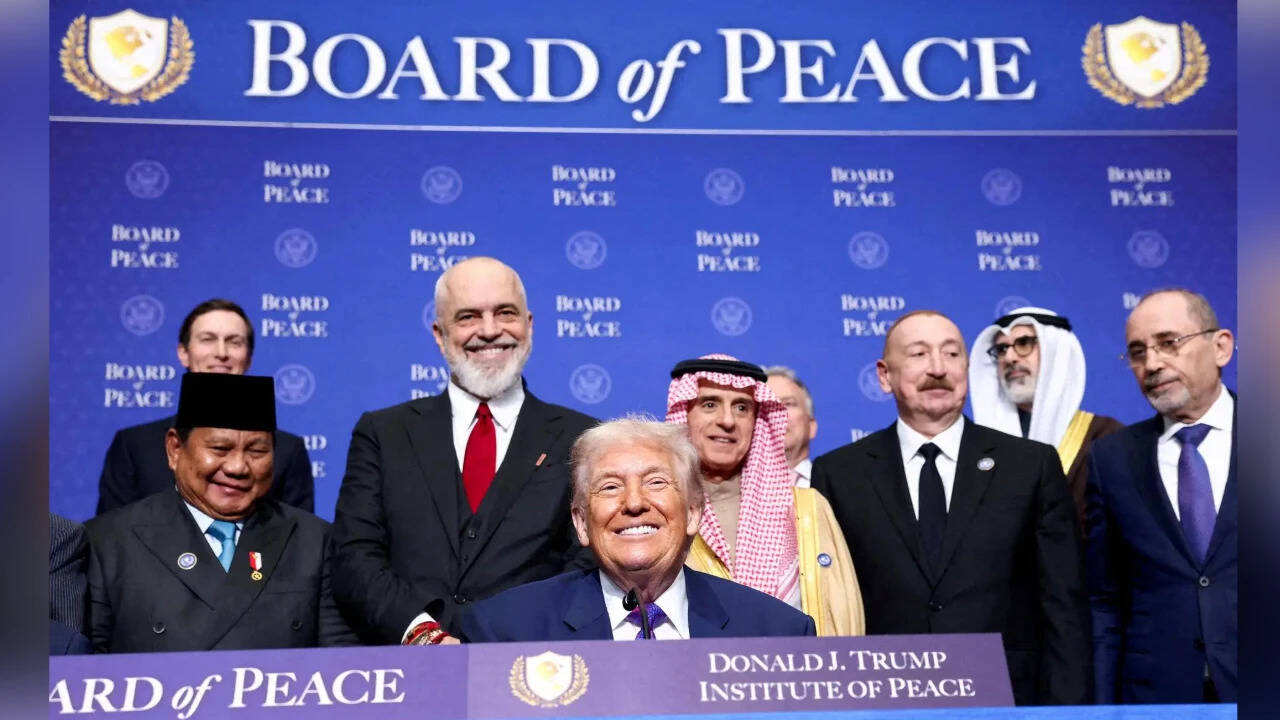
Donald Trump took to Truth Social to drop what he called a historic breakthrough. According to the announcement, the Board of Peace successfully negotiated a comprehensive agreement for the complete disarmament of Hamas and other armed groups in Gaza. It sounds like the kind of headline the world has been waiting to hear for years. But if you look past the social media post and examine what regional actors are actually saying, reality hits hard. Prime Minister Benjamin Netanyahu's office immediately pushed back, stating that the proposed terms do not meet Israeli security requirements for a fully demilitarized strip.
When you dig into the mechanics of this agreement, the tension between flashy announcements and ground-level friction becomes glaringly obvious. The roadmap relies on a multi-phase structure where heavy and light weapons are gradually handed over to a transitional body known as the National Committee for the Administration of Gaza, or NCAG. In theory, as weapons are surrendered and tunnels are dismantled, the Israel Defense Forces pull back. An International Stabilization Force steps in alongside a new Palestinian police force to manage security. It is a neat blueprint on paper. In practice, nobody trusts anyone, and every single faction is screaming "you first".
The diplomatic track that led to this moment involved quiet coordination in Egypt with mediators from Qatar and Turkey, alongside back-channel maneuvers by Jared Kushner and former Gaza security chief Mohammed Dahlan. Hamas reportedly signaled willingness to accept the terms because doing so temporarily shifts diplomatic pressure onto Israel, forcing Jerusalem to either accept the phased framework or look like the obstructionist party. Yet, Israel's right-wing government has made it clear that troops will not abandon strategic positions like the Yellow Line until every single vestige of militant infrastructure is completely erased.
The sequencing problem ruins the entire architecture of the deal. The Board of Peace wants a system of strict reciprocity where each step triggers the next, backed by verification committees. Sounds logical, right? But months of stalled negotiations following the initial ceasefire last October proved that minor skirmishes can blow up an entire schedule overnight. If a rocket is fired or a tunnel is missed, Israel uses it as justification to halt withdrawals. Meanwhile, Hamas views any premature loss of arms as tactical suicide before a permanent political framework is carved in stone.
We also have to talk about who is actually running the show. The Board of Peace represents an external attempt to engineer a technocratic government for a completely devastated enclave. Billions of dollars in reconstruction funds depend on these fragile compliance mechanisms working smoothly. But a pilot housing and governance project proposed for the Rafah area highlights just how microscopic these initial steps are compared to the massive rebuilding effort required across the entire strip. Moving 50,000 people into a fenced, internationally monitored zone is a far cry from governing a sovereign territory.
Look at the core incentives here. Hamas wants survival, amnesty for its compliant members, and an exit from total destruction. Trump wants a foreign policy crown jewel stamped onto his 20-Point Plan. Israel wants absolute deterrence so that October 7 never happens again. These goals crash directly into one another. You cannot have a phased mutual withdrawal when one side views the other's existence as an existential threat that cannot be negotiated away.
Expect more diplomatic theater in the coming weeks as international envoys try to force Netanyahu and Hamas into compliance. Don't hold your breath for immediate peace across the strip. The gap between a press release and a disarmed militia is wider than ever.