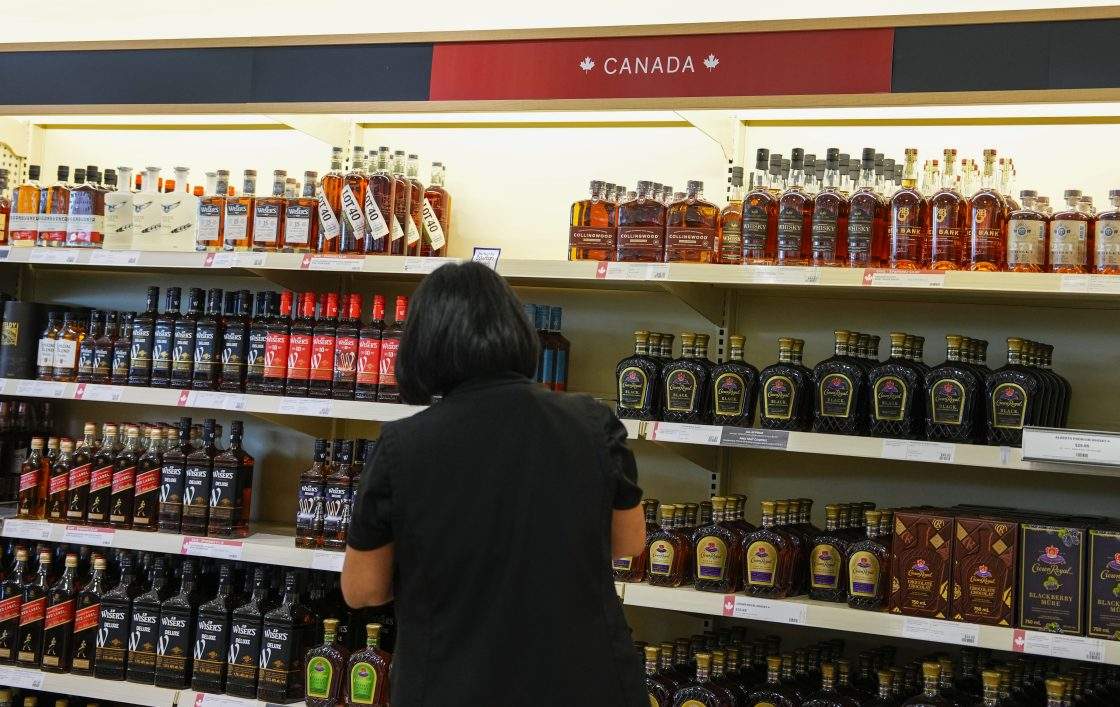
The mainstream punditry is having a collective meltdown over Washington's latest trade escalation. Headlines wring their hands over White House prohibitions targeting Canadian alcohol and dairy, treating the restrictions as a catastrophic blow to Canada’s economic sovereignty. Analysts run breathless calculations on lost export volume, predicting doom for Ontario wineries and dairy farms.
They are asking the wrong question entirely.
Focusing on the immediate friction of trade bans misses the structural reality of what happens when a dependent economy is forced off life support. Canada's over-reliance on a single southern market has long turned its corporate sector into an uncompetitive domestic lounge. The export numbers look comforting on paper, but they mask a corporate lethargy born of geographic convenience.
Look at the underlying math. Export Development Canada figures show that total Canadian exports facing these targeted blocks account for a fraction of a percent of overall national trade. Yet, the psychological panic is deafening. Why? Because decades of frictionless border commerce bred corporate laziness. Companies stopped building operational resilience, relying instead on frictionless access to American consumers to pad balance sheets without forcing internal efficiencies.
When a market absorbs up to ninety-five percent of an industry's outbound goods, management stops innovating. They do not need to optimize supply chains. They do not need to hunt for margins in high-growth corridors across Europe or Asia. They simply load trucks across the nearest parallel.
This protective shock breaks that feedback loop.
Prime Minister Mark Carney’s push for immediate diversification is no longer a political talking point; it is an economic survival mandate. For years, I have watched mid-sized manufacturing and agricultural outfits ignore international expansion strategies because shipping down the I-90 was easier than navigating overseas logistics. They built single-market dependencies that left them entirely vulnerable to regulatory shifts in Washington.
Imagine a scenario where these bans remain permanent, forcing Canadian producers to reallocate capital toward transatlantic agreements and domestic optimization. The short-term pain for specific regional sectors, particularly Ontario wine and specialized dairy processing, is sharp. Capital reallocation is never painless. Factories will retool, distributors will pivot, and balance sheets will bleed for a quarter or two.
Yet, the long-term structural outcome is an economy hardened against external shocks. Nations that diversify trade paths outgrow nations tethered to a single partner's domestic political cycle.
The lazy consensus claims protectionism destroys wealth. In this specific dynamic, the external pressure acts as a compulsory catalyst. Canadian commerce is being dragged kicking and screaming into global competitiveness, shedding its over-dependence on a partner that treats cross-border trade as a political weapon.
Stop mourning the loss of easy export lanes. Start building products that the rest of the world actually has to compete to buy.