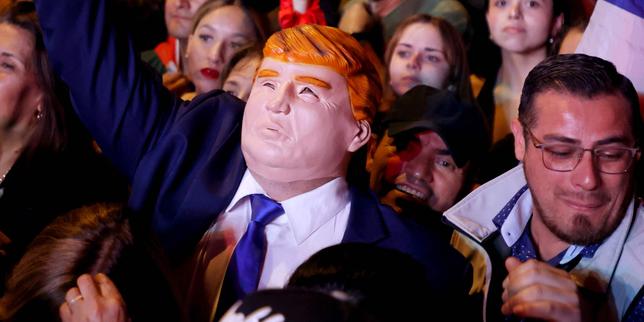
Latin America is trading its historic left-wing populism for a completely different brand of politics, and it is happening faster than anyone expected. If you think the political style popularized by Donald Trump is uniquely American, you are missing the massive realignment reshaping the Western Hemisphere. From the Andes to the Atlantic, a heavy-handed, anti-establishment, right-wing wave is sweeping traditional elites and leftist champions out of power.
The latest domino fell in June 2026, when hard-right millionaire lawyer Abelardo de la Espriella secured a dramatic victory in Colombia’s presidential election. He campaigned on building ten mega-prisons and slashing the state bureaucracy by 40 percent. It is a formula that feels intensely familiar, and that is because it is directly modeled on a mix of Salvadoran security tactics, Argentine economic shock therapy, and Florida-style political theater.
This isn't a temporary swing of the political pendulum. It is a profound structural realignment. Electorates across the region are furious about the explosive growth of organized crime and stagnant economies, and they are turning to a new generation of leaders who mirror the transactional, nationalist, and unapologetic style of the White House.
The security crisis driving the rightward shift
The single biggest catalyst for the rapid spread of Trumpism in Latin America is fear. Organized crime groups and transnational drug cartels are no longer contained within traditional border hot spots. They have expanded deep into places like Chile, Ecuador, and Costa Rica, turning once-peaceful nations into high-homicide combat zones.
When people feel like they cannot walk down the street safely, their priorities change. They stop caring about progressive social agendas, institutional checks and balances, or fine-print human rights protocols. They want results, and they want them immediately.
This desperation has turned El Salvador’s Nayib Bukele into a regional blueprint. His model of mass incarceration and building massive mega-prisons has become the most sought-after political export in the Americas. Leaders across the region are realizing that aggressive, uncompromising security platforms are the easiest way to win elections. In Chile, ultra-conservative Jose Antonio Kast achieved major political victories by promising a massive, militarized crackdown on crime, mirroring the same rhetoric.
The second Trump administration has leaned hard into this appetite for militarization. In March 2026, Washington launched the "Shield of the Americas" initiative, creating the Americas Counter-Cartel Coalition. This multi-national military pact brings together 17 aligned nations to coordinate aggressive operations against transnational gangs. For local leaders, joining this coalition is both a domestic win and a direct path to securing political and financial backing from the United States.
Moving from left-wing failure to economic shock
For years, Latin America's "Pink Tide" promised that state intervention and heavy spending would solve deep-rooted inequality. Instead, the total economic collapse of regimes in Venezuela, Cuba, and Nicaragua permanently damaged the credibility of the broader left. The failure of these socialist projects made it incredibly easy for right-wing populists to paint any progressive economic policy as a fast track to disaster.
Look at Argentina. Javier Milei took over an economy suffering from over 200 percent inflation and went to work with an economic chainsaw. He drastically cut public spending, laid off thousands of government employees, and completely shifted the country's economic trajectory. Instead of facing a massive voter backlash, his party emerged even stronger in the late 2025 legislative elections.
The success of Milei's radical libertarian experiment gave other regional candidates the ammunition they needed. In Colombia, De la Espriella openly bragged about his alliance with Milei, joking on video calls about forming a fierce "tiger and lion" duo to dismantle South American bureaucracy.
This shift is backed by deep structural changes on the ground, including the massive rise of evangelical churches across Latin America. These religious networks have created a deeply conservative voter base that naturally aligns with an anti-abortion, traditional-family, and law-and-order message.
The heavy hand of the new Monroe Doctrine
Washington isn't just watching this shift happen; it is actively accelerating it through aggressive financial leverage and direct pressure. The White House has made it clear that foreign aid, international loans, and tariff exemptions are contingent on strict cooperation with American objectives, mainly curbing mass migration and cutting off commercial ties with China.
The administration’s policy has shifted completely toward punishing adversaries and rewarding ideological allies. Consider these major actions taken over the past year:
- The Venezuela Operation: The dramatic, unilateral U.S. military raid on January 3, 2026, which ousted Nicolas Maduro, sent a shockwave through the region. It proved that Washington is willing to use direct coercion to achieve its geopolitical goals.
- The Argentine Bailout: A massive $20 billion financial package was delivered to Argentina to stabilize Milei’s government, showing how the U.S. uses its voting weight in global financial institutions to reward loyal partners.
- The Cuban Oil Embargo: Washington enacted a choking oil embargo against Cuba, forcing immediate and chaotic economic overhauls on the island.
Even the region’s last remaining major left-of-center governments, like Mexico and Brazil, have largely kept quiet in the face of this heavy-handed strategy. They know that pushback means risking devastating tariffs or economic isolation. Mexico has already increased its own import tariffs on Chinese goods simply to avoid the wrath of the U.S. executive branch.
How to navigate the new Latin American landscape
For businesses, investors, and policymakers, pretending this conservative wave is a passing phase is a mistake. The political environment has fundamentally altered, and operating in the region requires a new set of rules.
First, align your strategy with the security infrastructure. Governments are pouring massive amounts of capital into defense, surveillance, and prison logistics. If you are in the tech, logistics, or security sectors, the procurement budgets in these countries are expanding rapidly.
Second, prepare for rapid deregulation. Leaders following the Milei and De la Espriella playbooks are looking to strip down environmental restrictions and fast-track resource extraction. Expect a sudden boom in mining, oil, and natural gas projects as these administrations reject green energy mandates in favor of immediate economic growth.
Finally, keep a close eye on your supply chains regarding China. If your business relies on importing Chinese components into Latin America for assembly and export, you are sitting in a major danger zone. Washington is actively scanning the hemisphere for Chinese economic footprints, and any country or business caught middle-manning Chinese goods will face fast, aggressive tariff penalties. Securing a footprint in explicitly U.S.-aligned nations is the only way to insulate your operations from sudden trade disruptions.