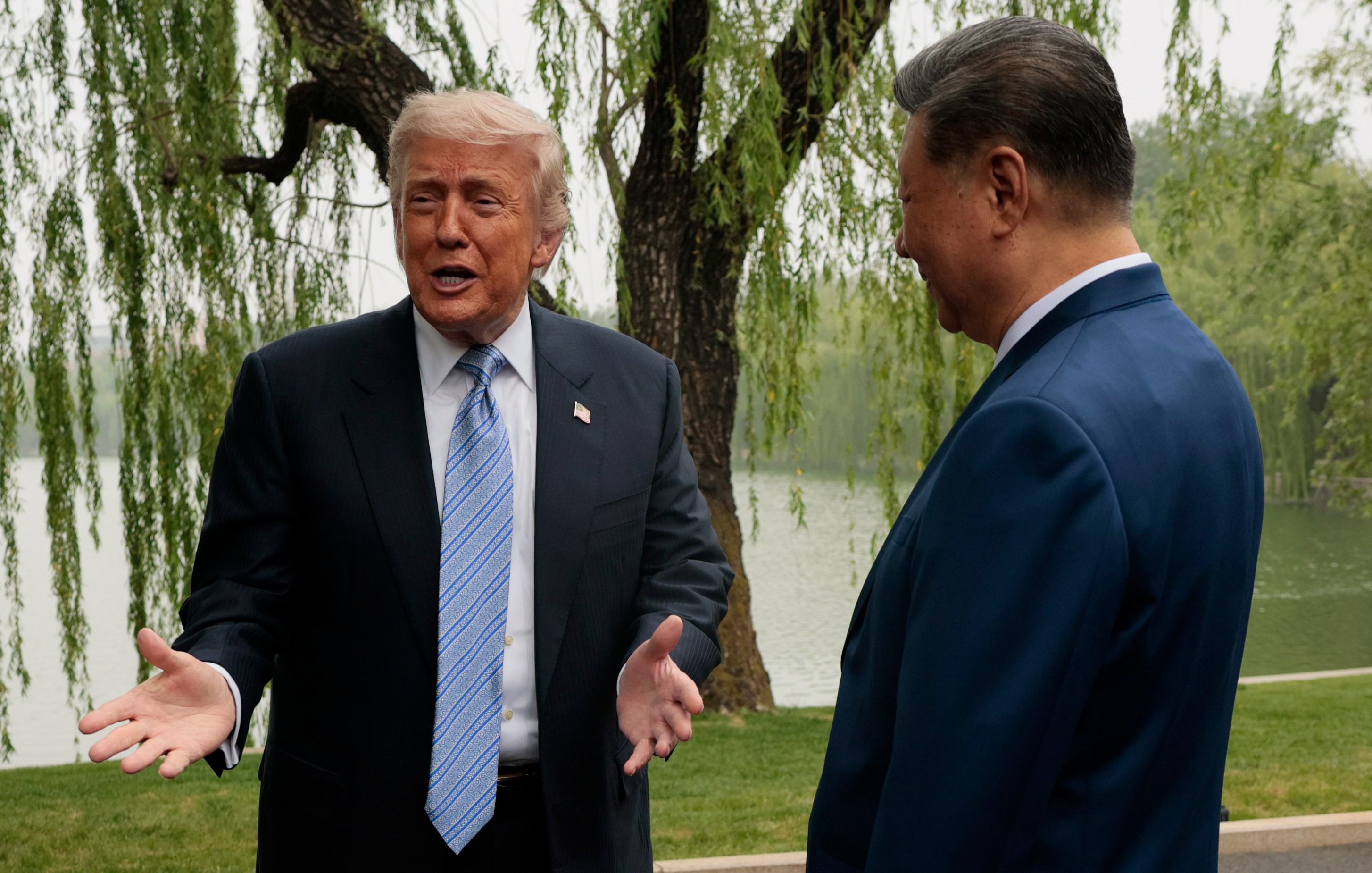
Donald Trump and Xi Jinping just walked away from their latest summit claiming they've stabilized the most volatile relationship on the planet. Don't buy the hype entirely. While the handshakes looked good for the cameras and the joint statements talked about "progress," the underlying friction between Washington and Beijing hasn't disappeared. It's just been managed for now.
You've seen this movie before. Two leaders meet, the markets rally on a few vague promises, and then the structural reality of two superpowers competing for the same slice of the global pie kicks back in. This summit was about preventing a total collapse, not building a lasting friendship. Honestly, the real story isn't the "stabilization" everyone is talking about. It's about the specific, narrow wins that both sides needed to keep their domestic audiences happy while they continue their long-term competition.
Why this summit actually happened now
Xi Jinping is facing an uphill battle at home. China's economy isn't the unstoppable juggernaut it used to be. From a cooling property market to high youth unemployment, Xi needed this summit to signal to global investors that China isn't a "no-go" zone. He needs American capital more than he'd ever care to admit. If he can lower the temperature with Washington, he buys himself space to fix his internal issues.
Trump, on the other hand, has his eyes on the next election cycle and the immediate health of the American consumer. He's been loud about tariffs and trade wars, but he also knows that a total decoupling from China would send prices at Walmart and Amazon through the roof. He wants to look tough without actually breaking the global supply chain. That's a delicate dance.
The "progress" they claimed is mostly about reopening communication lines. We're talking about military-to-military talks and cooperation on fentanyl—issues that are important but don't change the fact that both countries are still trying to out-innovate and out-muscle each other in every other arena.
The fentanyl deal and why it matters to you
One of the big wins touted at the summit was China's commitment to crack down on the chemical precursors used to make fentanyl. This isn't just diplomatic fluff. It's a direct response to a massive crisis in American communities. If Beijing actually follows through, it could save lives.
But let's be real. China has made these promises before. The real test is whether they actually raid the labs and stop the shipments. Trump is banking on the idea that he can hold Xi personally accountable for this. It's a high-stakes gamble. If the flow of drugs doesn't slow down, this "win" will sour very quickly, and the political blowback for Trump will be harsh.
High stakes in the South China Sea
While the leaders were talking about peace, their navies were still playing chicken in the Pacific. No one expected a breakthrough on Taiwan or the South China Sea, and they didn't get one. The best we got was a promise to talk more so we don't accidentally start a war.
The U.S. continues to bolster its alliances with Japan, South Korea, and the Philippines. China sees this as encirclement. Beijing, meanwhile, keeps building bases on tiny reefs and claims almost the entire sea as its own. You can't "stabilize" that kind of fundamental disagreement with a few hours of conversation and a nice dinner. The military-to-military hotline is a seatbelt, not a solution. It might keep a collision from being fatal, but it doesn't stop the cars from racing toward each other.
The tech war is the real war
Forget the trade deficit for a second. The real fight is over who owns the future. Artificial Intelligence, semiconductors, and green energy are the real battlegrounds. The U.S. is doubling down on export controls, trying to keep the best chips out of Chinese hands. China is pouring billions into becoming self-sufficient so they don't need American tech at all.
Nothing in this summit stopped the tech war. If anything, it confirmed that both sides have accepted it as the new normal. They'll trade soy beans and cars, but they won't share the code for the next generation of AI. That's where the real power lies.
What businesses should do today
If you're running a company that relies on Chinese manufacturing or sells to the Chinese market, don't let this "stabilization" talk make you complacent. The risk of sudden policy shifts is still incredibly high. Diversification isn't just a buzzword anymore; it's a survival strategy.
Look at what the big players are doing. Apple and Samsung have been moving parts of their production to Vietnam and India for years. They aren't doing it because they hate China. They're doing it because they know that one bad day in the Oval Office or the Great Hall of the People can wipe out their supply chain. You should be doing the same.
Review your contracts. Look for "force majeure" clauses that specifically cover geopolitical shifts. If your entire business model depends on the whims of two men who could change their minds tomorrow, you're in a dangerous spot. Use this brief period of calm to build your exit ramps.
The myth of a grand bargain
A lot of analysts were hoping for a "Grand Bargain" that would reset the relationship to the way things were in the early 2000s. That's not happening. The world has changed. The U.S. no longer views China as a partner-in-waiting, and China no longer sees the U.S. as a model to follow.
They are competitors. Period. The best-case scenario is "managed competition"—a state where they fight for dominance without blowing up the world economy. That's what this summit was trying to achieve. It wasn't about friendship. It was about defining the rules of the fight.
Keep your eyes on the data
Watch the trade numbers over the next six months. If we see a genuine uptick in Chinese purchases of American goods, then the summit had some teeth. If we see a real dip in fentanyl-related deaths, then the cooperation is working. But if the rhetoric stays hot while the actions stay cold, we'll know this was all just a PR exercise.
Don't get distracted by the photos of the leaders smiling. Look at the export control lists. Look at the naval deployments. Those tell the real story. The relationship isn't stable. It's just paused.
Start looking for alternative suppliers in Southeast Asia or Mexico. Hedge your currency exposure if you're dealing in Yuan. The calm won't last forever. You need to be ready for the next time the temperature rises. Because it will. This summit was a breather, not a finish line. Get your house in order while the sun is out. The storm is still on the horizon. Move your assets, diversify your suppliers, and stay skeptical of any headline that uses the word "permanent." In geopolitics, nothing is permanent.