Donald Trump just reminded everyone that he’s the undisputed king of the "delete" button when things get too hot. On Sunday night, the president hopped on Truth Social and shared an AI-generated image that stopped even his most loyal followers in their tracks. It wasn't just another photo of him looking muscular or heroic. This time, he was dressed in flowing biblical robes, laying hands on a sick man in a hospital bed, with light literally radiating from his fingertips.
If you thought it looked like Jesus, you weren't alone. The internet exploded. But by Monday morning, the post was gone. When reporters caught up with him, Trump had a classic excuse ready. He claimed he didn't think he was posing as the Son of God. He told the press he just thought the image depicted him "as a doctor, making people better."
The image that broke the religious right
We've seen Trump lean into messianic imagery before. His rallies are often filled with supporters who view him as a divinely appointed figure. But there's usually a buffer—a fan-made meme or a supporter's sign. By posting this himself, Trump crossed a line that many of his evangelical and Catholic allies found impossible to ignore.
The backlash was swift and remarkably bipartisan. Conservative commentators who usually have his back, like Riley Gaines and Megan Basham, called it "outrageous blasphemy." Even his own White House officials were reportedly cringing behind the scenes. It's one thing to be a "fighter" for religious values; it's quite another to visually swap yourself in for the central figure of the Christian faith.
Why this hit differently
- The Blasphemy Factor: For devout Christians, portraying a secular leader—no matter how much you like them—as Christ is the definition of sacrilege.
- The Timing: This happened right as Trump is locked in a nasty public feud with Pope Leo XIV.
- The "Doctor" Excuse: Claiming it was just a "doctor" photo feels a bit thin when there are angelic soldiers and heavenly light in the background.
A calculated distraction from the Pope feud
You can't look at this photo in a vacuum. Just hours before posting the AI miracle scene, Trump was on a tear against Pope Leo XIV. He called the pontiff "soft on crime" and "very liberal," essentially telling the leader of the Catholic Church to stay out of American politics.
This isn't just a random spat. Pope Leo has been critical of "delusions of omnipotence" in global leaders—a comment widely seen as a jab at Trump’s foreign policy, specifically regarding Iran. By sharing an image of himself with "divine" healing powers right after attacking the Pope, Trump was sending a loud, if messy, message about who he thinks really holds the moral high ground.
The rise of the AI presidency
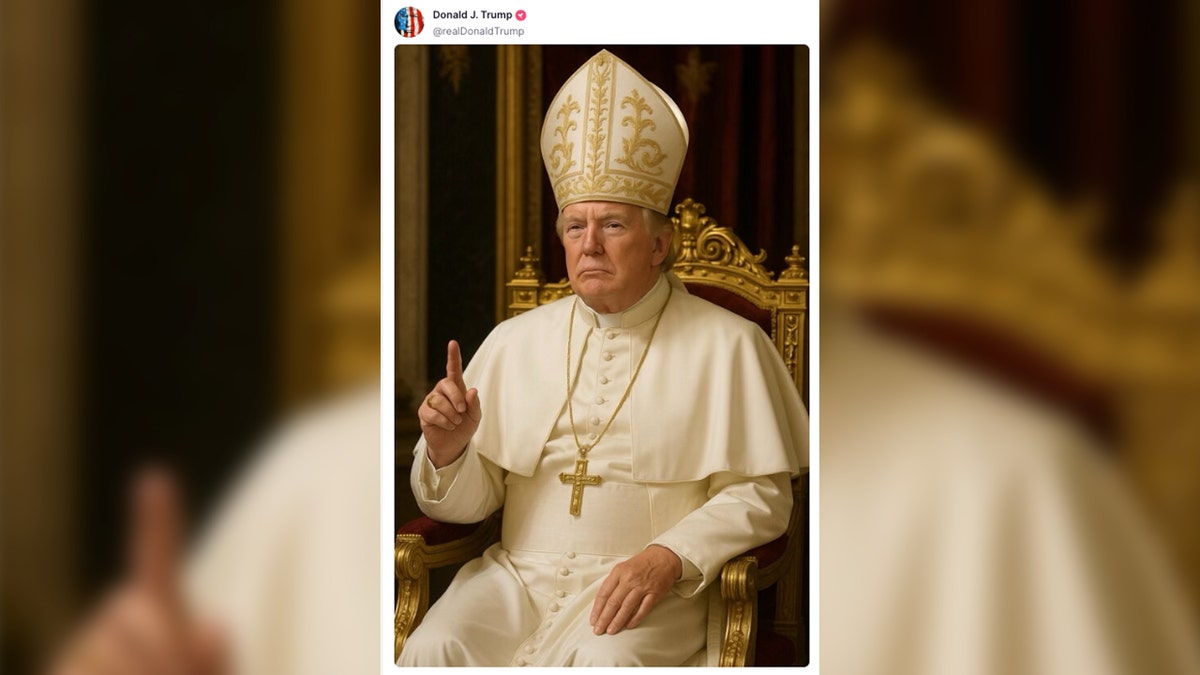
This isn't the first time we've seen this play out. Since the start of 2025, the Trump administration has leaned heavily into AI-generated content. We’ve seen him as a Jedi, we’ve seen him as a muscular warrior, and he even joked about being the Pope back in May 2025.
But there’s a danger here that goes beyond just "weird" art. When a sitting president uses AI to create alternate realities, the line between satire and official communication disappears. In this specific case, the image he shared was a modified version of one created by conservative influencer Nick Adams. In the original, there was a soldier. In Trump’s version, that soldier looked more like a "demonic figure" lurking in the back, which only added to the bizarre, unsettling vibe of the whole thing.
What happens next for the MAGA faithful
Don’t expect this to tank his numbers. If history is any guide, the "fake outrage" defense will kick in soon. His Religious Liberty Commission, featuring big names like Franklin Graham and Paula White-Cain, is still meeting. Most of these leaders will likely pivot back to his policy wins on judges or Israel rather than dwell on a deleted social media post.
However, it does show a rare moment of retreat. Trump doesn't like to delete things. He usually doubles down. The fact that this stayed up for less than 12 hours proves that even he knows when he's pushed the "chosen one" narrative a bit too far for comfort.
If you're following these developments, keep an eye on how the White House Faith Office handles the fallout this week. They're in full damage-control mode, trying to pivot the conversation back to "traditional values" and away from AI-generated miracles. The best thing you can do is stay skeptical of any political imagery that looks a little too "heavenly" to be real. AI is making it easier than ever to blur the line between a politician and a prophet, and it's up to the voters to tell the difference.