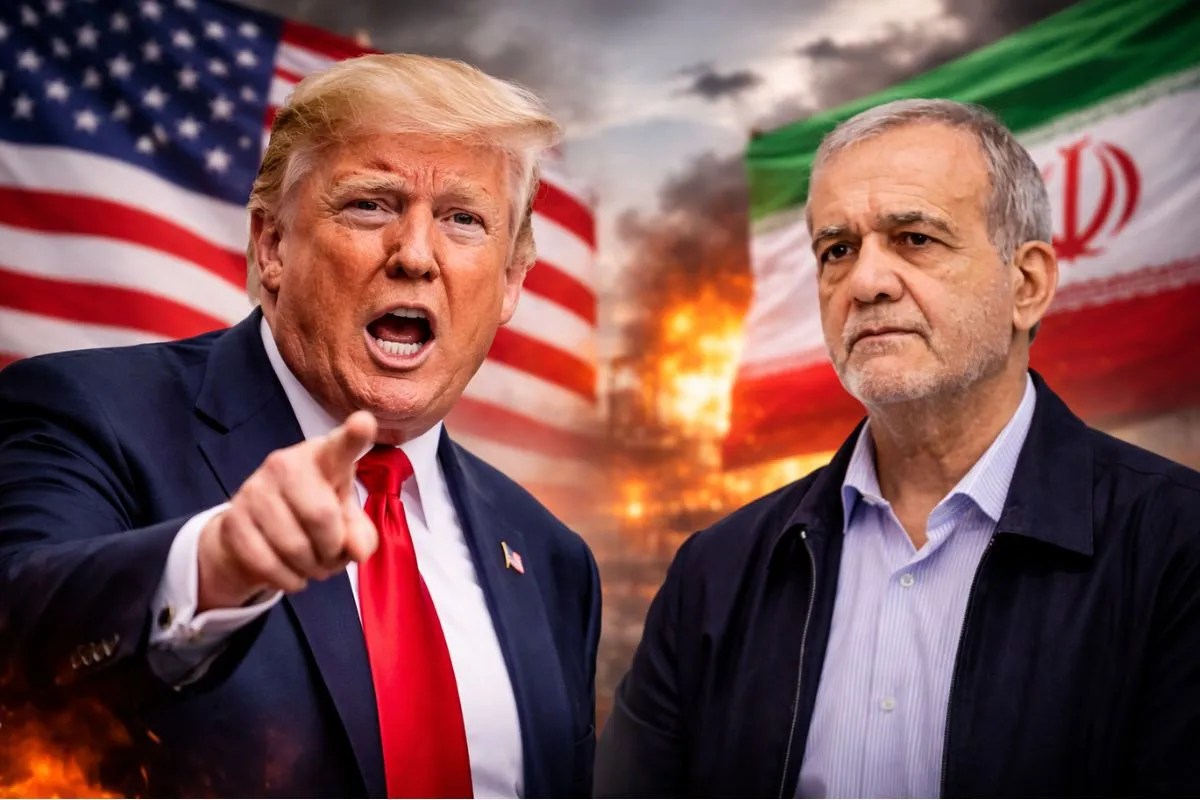
Don't let the "humanitarian" label fool you. President Donald Trump just launched Project Freedom, and while the name sounds like a rescue mission, it's actually a massive military chess move in the Strait of Hormuz. For months, the world has watched 2,000 ships—carrying everything from crude oil to car parts—sit like sitting ducks in the Persian Gulf. Now, the U.S. is moving in to "guide" them out.
It's a high-stakes play. On one hand, you have thousands of sailors running out of food and water. On the other, you have an Iranian military that considers this a direct violation of the April ceasefire. Honestly, we’re back on the edge of a blade. If you're wondering why your gas prices are bouncing around like a rubber ball, this is the reason.
What Project Freedom actually looks like on the water
The plan kicked off Monday morning. The U.S. isn't just sending a few boats; they’re moving 15,000 military personnel and over 100 aircraft. Two U.S. guided-missile destroyers have already entered the Gulf. We’ve already seen the first results. Two American-flagged merchant ships successfully made the trip through the Strait.
But it wasn't a quiet Sunday stroll.
- Iranian aggression: Tehran claims they fired two missiles at a U.S. Navy vessel.
- The U.S. response: CENTCOM denied any ships were hit but confirmed they destroyed six Iranian "fast boats" that were harassing the operation.
- Collateral damage: A South Korean cargo ship was rocked by an explosion today.
Trump is calling this a "humanitarian gesture." He’s even invited South Korea to join the mission. It’s a classic Trump move—frame a military escalation as a global rescue mission to put the pressure on everyone else to pick a side.
The oil market is freaking out and for good reason
If you think $100 oil is expensive, you haven't seen anything yet. The Strait of Hormuz is the world's most important oil chokepoint. About 20% of the world's petroleum flows through that tiny strip of water. Since the war started in February 2026, we’ve seen the "greatest global energy security challenge in history," according to the IEA.
When Project Freedom was announced, Brent crude futures actually dipped slightly to around $108 a barrel. Why? Because the market is desperate for any sign that the oil will start moving again. But that's a fragile peace.
Experts from Phillip Nova and other analysts are warning that this is a "double-edged sword." If the U.S. successfully clears the Strait, prices drop. If one Iranian missile hits a U.S. destroyer or a major tanker, we’re looking at $120 or even $150 oil overnight. Saudi Arabia and the UAE are already struggling to hit their targets because of the blockade. The UAE even threatened to leave OPEC+ recently, which shows just how much pressure the regional players are under.
Why this isn't a guaranteed win for the U.S.
The big problem is that the U.S. doesn't actually "control" the Strait. Iran has spent decades preparing for this exact scenario. They’ve mined the waters. They have swarms of fast-attack boats. They have land-based missile batteries hidden in the cliffs.
Trump’s plan to "guide" ships is vague on purpose. Is it a full naval escort? Or is the U.S. just providing "overwatch" with drones and jets? According to the Wall Street Journal, the Navy isn't doing close-escort operations yet. They’re basically trying to scare the Iranians into staying back while the merchant ships run the gauntlet.
It’s a massive risk. If a merchant ship gets sunk while the U.S. is "guiding" it, the whole Project Freedom narrative falls apart. Iran’s military chief, Ali Abdollahi Aliabadi, hasn't minced words: he said any foreign force entering the Strait will be attacked.
The diplomatic mess behind the scenes
While the ships are moving, the diplomats are talking—kind of. Trump posted on Truth Social that his representatives are having "very positive discussions" with Iran. But don't hold your breath for a grand bargain.
Iran wants three things:
- An end to the U.S. naval blockade.
- The release of frozen assets.
- A total withdrawal of U.S. forces from the region.
Trump has already rejected their latest proposal, calling it "not acceptable." He’s using Project Freedom as leverage. He wants to show Iran that he can reopen the Strait by force if they don't agree to his terms. It’s a classic "maximum pressure" tactic, but with a lot more hardware in the water than we saw back in 2020.
What you should do right now
The next 48 hours are critical. If Project Freedom manages to get a significant number of tankers out without a major firefight, we might see energy prices stabilize. If not, the global economy is in for a very rough summer.
- Watch the headlines for "escort" vs. "guide": If the U.S. starts formal convoys, that’s a massive escalation.
- Keep an eye on South Korea: If they join the mission, expect other Asian nations like Japan or India to feel the heat to join too.
- Don't bank on cheap gas: Even if this works, the "war premium" on oil isn't going away until there's a signed peace treaty.
Basically, the U.S. is trying to call Iran's bluff. It's a bold play, but in a narrow waterway filled with mines and missiles, there's very little room for error.


