Media outlets love a cheap story. Give them three seconds of audio, a handful of angry fans in the cheap seats, and a camera angle cut just tight enough to hide the full stadium, and they will spin you a narrative about political humiliation.
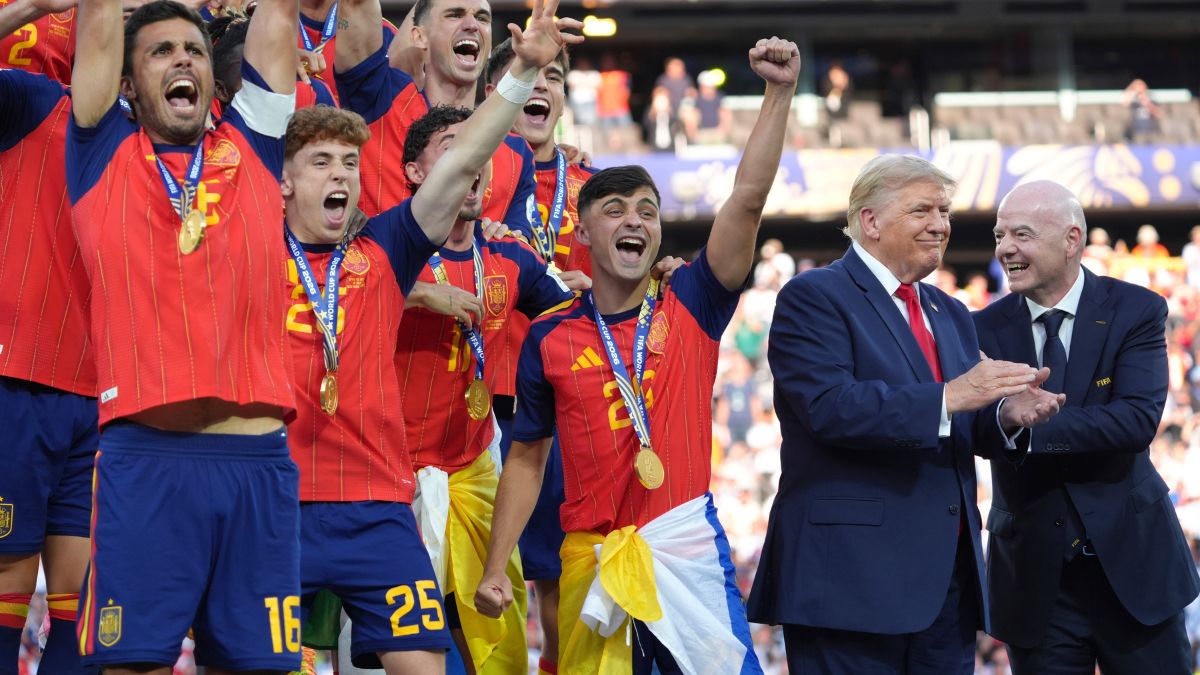
The prevailing media takeaway from the World Cup final was practically written before the match even kicked off. Spain won, Donald Trump handed over or stood near the trophy, a segment of the crowd whistled, and headlines declared an "awkward moment" where the leader was "ignored and booed." If you enjoyed this post, you should look at: this related article.
It is a comfortable, lazy consensus. It feeds the exact appetite of political commentators who evaluate international sporting events through the narrow lens of cable news panel discussions.
They are missing the entire point of global optics. For another angle on this story, see the latest update from Bleacher Report.
Stadium Noise is Cheap Politics
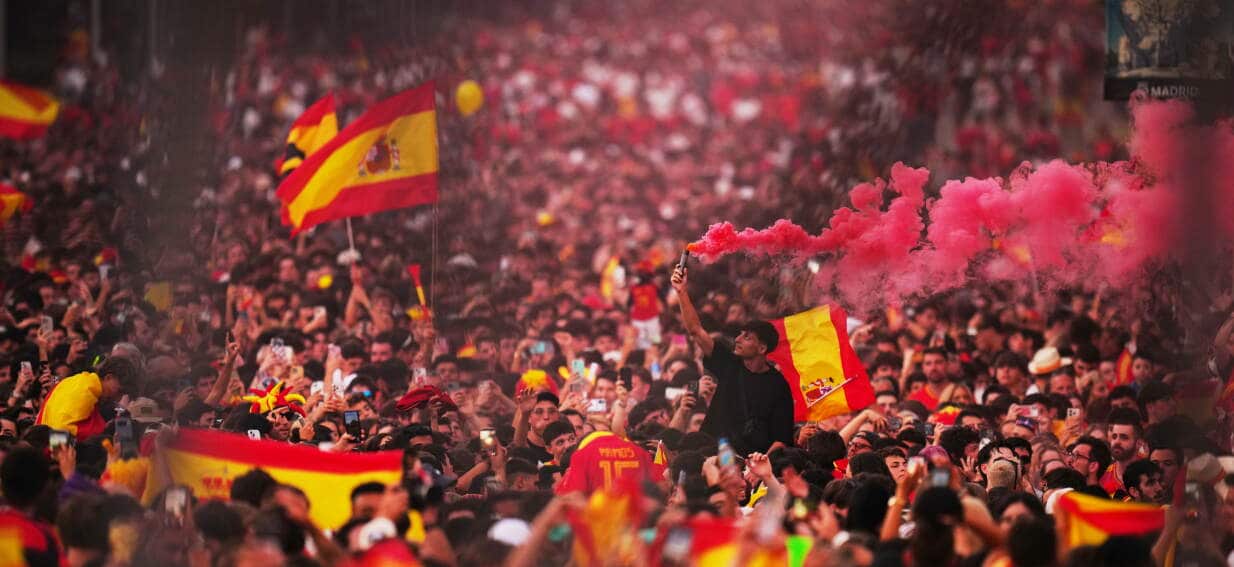
Go to any major international sporting event with eighty thousand people fueled by ninety minutes of adrenaline, alcohol, and tribal nationalism. Put any world leader on a jumbotron during a trophy presentation, and you will hear a wall of noise that includes aggressive booing.
When Emmanuel Macron took the pitch at the Rugby World Cup in Paris, his own country’s stadium nearly tore the roof off with jeers. When Justin Trudeau shows up at Canadian sporting venues, he gets blasted. World leaders do not attend international finals to win popularity contests among drunk fans supporting a rival country.
The media treats a stadium reaction like a controlled focus group. It isn't. It is an emotional pressure cooker where fans resent anything that interrupts the immediate catharsis of their team lifting silverware. If you put a video of a golden retriever on the screen right before the winning captain grabs the trophy, half the stadium would probably boo the dog for delaying the moment.
Evaluating a politician's international standing by stadium crowd decibels is the amateur hour of political analysis.
The Attention Economy Doesn't Care About Boos
In modern optics, presence is everything; polite approval is nothing.
The media framing relies on the outdated assumption that political figures want quiet, dignified, uncontroversial consensus. That world died two decades ago. In the current media ecosystem, neutral visibility is a dead end. Silence is irrelevance.
To understand why the "humiliation" narrative fails, you have to look at the raw mechanics of broadcast reach:
Global Reach Over Local Approval: The live broadcast reached an estimated audience in the hundreds of millions. The percentage of viewers who noticed, cared about, or were influenced by background whistles in the stadium is statistically negligible. What they saw was a dominant political figure embedded in the highest-profile sporting event on the planet.
Fuel for the Domestic Engine: A hostile reaction from an international crowd at a global tournament does not hurt a nationalist political brand—it fortifies it. For a domestic base, getting booed by a foreign or elite stadium crowd in a global venue isn't a failure. It is proof of identity. It reinforces the exact "us versus them" boundary that drives engagement.
Total Dominance of the News Cycle: By generating an "awkward" moment, the appearance hijacked the post-match coverage. Instead of forty-eight hours of standard sports reporting about midfield tactical shifts and possession percentages, the news cycle pivoted entirely to the political presence.
I have watched sports marketing executives and political strategists spend tens of millions of dollars trying to buy five seconds of unscripted, high-emotion global airtime. Here, the media delivered a forty-eight-hour cycle for free because they could not resist taking the bait of a brief stadium chorus.
The Real Power Dynamic on the Podium
Look at the actual mechanics of the trophy presentation, stripped of the editorialized commentary.
International sports governing bodies—FIFA chief among them—are notoriously protective of their brand, their podiums, and their broadcast feed. They operate as sovereign entities, often dictating terms to host nations with absolute authority.
When a political figure stands on that stage alongside FIFA executives and the winning squad, the power dynamic is already established. FIFA does not hand out podium space as a favor or a mistake. They do it because the geopolitical weight of the leader forces the accommodation.
The competitor article framed the moment as the president being "ignored" while Spain raised the trophy. Think about the absurdity of that framing. The team that just spent four years working to win the biggest tournament on earth was focused on the trophy they just won, rather than turning around to engage in political glad-handing on live television.
That isn't an insult; it's how every single sports presentation in human history operates. The players care about the gold. The suit on the stage is there to frame the moment.
To read personal rejection into a winning squad celebrating with their country's highest sporting achievement is to misunderstand basic human behavior under extreme physical and emotional euphoria.
The High-Risk Trade-Off
This strategy is not without cost. There is a reason traditional politicians avoid unscripted sporting appearances like the plague.
The risk is obvious: you surrender control of the environment. You cannot pre-screen eighty thousand people in a stadium. You cannot hand out pre-approved signs. You cannot control the broadcast audio mix in real time. For a conventional politician whose brand relies on polished, carefully curated, risk-averse optics, walking into a global stadium is pure madness.
It creates permanent visual receipts that political opponents will weaponize in campaign ads for the next decade. A thirty-second clip of a hostile crowd is endlessly reusable.
But for a polarizing figure, that risk profile flips entirely. The downside (negative noise from people who were never going to vote for you anyway) is capped. The upside (total dominance of the global media stream, validation of a populist stance, and association with the absolute pinnacle of global culture) is virtually limitless.
Stop Reading the Audio, Read the Room
The next time a major political figure steps onto a sporting field and the internet erupts over a chorus of jeers, stop buying the instant analysis.
The commentators telling you this was a disaster are using a playbook from 1995. They still believe that public figures require universal, polite applause to project power. They don't understand that in a hyper-fragmented, high-velocity media landscape, friction is the point. Contours create contrast. Contrast creates coverage.
The crowd thought they were rejecting a politician. The media thought they were documenting a blunder. In reality, everyone in that stadium played their exact assigned role in a masterclass of total cultural saturation.
If you're still counting the boos, you're looking at the scoreboard upside down.