Imagine the high-pitched shriek of an IndyCar engine bouncing off the stone facade of the National Gallery of Art. Picture a carbon-fiber open-wheel machine screaming past the National Archives at 190 miles per hour.
To some, it sounds like an absolute logistical nightmare. To others, it is pure genius. Recently making waves in related news: The Transfer Function of Elite Athletics to High-Stakes Parenting.
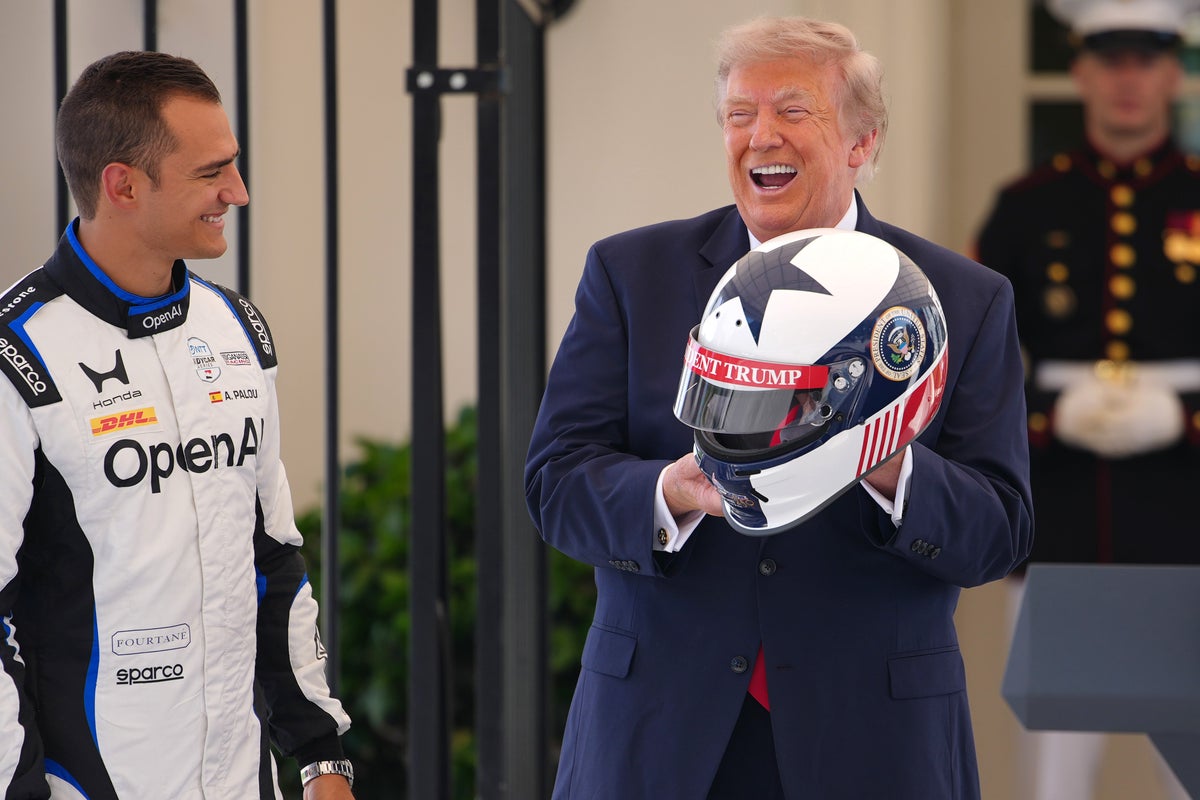
On July 13, 2026, President Donald Trump hosted a loud, high-energy showcase on the South Lawn of the White House. Top drivers like Alex Palou and Felix Rosenqvist rolled their machines right onto the pavement. Roger Penske, the billionaire owner of IndyCar, stood alongside them. They were there to preview the Freedom 250 Grand Prix, scheduled to storm through the streets of Washington, D.C., from August 21 to August 23, 2026.
This is not just another photo-op. It is the first time since 1801 that the nation's capital has sanctioned a competitive race on its streets. The last one? A horse race organized by Thomas Jefferson. More details into this topic are explored by Sky Sports.
Getting this done required bypassing mountains of red tape.
Overcoming Eighty Failed Attempts
Washington, D.C. is a bureaucratic fortress. Over the last several decades, event promoters tried to bring a street race to the capital at least 80 times. Every single attempt died in a swamp of committee meetings and local protests.
How did it finally happen? Trump signed an executive order titled "Celebrating American Greatness with American Motor Racing".
The executive order forced cooperation between the Department of the Interior, the Department of Transportation, and local D.C. officials. It effectively ran over the traditional municipal roadblocks. Transportation Secretary Sean Duffy and Interior Secretary Doug Burgum quickly cleared the runway.
Politically, it is a massive statement. Culturally, it is going to be wild.
It is easy to mock the optics of a president wearing a custom racing helmet on the South Lawn. But look past the political theater. Bringing this event to the National Mall is a massive win for IndyCar, a major boost for D.C., and a fascinating experiment in modern sports marketing.
Breaking Down the 1.7-Mile Street Track
Let's look at the actual layout. This is not some cheap parking lot circuit. It is a legitimate, high-speed street course designed to challenge the best drivers in the world.
The course spans 1.7 miles and features seven distinct turns:
- The Third Street Start/Finish Line: Drivers will line up directly in front of the U.S. Capitol building. It provides a spectacular, highly photogenic starting grid.
- The Pennsylvania Avenue Frontstretch: A blistering 0.4-mile straightaway. Drivers will stand on the throttle here, hitting speeds close to 200 miles per hour with the Washington Monument framing the background.
- The Ninth Street Technical Complex: This is where the race will be won or lost. After flying down Pennsylvania Avenue, drivers must slam on the brakes to navigate a tight, technical sequence of corners.
- The Constitution Avenue Loop: Cars will rocket past the Smithsonian’s National Air and Space Museum and the National Gallery of Art, pushing their aerodynamic grip to the absolute limit.
Street tracks are notoriously bumpy. Washington, D.C. roads are no exception.
D.C. crews are already working to patch, smooth, and prep the asphalt. IndyCar machines run incredibly low to the ground. A single bad pothole on Pennsylvania Avenue could launch a million-dollar race car into the air. The technical challenge for race engineers will be brutal. They have to balance high-speed straight-line aerodynamics with a suspension soft enough to absorb the imperfections of historic city streets.
The Economic Reality of a Free Race
Street races are usually expensive to attend. Formula 1 races in Miami and Las Vegas charge thousands of dollars for basic tickets.
The Freedom 250 Grand Prix is completely free to the general public.
That is a crucial detail. Anyone can walk up to the barriers and watch the action. Organizing a free event of this scale in the middle of a major city is incredibly risky, but the potential payoff is huge.
D.C. Mayor Muriel Bowser is thrilled. The city needs a win. Locals know that downtown areas have struggled to regain consistent foot traffic. A free race weekend will draw more than a million spectators. Hotels will fill up. Restaurants will be packed. The economic engine of the city will get a much-needed shot of adrenaline.
Safety is the biggest hurdle. The Department of Homeland Security designated the race as a SEAR-1 level event. That puts it on the same security tier as the Super Bowl.
Concrete barriers, debris fencing, and massive security checkpoints will dominate the National Mall for days. Some locals are already complaining about the closures. But if the organizers pull this off safely, it sets a brand-new precedent for how cities can host mega-events without charging taxpayers extortionate ticket prices.
How to Attend and Actually Enjoy the Event
If you are planning to head to Washington, D.C. for the race weekend on August 21-23, 2026, you need a strategy. You cannot just show up and expect a great view.
First, skip the car. Do not even think about driving downtown. Road closures will make parking impossible. Use the Metro. The Smithsonian, Federal Triangle, and Archives stations are all a short walk from the track.
Second, pick your viewing spot early.
For raw, terrifying speed, find a spot along Pennsylvania Avenue near the Washington Monument. You will feel the wind shear and the vibration of the engines in your chest.
If you prefer overtaking and tactical driving, head to the Constitution Avenue corners near Ninth Street. This is where drivers will try to out-brake each other to make passes.
Pack light. Security will be tight, and large bags will get rejected at the gates. Bring earplugs. Seriously. IndyCars are deafeningly loud, especially when the sound is bouncing off marble buildings.
Download the official IndyCar app before you head out. Mobile networks might get congested with a million people in the area, but the app will be your best bet for keeping track of the running order and race schedule. Plan your entry points, grab your spot early, and prepare to watch history unfold on the streets of Washington.