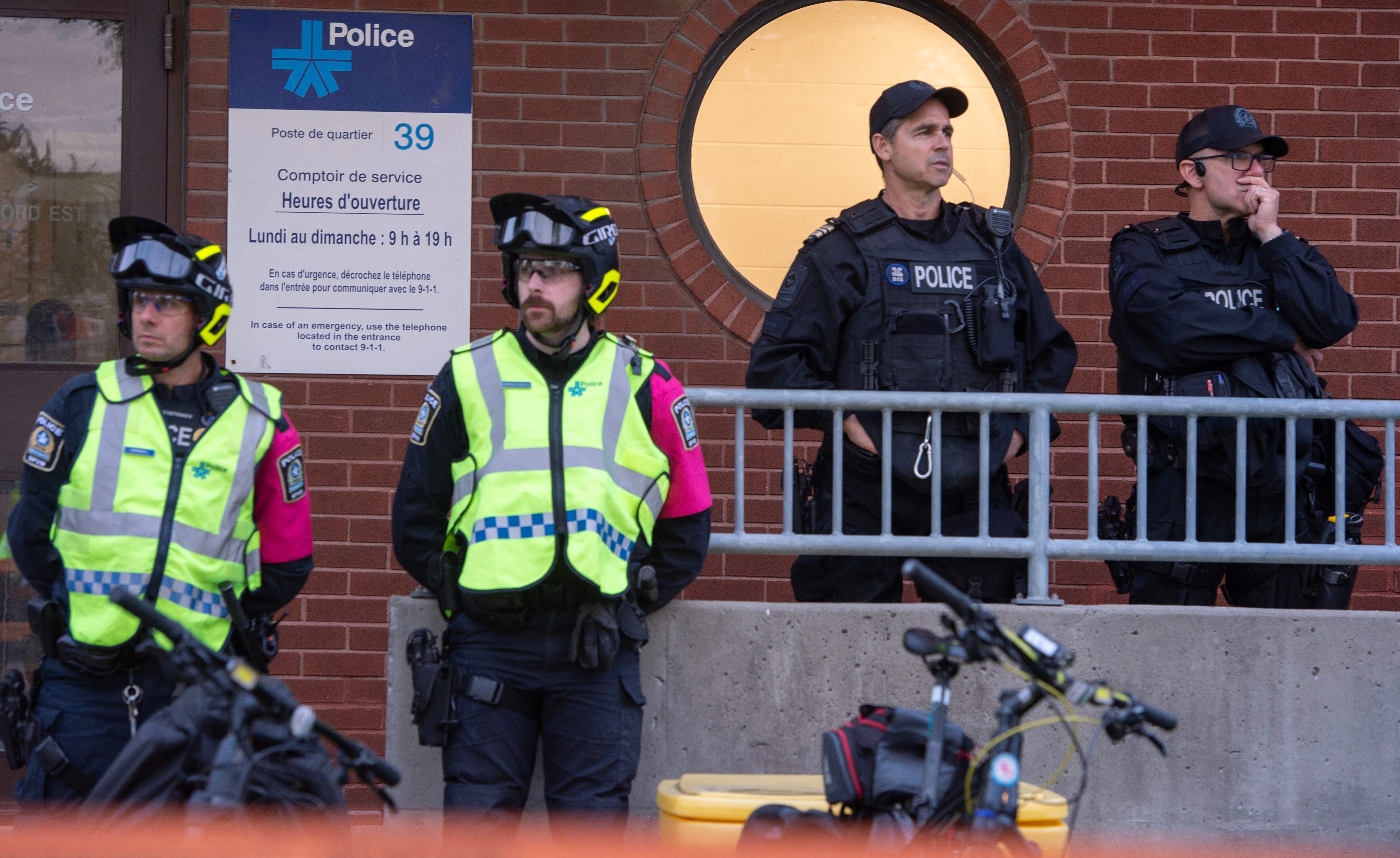
You can't fix systemic discrimination behind closed doors, yet that's exactly what Montreal city officials decided to try. In a sudden, jarring schedule shift, elected municipal leaders cancelled a highly anticipated public meeting meant to review the Service de police de la Ville de Montréal (SPVM) annual report.
Instead, they summoned Montreal Police Chief Fady Dagher to a private, closed-door session. The goal was to have "in-depth discussions" regarding a horrifying racism scandal rocking Station 39 in the Montréal-Nord borough.
It’s a massive mistake. When communities are reeling from revelations that their local police force has been treating them like targets rather than citizens, locking the public out of the room is the worst possible signal to send. It destroys trust at the exact moment transparency is needed most.
What Happened Inside Station 39
This isn’t just a case of vague bias or a single rude comment. The details leaking out of the investigation into Station 39 are stomach-turning.
A night patrol team was completely dismantled after allegations surfaced that 16 officers engaged in coordinated, racist, and hateful acts against Black and Arab residents during routine street stops. Look at what these officers are accused of doing.
- Trophy Hunting: Officers allegedly collected shorn pieces of locs—dreadlocks—cut from the heads of individuals during violent police interventions, keeping them as literal trophies.
- Targeted Fines: Tickets and citations were allegedly handed out to citizens based entirely on their ethnic background to meet informal quotas or harass residents.
- Gratuitous Violence: Community reports detail young men being violently detained while walking alone at 3 a.m., or being forced to their knees on wet pavement for minor infractions like jaywalking.
The scale of the misconduct forced Chief Dagher to hold an unprecedented late-night press conference to announce that 14 officers were being stripped of patrol duties and reassigned. Two others were suspended without pay and are now under active criminal investigation.
Quebec Domestic Security Minister Ian Lafrenière even stepped in to appoint a lawyer, Anne-Marie Boisvert, as an independent observer to oversee the internal and criminal probes.
The Myth of the Bad Apple
Whenever a police scandal breaks, the immediate corporate response is to blame a few rogue actors. But Chief Dagher himself admitted something far more troubling. The issue isn't just a few bad individuals; it's a deep-seated cultural rot.
Most of the 16 officers under investigation are young men with less than five years on the force. They are fresh out of the police academy. This completely punctures the idea that racism in the ranks is just a legacy leftover from an older generation of cops.
Instead, it proves that a toxic field culture is actively corrupting young officers the second they hit the pavement. They are being socialized into discriminatory behavior by their peers and immediate superiors.
If there’s any silver lining, it’s that the whistle was originally blown by other police officers within the station who refused to tolerate the behavior. But that internal breakthrough doesn’t change the reality for the people living in Montréal-Nord. For them, this is a bitter rerun of a movie they’ve watched for decades.
The roundtable discussions organized by community group Hoodstock at the Henri-Bourassa Park pavilion took place right near the site where 18-year-old Fredy Villanueva was shot and killed by police back in 2008. Nearly twenty years later, the faces change, but the fear remains identical.
Why Private Meetings Won't Work
Politicians love private meetings because they can argue, negotiate, and manage political fallout without the messy reality of public anger in the room. But treating a human rights crisis like a PR liability is why real change never happens.
Montreal Mayor Valérie Plante recently called for a moratorium on random police street checks after sharing that her own husband, who is Black, has been stopped by police five or six times in the last year for absolutely no reason.
If the mayor’s own family can’t escape racial profiling, what chance does an average kid in Montréal-Nord have?
Municipal employees themselves are calling out the hypocrisy. In a blistering letter sent to city hall, Black public servants stated they’ve been trying to denounce systemic racism within the city structure for years, only to be met with human resources stalling tactics, empty action plans, and endless consultations.
They raised a fundamental question that city officials don't seem to want to answer publicly: Why do we keep trusting the exact same internal mechanisms that have failed to produce results for decades?
Moving Beyond Private Damage Control
The city claims that residents will get their chance to speak at a rescheduled public meeting on July 8, but pushing the public out of the initial crisis talk feels like damage control rather than accountability. True reform requires tearing down the walls, not hiding behind them.
If you want to see actual progress in municipal oversight and police accountability, the strategy has to shift away from backroom political deals.
First, support the growing coalition of civil rights groups demanding an immediate, binding public inquiry. Internal police investigations and independent observers are a start, but they don't have the power to fundamentally reshape the systemic structure of the SPVM. A public inquiry forces testimonies into the light where they cannot be buried or sanitized.
Second, put immediate pressure on local city councillors to formalize the moratorium on arbitrary street checks. Don't let it sit as a casual suggestion or a talking point in a radio interview. Street checks are the primary tool used to justify racial profiling; eliminating them removes the legal cover for discriminatory stops.
Finally, show up to the rescheduled public forum on July 8. Don't let the delay cause momentum to fade. Governments count on public outrage cooling down over time. Demanding direct answers from Chief Dagher and city administrators in an open room is the only way to ensure that the dismantling of Station 39's night patrol is the beginning of systemic change, not just a temporary PR fix.