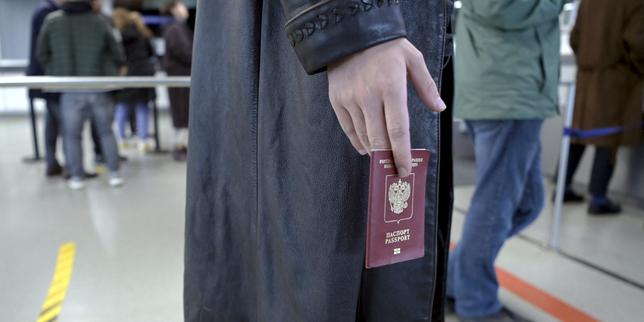
The mainstream media loves a simple, ideologically neat narrative. When Moscow announced that over a thousand foreigners—including 140 French citizens—secured Russian residency via the new "traditional values" visa track, the press took the bait hook, line, and sinker. Western outlets framed it as a terrifying symptom of democratic decay, while state media painted it as the vanguard of a conservative exodus from a decadent West.
Both sides are completely missing the real mechanics at play.
This isn't a migration revolution. It is an incredibly cheap, highly effective soft-power marketing campaign run by the Kremlin, swallowed whole by desperate expatriates and lazy analysts alike. To look at these numbers and conclude that Western conservatives are packing their bags en masse to build a new life in the Russian rust belt requires a total suspension of economic and bureaucratic reality.
Let's dissect the numbers, the logistics, and the cold truth that nobody on either side of this debate wants to admit.
The Flawed Math of the Conservative Exodus
Let’s look at the headline figure with some basic, unvarnished arithmetic. One thousand foreigners globally. One hundred and forty from France.
In the grand scheme of global demographics, these figures do not even register as a rounding error. To put this into perspective, France has a population of over 68 million people. If 140 people leave a country of 68 million over the course of a year, that is not a cultural movement. That is a statistical anomaly. It is fewer people than it takes to fill a single mid-sized commercial airplane.
More importantly, it pale beside actual migration patterns. Every single year, tens of thousands of Westerners relocate to places like Spain, Portugal, or the United Arab Emirates for lifestyle, tax, or ideological reasons. A handful of ideologues moving to Russia is treated as a major geopolitical shift only because it serves the clickbait agendas of both pro-Russian and anti-Russian commentators.
The media focuses on the why—the rejection of Western cultural norms—while completely ignoring the who. Who are these people actually?
Having spent years analyzing international mobility and immigration trends, I can tell you exactly who fills these quotas. You are not looking at a wave of highly skilled engineers, wealth creators, or stable middle-class families. The demographic profile of people pulling up stakes for Russia based purely on ideological alignment usually breaks down into three distinct, non-productive categories:
- The Radical Ideologues: Individuals whose entire identity is wrapped up in anti-Western contrarianism, who view the world through a deeply warped geopolitical lens.
- The Digital Grifters: Content creators and alternative media bloggers who realize that moving to Russia provides them with a unique selling proposition to monetize an audience back home.
- The Disconnected Expats: People who have failed to build economic or social stability in their home countries and mistakenly believe a change in geography will magically fix their personal shortcomings.
Moving to a country where you do not speak the language, cannot access the international banking system easily, and must rely on a volatile economy is a catastrophic financial move for anyone with actual capital to protect.
The Bureaucratic Trap the Competitor Ignored
The competitor's coverage of this visa program treats Russia’s immigration framework as a welcoming, streamlined conveyor belt for conservative Westerners. This is a joke to anyone who has ever actually dealt with the Ministry of Internal Affairs (MVD) or attempted to navigate the post-Soviet administrative labyrinth.
Presidential Decree No. 702, which established this track, allows foreigners to bypass the standard language and history tests if they reject their home country's "neoliberal ideological agenda." That sounds great on a press release. In practice, it simply removes one minor hurdle while leaving an entire mountain range of bureaucratic misery intact.
Imagine a scenario where a French family arrives in a provincial city like Nizhny Novgorod or Samara under this visa. Here is the reality that hits them within forty-eight hours:
The Banking Lockout
Because of sweeping international sanctions, Western debit and credit cards are useless plastic in Russia. You cannot transfer your life savings from a French, American, or British bank via SWIFT. To move your capital, you are forced to rely on shady cryptocurrency exchanges, physical cash smuggling, or complex multi-tiered banking arrangements in third countries like Armenia or the UAE. For a family trying to buy a house or start a business, this turns basic financial existence into a permanent compliance nightmare.
The Ruble Trap
Even if you successfully transfer your money, you are trading hard currency (Euros or Dollars) for a volatile currency completely disconnected from global financial markets. You are locking your net worth into a closed economic ecosystem where inflation is stubbornly high and your purchasing power is tied to the geopolitical fortunes of a single state.
The Local Reality
The visa waives the initial language test, but it does not magically teach you Russian. The state services, the school systems, the medical clinics, and the tax offices do not operate in French or English. The administrative friction of everyday life in Russia for a non-Russian speaker is incredibly draining. The initial ideological romance wears off the moment you spend four hours in a drab government building trying to register your residency certificate, facing a wall of unsmiling, indifferent bureaucracy.
Dismantling the Premise of the "Traditional Values" Appeal
The most significant logical flaw in the competitor's reporting is the assumption that Russia actually offers the conservative utopia these migrants are searching for. This is where the gap between state rhetoric and sociological reality becomes an abyss.
Western conservatives who romanticize Russia see the state-enforced bans on certain social movements, the public rhetoric defending the nuclear family, and the alignment with the Orthodox Church. They mistake political posturing for societal reality.
Let's look at the actual sociological data out of Russia, which tells a completely different story:
| Sociological Metric | Western Conservative Ideal | Russian Reality |
|---|---|---|
| Divorce Rates | High stability, lifelong marriage | Among the highest in the world, frequently tracking at 60-70% of marriages ending in dissolution. |
| Abortion Rates | Strictly restricted or eliminated | Historically and currently among the highest per capita rates globally, used widely as a primary method of family planning. |
| Church Attendance | High weekly congregational life | Despite high cultural identification with Orthodoxy (around 70%), actual weekly church attendance hovers between 2% and 5%. |
| Substance Abuse & Mortality | Clean living, traditional health | Chronic issues with alcoholism, high male mortality rates, and systemic public health challenges in the provinces. |
Russia is a deeply secularized, post-Soviet society bearing the heavy social scars of the 20th century. It is not an agrarian, church-going, 19th-century patriarchal paradise. The Western expat arriving with visions of a wholesome, community-driven rural life is in for a massive cultural shock when they realize that the local population is largely indifferent to the ideological crusade the migrant thinks they are fighting together.
The state uses traditional values as a geopolitical wedge issue to contrast itself with NATO and the European Union. It is a foreign policy tool, not a reflection of the organic, day-to-day social fabric of the average Russian city.
The True ROI of the Program for Moscow
If the visa track yields so few actual migrants and creates a logistical headache for the people who arrive, why does Moscow keep pushing it?
Because the return on investment (ROI) isn't measured in demographic growth. It is measured in pure propaganda value.
For the cost of processing a few hundred visa applications, the Russian state gets an endless supply of useful content. A French family moving to a village outside Moscow is a goldmine for state television. They are paraded in front of cameras, interviewed about the "collapse of Western civilization," and used to validate the state's internal narrative to its own domestic audience: Look, even the wealthy Westerners are fleeing their broken system to come to us.
It is a classic asymmetric information operation. You don't need a million migrants to win the PR war. You just need a dozen photogenic ones who are willing to speak on camera.
The tragedy is that the competitor, along with most of the Western media commentariat, validates this strategy by treating it as a real, terrifying trend. By reacting with alarm, Western media reinforces the Kremlin's narrative that Russia has successfully positioned itself as the global capital of alternative cultural values.
Stop Asking if the West is Losing Its People
The lazy consensus asks: "Why are Westerners leaving for Russia?"
The correct, insider question is: "Why are we letting a microscopic PR stunt dictate our understanding of global migration?"
If you are a Western conservative disillusioned with the political or cultural trajectory of your home country, moving to an authoritarian state active in a major geopolitical conflict is the absolute worst way to solve your problem. You are trading minor cultural annoyances for total legal, financial, and physical vulnerability. You are transforming yourself from a citizen into a geopolitical pawn, completely dependent on the whims of a state apparatus that views you primarily as a media asset.
The "Traditional Values" visa is a masterclass in political marketing, but it is a hollow product. It relies on the desperation of a few fringe individuals and the predictable reaction of an easily triggered Western media.
The numbers don't lie. A thousand visas globally is not a migration trend; it is a press release. And it's time we stopped treating it as anything else.