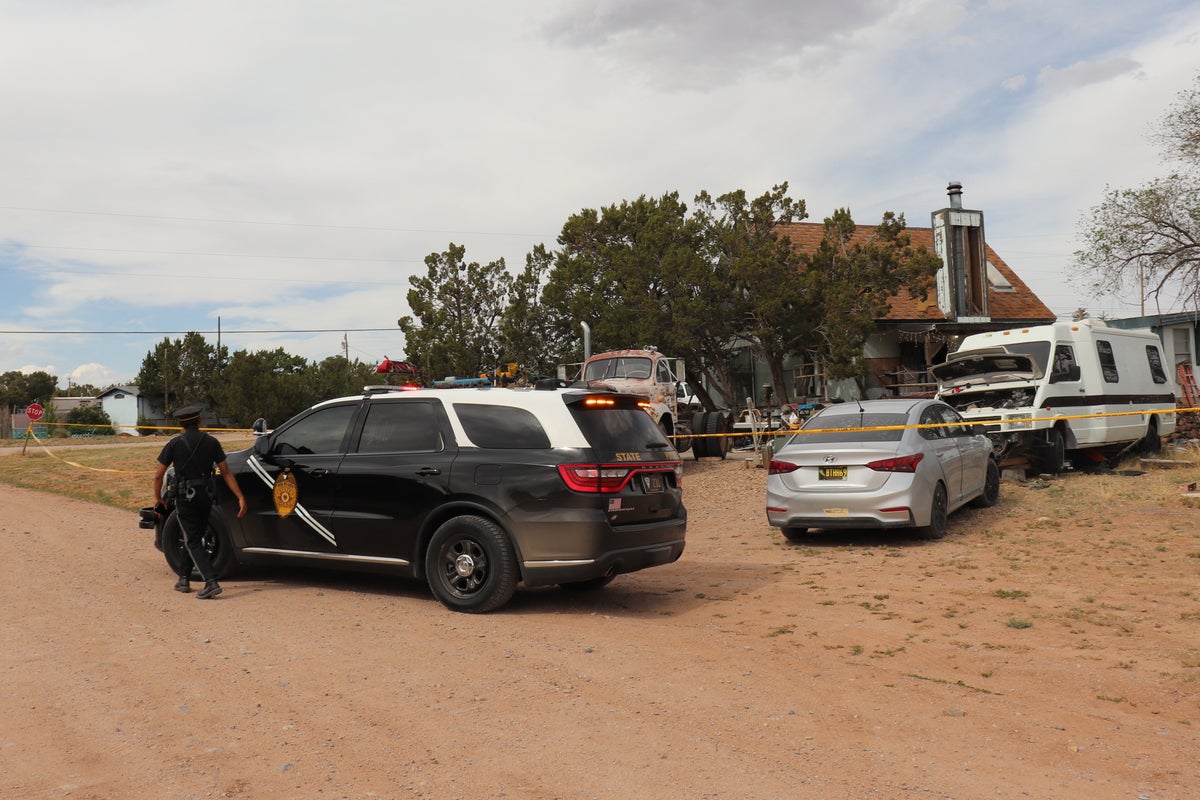
The fatal contamination event in Mountainair, New Mexico, exposes critical vulnerabilities in rural emergency response systems and highlights the evolving risks of modern chemical exposure. On May 20, 2026, first responders entering a residential property to treat a suspected drug overdose encountered a toxicological anomaly: four unresponsive individuals, three of whom were pronounced dead, and an unidentified chemical agent that quickly incapacitated the arriving emergency personnel. The rapid onset of severe symptoms among eighteen emergency medical technicians, firefighters, and hospital staff points to a highly potent substance, transforming a standard localized emergency into a complex biohazard containment operation.
Analyzing this incident requires a rigorous epidemiological and operational framework. Rather than viewing the event as an isolated misfortune, it must be evaluated through the mechanics of chemical transmission, the structural failure of standard personal protective equipment (PPE), and the socio-economic pressures driving high-potency substance distribution in rural environments.
The Triad of Chemical Exposure Mechanics
Evaluating the risk profile of an unknown toxicant requires mapping its transmission dynamics, symptom presentation, and potency vectors. Initial speculative reports often default to airborne or environmental vectors like carbon monoxide or natural gas. However, local executive assessments and preliminary state police findings have systematically eliminated these variables.
The profile of the Mountainair agent can be defined by three distinct operational parameters:
                  [ Dermal / Contact Transmission ]
                                 │
            ┌────────────────────┴────────────────────┐
            ▼                                         ▼
[ Primary Exposure Zone ]                 [ Secondary Exposure Zone ]
• Lethal Dose Index (LD50) reached       • Cross-contamination via vectors
• Rapid systemic collapse                 • Acute systemic irritation
• 3 Fatalities, 1 Critical                • 18 First Responders Symptomatic
- Transmission Vector Restriction: Official investigative briefs indicate that the substance is non-airborne, functioning primarily through contact or dermal transmission. This restriction dictates how the agent spreads throughout a space. While an airborne agent relies on atmospheric dispersion models, a contact-driven toxicant requires a physical vector for cross-contamination.
- The Symptom Profile Matrix: First responders exposed to the site exhibited rapid physiological distress, including acute coughing, vomiting, nausea, and peripheral dizziness. The presentation of these symptoms across multiple individuals establishes a clear cause-and-effect link between direct proximity to the source material and immediate autonomic nervous system disruption.
- The Dose-Response Divergence: A stark gap exists between the primary exposure group (the occupants of the residence) and the secondary exposure group (the first responders). The primary group experienced a lethal dose index ($LD_{50}$) or a level of toxicity sufficient to cause rapid systemic collapse, resulting in three fatalities and leaving a fourth individual in critical condition at the University of New Mexico Hospital. The secondary group suffered acute irritation and systemic distress but did not experience lethal organ failure, illustrating a steep dose-response curve common in concentrated synthetic compounds.
The First Responder Protocol Bottleneck
The incapacitation of nearly two dozen medical and rescue personnel reveals a critical structural bottleneck in standard emergency operating procedures. When a dispatch call is categorized as a "suspected drug overdose," the behavioral heuristic of the arriving crew is calibrated for biological and medical intervention—such as administering opioid antagonists—rather than chemical defense.
This operational bias creates a specific vulnerability gap:
Phase 1: The Initial Entry Deficit
First responders enter the hot zone utilizing standard Level D personal protective equipment, which consists of basic medical gloves, surgical masks, and standard uniforms. While sufficient for bloodborne pathogens, Level D configurations offer zero dermal or respiratory protection against highly concentrated synthetic chemicals or transdermal toxins.
Phase 2: The Cross-Contamination Cascade
Because the substance acts via contact, the initial rescue actions (checking vitals, performing CPR, moving bodies) transfer the chemical agent onto the skin and clothing of the responders. The case of a volunteer firefighter who performed CPR outside the residence and subsequently witnessed colleagues vomiting at the heliport demonstrates how quickly an uncontained agent travels through physical contact loops.
Phase 3: Secondary Facility Contamination
The chain of exposure extended beyond the physical scene to the University of New Mexico Hospital in Albuquerque. Several nursing staff members developed symptoms after coming into direct contact with the patients or the contaminated gear of the transport crews. This indicates a failure in early-stage field decontamination protocols, forcing the receiving medical center to institute emergency quarantine measures for eighteen responders and adjust active staff allocations to prevent wider hospital contamination.
Systemic Pressures and Rural Vulnerability
The Mountainair incident is structurally linked to broader macro-environmental realities within New Mexico. According to data from the Centers for Disease Control and Prevention, New Mexico maintained one of the highest per-capita drug overdose mortality rates in the United States, recording 775 deaths in 2024. This systemic trend creates specific operational challenges for rural municipalities.
Small jurisdictions with populations under 1,000 residents operate with thin infrastructure margins. The sudden loss of local emergency capacity due to quarantine directly reduces the regional emergency response readiness. When a single incident hospitalizes the Emergency Medical Services Chief and isolates a significant portion of the volunteer rescue force, the local safety net suffers an immediate capacity deficit.
Furthermore, the introduction of highly concentrated synthetic adulterants or novel chemical compounds into rural supply chains alters the risk calculus for public safety. In urban centers, specialized hazardous material (HAZMAT) teams can deploy rapidly. In rural contexts, the time lag between initial exposure and specialist arrival extends the window of vulnerability, increasing the likelihood that early responders will inadvertently act as vectors for the toxin.
Operational Constraints in Forensic Identification
Identifying an unknown compound responsible for rapid fatalities involves precise analytical sequencing, which introduces a critical period of operational uncertainty. Investigators cannot rely on field test kits when dealing with novel synthetics or complex chemical matrices; instead, they must depend on a multi-stage laboratory framework.
The timeline for definitive identification is restricted by the following analytical steps:
- Gas Chromatography-Mass Spectrometry (GC-MS): This process separates the individual chemical components of a sample and identifies them by their unique mass-to-charge ratios. While highly accurate, the presence of biological contaminants or complex cutting agents requires intensive sample preparation to avoid false negatives.
- Post-Mortem Toxicological Sequencing: Distinguishing between the chemical found at the scene and the metabolized substances within the victims' tissue requires separate blood and tissue assays. This is necessary to confirm whether the external substance matches the internal cause of death.
- Adulterant and Precursor Mapping: Modern illicit manufacturing frequently yields unintended chemical byproducts or highly toxic precursors due to poor synthesis control. The laboratory must determine if the lethality was driven by the intended drug or an unreacted chemical intermediary left behind during synthesis.
Until these laboratory phases conclude, public safety agencies face a tactical dilemma. They must enforce heightened protective measures without knowing the exact chemical profile of the threat, balancing responder safety against the operational costs of over-encapsulation.
Tactical Realignment for Incident Command
The tactical lesson of the Mountainair exposure requires a permanent shift in how rural field operations handle suspected overdose calls. Managing these scenes strictly as medical emergencies introduces an unacceptable level of risk to personnel.
[ Incoming Dispatch: Suspected Overdose ]
                   │
                   ▼
       [ Dual-Track Assessment ]
                   │
         ┌─────────┴─────────┐
         ▼                   ▼
   [ Medical Need ]    [ Chemical Hazard ]
         │                   │
         └─────────┬─────────┘
                   ▼
[ Mandatory Perimeter Enactment & Level C PPE ]
The data points to a clear strategic pivot: initial scene entries on suspected overdose calls must adopt a dual-track assessment model that treats the location simultaneously as a medical crisis and a potential chemical hazard zone. Incident commanders must enforce a mandatory perimeter until the scene is cleared of visible chemical anomalies, requiring the use of Level C protective gear—including air-purifying respirators and chemical-resistant clothing—whenever unknown substances are physically present on site.
Relying on retroactive decontamination after symptoms appear creates an operational bottleneck that compromises both frontline personnel and receiving medical facilities. Mitigating this risk requires integrating hazardous material protocols directly into the primary deployment phase of rural emergency services.