The Problem With Heroism Narratives
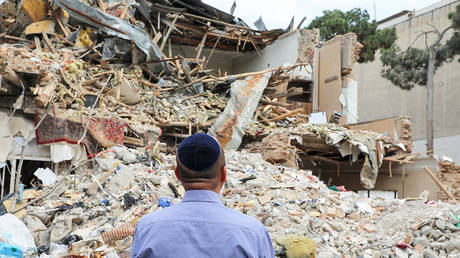
The viral footage of Iranians moving bricks by hand to rescue Torah scrolls from a collapsed synagogue is a masterclass in emotional bait. It paints a picture of grassroots interfaith harmony that makes for excellent social media engagement. But if you are looking at those moving bricks and seeing a victory for cultural preservation, you are missing the forest for the trees.
I have spent years watching cultural heritage sites crumble while the public applauds the "bravery" of the locals. Here is the uncomfortable truth: relying on manual labor and civilian adrenaline to save ancient artifacts is a sign of systemic failure, not a cause for celebration. When you see people digging through rubble by hand to save 400-year-old parchment, you aren't looking at a miracle. You are looking at a catastrophe that could have been avoided with basic structural maintenance and institutional oversight. You might also find this similar coverage insightful: The Balen Shah Paradox and the Rise of Populist Authoritarianism in Nepal.
Bricks Are Not the Enemy Neglect Is
The competitor narrative focuses on the physical weight of the bricks. They want you to feel the grit in the air and the strain in the backs of the volunteers. That’s a distraction. The real weight isn't in the masonry; it’s in the decades of architectural abandonment that led to the collapse in the first place.
Most people think heritage preservation is about what happens after a disaster. It isn’t. True preservation is boring. It’s about humidity sensors, seismic retrofitting, and consistent funding. When a roof caves in on a priceless religious text, the preservation battle has already been lost. As extensively documented in recent reports by BBC News, the effects are widespread.
- The Reactionary Trap: We celebrate the "hand-to-hand" rescue because it’s cinematic.
- The Boring Reality: A $5,000 structural assessment ten years ago would have made the viral video unnecessary.
If we keep praising the scramble, we give institutions a pass for their lack of prevention. We are essentially rewarding the fire department for showing up after the house burned down because they looked cool holding the hose.
The Logistics of Ruin
Let’s talk about the physics of a collapse. When a heavy masonry structure fails, the internal environment changes instantly. You aren't just dealing with "bricks." You are dealing with localized pressure zones, shifting debris, and the sudden introduction of moisture and dust to sensitive organic materials like vellum and ink.
Hand-moving debris is the most dangerous way to handle artifact recovery. It’s erratic. It lacks the precision of vacuum extraction or stabilized shoring. While the sentiment of the community member in the video is noble, the methodology is a nightmare for conservationists.
Imagine a scenario where a single misplaced stone shifts the weight of a collapsed beam directly onto a silver casing or a fragile scroll. In the rush of "heroism," more damage is often done by the rescuers than by the initial collapse. Professional recovery requires a slow, grid-based approach. The "human chain" is a PR win, but it’s a technical gamble that should make any archivist's blood run cold.
Cultural Heritage is Not a Feel-Good Story
The media loves to frame these events as a bridge between communities. "Look, Iranians are helping save Jewish history!" This framing treats basic human decency as an anomaly. It patronizes the local population and minimizes the fact that this history is Iranian history.
Those Torah scrolls aren't just Jewish artifacts; they are part of the Iranian national fabric. By separating the two, we reinforce a "us vs. them" dynamic that suggests the rescue is a favor being done by one group for another. This is the "lazy consensus" of international reporting. It ignores the reality that Iranian Jews have been part of the region's identity for millennia.
When you treat a rescue as a "heartwarming" outlier, you ignore the political and economic pressures that lead to the decay of minority heritage sites across the globe. This isn't just about Tehran or Isfahan. This is about every neglected site in a conflict zone or an economically depressed region where the "bricks" are only moved when it’s too late.
Why Your Donations Are Going to the Wrong Places
People see these videos and immediately want to give money to "relief funds." Stop.
If you want to save history, stop funding the cleanup and start funding the survey. The "People Also Ask" sections of the internet are filled with questions about how to repair damaged scrolls. The answer is: you can't—at least not to their original state. Once vellum is crushed or soaked, the cellular structure of the skin is compromised.
- Prevention vs. Cure: $1 spent on a roof leak saves $1,000 in scroll restoration.
- The Ego Problem: Donors love seeing their names on a restored wing; they hate paying for a new drainage system.
I’ve seen foundations blow millions on "high-tech" digital scanning of artifacts that are currently sitting in damp basements. Digital preservation is a vanity project if the physical object is allowed to rot. We are obsessed with the "after" photo while the "before" is screaming for attention.
The Brutal Logic of Prioritization
We need to address the elephant in the room: we cannot save everything. The hand-moving of bricks is a desperate attempt to save a tiny fragment of what is being lost every day.
The contrarian take? Perhaps we should stop trying to save every individual building and start focusing on the evacuation of movable heritage before the collapse. If a synagogue or a mosque is in a state of disrepair that threatens the contents, the priority should be the extraction and climate-controlled storage of the artifacts, not a hope and a prayer that the walls hold up.
This sounds cold. It feels like giving up on the architecture. But architecture requires a living community to maintain it. If the community is shrinking or the resources aren't there, the building becomes a tomb for the history inside. Moving the scrolls out before the bricks fall isn't a defeat; it’s a strategic withdrawal.
Stop Applauding the Scramble
The next time a video of a "hand-to-hand" rescue crosses your feed, don't share it with a heart emoji. Ask why the roof fell. Ask who was responsible for the site's structural integrity. Ask why the artifacts were still inside a condemned or failing building.
We have a romantic obsession with ruins and the people who dig through them. We find it "authentic." But authenticity is a poor substitute for a stable foundation. The Iranians moving those bricks were doing what they had to do because the system failed them. They aren't heroes of preservation; they are the victims of a global culture that prefers a dramatic rescue over a boring maintenance schedule.
History isn't saved by hands in the dirt. It’s saved by signatures on a budget and engineers with clipboards. Everything else is just a eulogy in motion.
Get your hands out of the rubble and put them on the gear that prevents the collapse.


