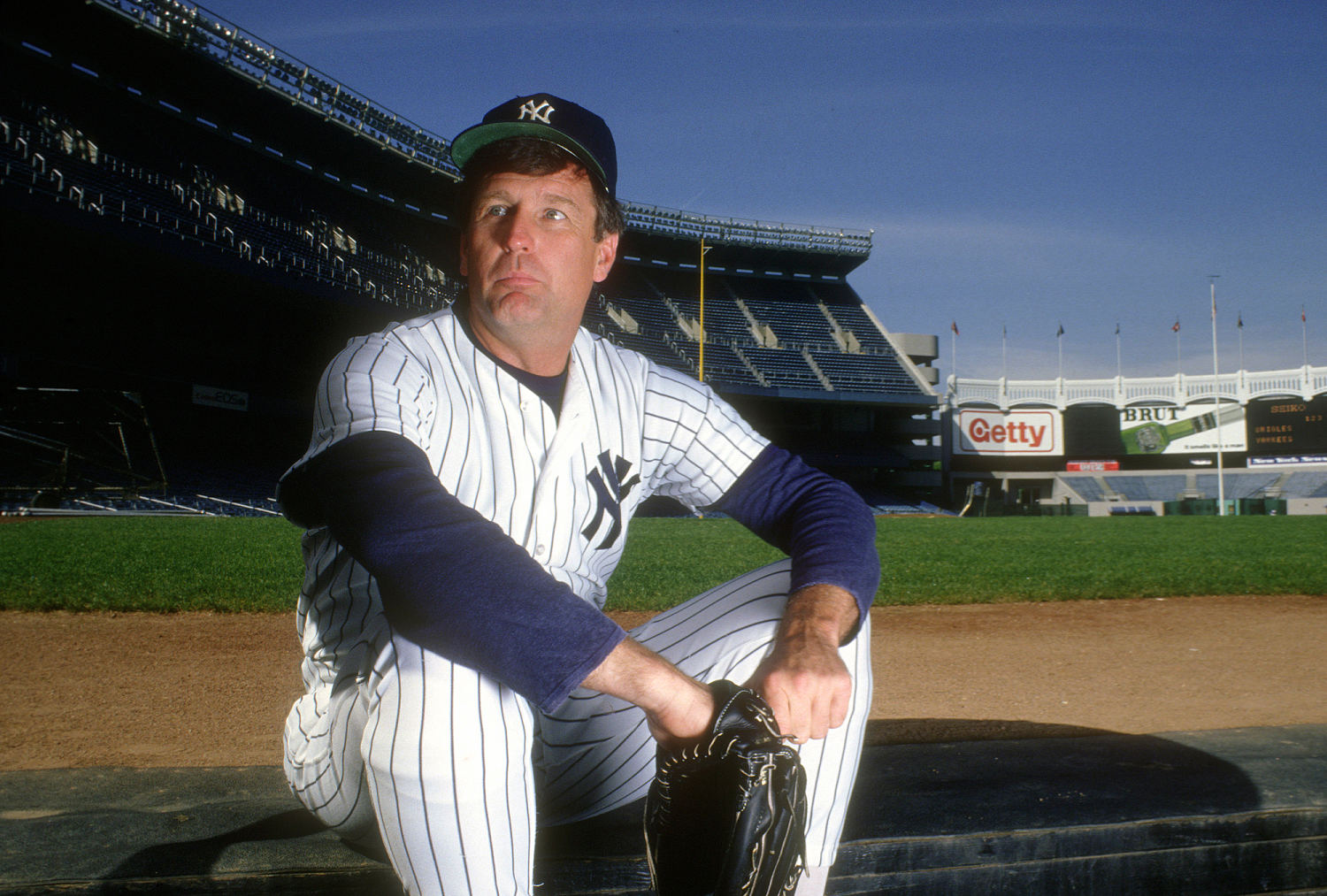
When a sports icon passes or steps off the stage, the media machine cranks out the same tired eulogy. They wrap everything in neat, sentimental bows. They tell you about the grit, the legacy, the triumphs. But when the subject is Tommy John, the narrative gets dangerously lazy. The conventional take paints ulnar collateral ligament reconstruction as a miraculous medical pit stop. A quick zip of the scalpel, a piece of a tendon harvested from elsewhere in the body, a year of rehab, and boom—you throw harder than before.
It is the greatest marketing trick in the history of sports medicine. For an alternative perspective, check out: this related article.
I have watched organizations throw millions of dollars and countless prospects into the meat grinder of modern pitching development, treating elbow reconstruction like an oil change. That mindset is broken. We treat a catastrophic structural failure of the human joint as a routine career maintenance fee.
Let us dismantle the myth right now. Related coverage on this matter has been provided by Bleacher Report.
The Flawed Premise of the Bionic Arm
The lazy consensus says that ulnar collateral ligament reconstruction saves careers. It extends timelines. It turns damaged arms into indestructible weapons.
That is flatly backwards.
The procedure is a symptom of a systemic developmental failure, not a cure for athletic mortality. When Frank Jobe performed the first operation on the left-handed pitcher of the same name in 1974, it was a desperate Hail Mary. It was never meant to be an assembly-line procedure handed out to teenagers in high school showcase circuits like trading cards.
Today, youth pitchers are going under the knife before they even hit their driver's licenses. Parents and coaches look at the procedure as an upgrade. They think adding a synthetic or harvested anchor makes the joint stronger than God intended.
Physics disagrees.
[Image of elbow anatomy and ulnar collateral ligament]
Biomechanical reality is stubborn. A biological joint relies on active muscular deceleration and dynamic stability. When you replace a natural ligament with a graft, you alter the kinetic chain. You introduce a weak link disguised as a fix. Pitchers come back throwing 100 miles per hour, sure. But they do so on borrowed time, operating with a mechanical handicap that stresses the shoulder and the forearm in ways nature never designed.
Why the Data Screams Danger
Look past the glossy highlight reels of All-Stars returning to the mound. Look at the minor league recovery wards.
Repeat surgeries are skyrocketing. Revision rates tell the real story that the hype machine tries to bury. Once a pitcher gets a reconstruction, the probability of a second procedure spikes. Why? Because the underlying root cause—overuse, flawed mechanics, and a culture that worships peak velocity at the expense of kinetic efficiency—remains entirely unaddressed.
Imagine a scenario where an auto manufacturer builds a car engine that constantly blows its transmission at 5,000 miles. Instead of redesigning the transmission, the manufacturer simply installs a slightly heavier-duty bolt and tells the driver to floor the gas pedal even harder.
That is modern pitching philosophy.
We measure success by how fast a baseball crosses home plate, completely ignoring the velocity of the destruction happening inside the elbow joint. The human body is not a machine with swappable modular parts. Every time you slice open a joint and harvest a palmaris longus tendon or a hamstring graft, you rob Peter to pay Paul.
The Anatomy of a Broken Development Model
Let us define the core terminology correctly, because the sports world loves to hide behind medical jargon.
The ulnar collateral ligament is a stabilizing band on the inner side of the elbow. It resists valgus stress—the massive rotational force generated when a pitcher's arm accelerates forward at thousands of degrees per second.
When that ligament tears, it is not bad luck. It is structural overload.
The common narrative claims that high velocity causes tears. That is only half true. High velocity combined with modern weighted-ball training, year-round showcase pitching, and zero mandatory rest windows causes tears. We have replaced natural athletic play in childhood with specialized, single-sport pitching factories that push immature growth plates to the breaking point.
Ask yourself why position players rarely need this surgery compared to pitchers, or why historical workhorses who threw complete games for decades had healthier elbows than today's max-effort openers who throw one inning of fire.
The answer is pacing, self-regulation, and load management. Today's system trains athletes to throw every single pitch at maximum output. Maximal torque demands maximal sacrifice.
The Uncomfortable Truth About the Recovery Myth
Let us address the elephant in the room: the so-called "velocity bump" post-surgery.
Hitters and analysts love to point out that pitchers often return throwing harder than they did before the injury. They use this anomaly to argue that the procedure somehow enhances performance.
This logic ignores survival bias and physical maturity. Pitchers spend twelve to eighteen months away from competitive stress, doing nothing but rebuilding their entire kinetic chain, core strength, and lower-half mechanics under the supervision of elite physical therapists. Of course they come back stronger—they just spent a year and a half doing professional-grade strength training while their peers were grinding through exhausting 162-game schedules or grueling minor league bus rides.
Furthermore, the pitchers who fail to recover—the thousands whose arms never quite find the release point again, who quietly wash out of independent leagues and college programs—are written off as statistical noise.
You never read an article about the Triple-A reliever who underwent the procedure at twenty-one and never touched 88 miles per hour again. The survivors skew the data.
The Unconventional Blueprint for Preservation
If you want to fix the epidemic, you stop treating the symptom.
First, ban radar guns at youth tournaments. Take away the quantifiable obsession with velocity during developmental years when growth plates are still fusing.
Second, enforce strict pitch-count ceilings that account for intensity, not just volume. A high-effort slider at 95 miles per hour places exponentially more strain on the medial elbow than a two-seam fastball painted at 88. Counting all pitches equally is organizational malpractice.
Third, overhaul the rehabilitation paradigm. Instead of viewing rehab as a countdown to the day the pitcher can start maxing out again, view it as a mandatory biomechanical correction period. If the pitcher returns with the exact same violent arm-drag mechanics that tore the ligament in the first place, the calendar is simply ticking down toward round two.
The namesake of the career-saving surgery would likely be the first to tell you that his famous 1974 operation was a last resort, not a blueprint for an entire generation of throwers. We turned an emergency medical intervention into a factory-line replacement part.
Stop celebrating the surgery. Start fixing the rot at the root of the game.