Japan has officially dismantled the decades-old barricades preventing the export of lethal weaponry, a move that fundamentally reshapes the security architecture of the Indo-Pacific. This is not merely a bureaucratic tweak or a minor adjustment to trade policy. By revising the Three Principles on Transfer of Defense Equipment and Technology, the Kishida administration has effectively ended Japan’s era of "checkbook diplomacy" in favor of becoming a direct arsenal for its allies. For the first time since the end of World War II, Japanese-made missiles, fighter jets, and artillery are no longer restricted to domestic soil or non-combat roles.
The immediate catalyst is the Global Combat Air Programme (GCAP), a massive joint venture with the United Kingdom and Italy to develop a next-generation stealth fighter. Without the ability to export these jets to third-party nations, the economics of the project would have collapsed. Japan faced a binary choice: remain a pacifist outlier and watch its domestic defense industry wither, or embrace the reality of global arms markets to keep its technological edge sharp. They chose the latter.
The Death of the Post-War Taboo
For seventy years, Article 9 of the Japanese Constitution served as a psychological and legal anchor. It didn't just limit the military; it defined the national identity as a "peace-loving nation" that stayed out of the business of killing. That identity is now in the rearview mirror. The policy shift allows Japan to export finished defense products to countries that hold "defense cooperation" agreements with Tokyo, provided those nations are not currently engaged in active conflict.
However, the definition of "active conflict" is increasingly fluid. By allowing the export of components and eventually full systems like the Patriot missile—under license from U.S. firms—Japan is plugging itself directly into the global supply chain of high-intensity warfare. This was born out of necessity. The war in Ukraine exposed a terrifying reality for the West: the democratic world lacks the industrial capacity to sustain a long-term conventional war. Washington needed Tokyo’s factory floors to backfill its own depleted stockpiles.
The Washington Pressure Cooker
The United States has been quietly nudging Japan toward this moment for years. As the Pentagon focuses on the "pacing challenge" of China, it can no longer afford to be the sole provider of security in the Pacific. Japan’s move to export Patriot missiles back to the U.S. is the first domino. While these missiles are officially intended to replenish American stock rather than go straight to Kyiv, the net effect is the same. Japan is now an active participant in the global military-industrial complex.
This transition isn't just about regional pride. It’s about survival. Japan’s domestic defense contractors—Mitsubishi Heavy Industries, Kawasaki, and IHI—have long suffered from a "Galapagos" syndrome. They produced world-class tech for a single customer, the Japan Self-Defense Forces (JSDF). This led to astronomical unit costs. If you only build twenty tanks, each tank costs as much as a small fleet of private jets. By opening the doors to international buyers, Tokyo is betting that scale will finally bring those costs down to earth.
The GCAP Gamble and the Stealth Fighter Race
The center of this strategic pivot is the sixth-generation fighter jet. Japan, the UK, and Italy are racing to build a platform that surpasses the F-35 in terms of AI integration and drone-teaming capabilities. This is a multi-billion dollar bet on the future of aerial dominance.
Under the previous rules, Japan would have been a junior partner, unable to sell the finished product to anyone else. London and Rome were blunt: if Japan couldn't export, the partnership was lopsided and financially unviable. The recent policy change specifically carved out a path for this jet. It signals that Japan is ready to compete with the likes of Lockheed Martin and Dassault.
But competing in the arms market isn't just about having better sensors or stealthier coatings. It’s about the "how" of the industry. Selling weapons is a dirty, complicated business involving long-term maintenance contracts, geopolitical alignment, and often, uncomfortable moral compromises. Japan’s defense ministry is currently scrambling to build the infrastructure required to manage these international deals. They are moving from a mindset of "procurement" to a mindset of "sales," and the cultural shock within the halls of power in Tokyo is palpable.
Bypassing the Constraints of Article 9
Critics argue that this move circumvents the spirit of the constitution without a formal amendment. They aren't wrong. The Japanese government has become masters of the "reinterpretation." By framing weapon exports as a means to "create a desirable security environment," they have found a linguistic loophole large enough to fly a fighter jet through.
The argument is simple: if Japan’s neighbors are well-armed with Japanese tech, they are less likely to be bullied by an expansionist power. It’s deterrence through commerce. Yet, this assumes that the weapons Japan sells today will always be used by the "right" people tomorrow. History is littered with examples of hardware changing hands or regimes flipping. Tokyo is entering a world where its brand—formerly synonymous with reliable cars and high-end electronics—will now be attached to the machinery of destruction.
The Industrial Reality Check
Can Japan actually compete? For decades, Japanese defense firms have been insulated from the cutthroat reality of global competition. Their lead times are long and their prices are high. While their materials science and robotics are second to none, they lack the experience of "battle-testing" their equipment.
In the arms world, "combat-proven" is the gold standard. Most Japanese systems have never seen a day of actual combat. Convincing a military in Southeast Asia or the Middle East to buy a Japanese frigate or radar system over a cheaper, combat-tested South Korean or Israeli alternative will be a massive uphill battle.
Key Challenges for Japan’s New Export Era:
- Price Competitiveness: Japanese labor and precision engineering come at a premium that many developing nations cannot afford.
- End-Use Monitoring: Tokyo has promised strict oversight to ensure weapons don't end up in the wrong hands, but once a missile leaves the dock, control is an illusion.
- Regional Sensitivities: Neighbors like China and South Korea view any Japanese "remilitarization" through the lens of 20th-century history. While Seoul is also a major arms exporter, the historical baggage makes Tokyo's entry into the market a sensitive diplomatic minefield.
The Silent Rise of the "Secondary" Defense Market
Beyond the headline-grabbing fighter jets, Japan is looking at "non-lethal" equipment that sits in a gray zone. This includes radar systems, communication arrays, and patrol boats. Tokyo has already begun gifting or selling these to nations like the Philippines and Vietnam.
This is the real "how" of Japan’s strategy. They are building a web of integrated defense networks across the South China Sea. If five different nations are all using Japanese radar systems, they can share data more effectively. They become a de facto coalition. This isn't just about selling hardware; it’s about selling an ecosystem. Japan is positioning itself as the tech hub of a democratic Pacific alliance.
The Risk of Backlash
Public opinion in Japan remains deeply divided. While the younger generation is increasingly wary of China's maritime assertiveness, the older generation still clings to the pacifist ideal. There is a legitimate fear that by becoming an arms dealer, Japan loses its moral authority to act as a mediator in international disputes.
The government’s response has been to move in increments. First, it was parts for rescue equipment. Then, it was finished non-lethal goods. Now, it’s lethal equipment for joint-development projects. By the time the public realizes the full extent of the shift, the transition will be irreversible. The "Peace Constitution" remains on the books, but its practical application has been hollowed out.
A New Economic Engine
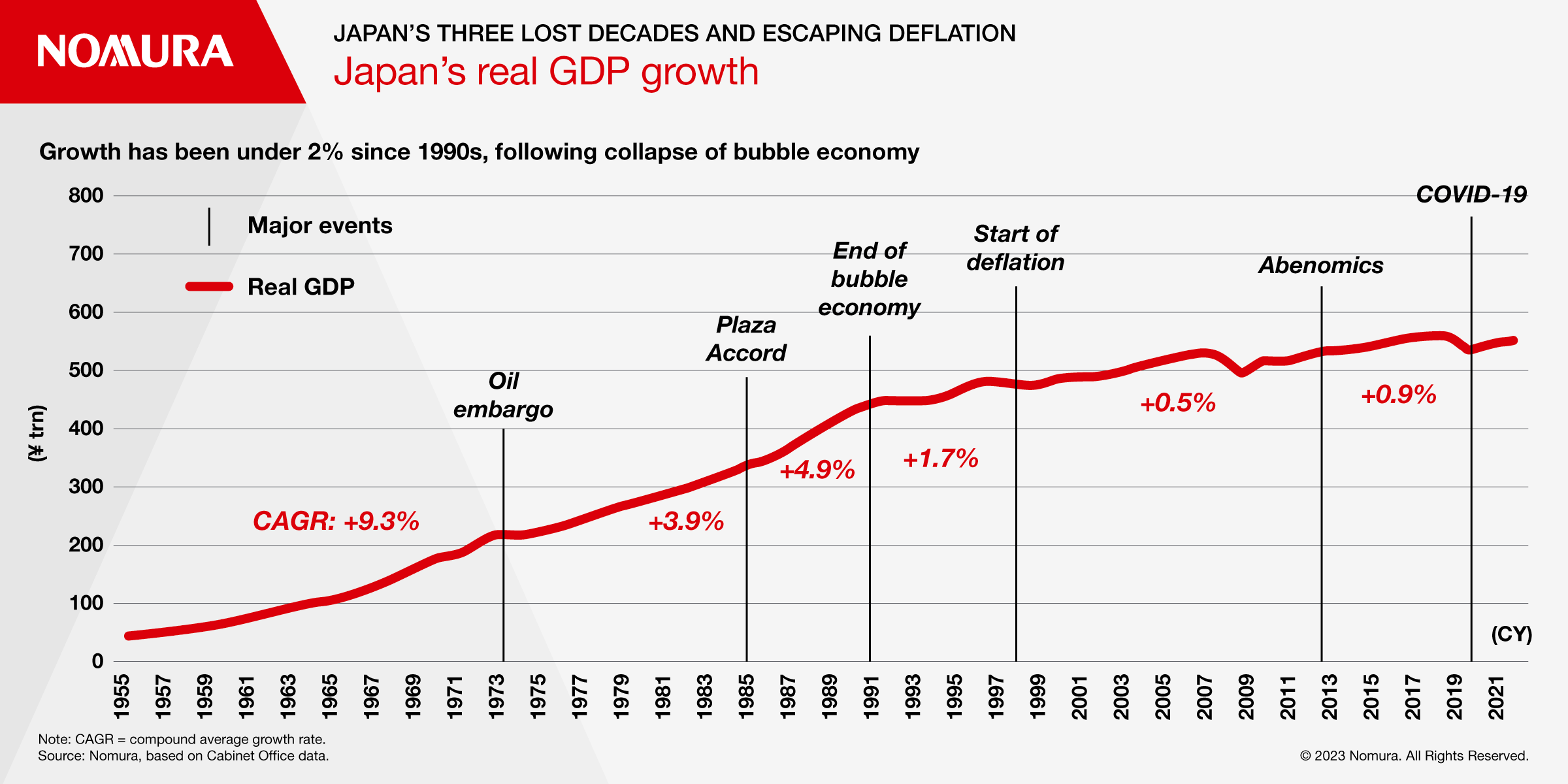
There is an undeniable economic subtext to this shift. Japan’s economy has been sluggish for years, overshadowed by the rise of China and the tech dominance of the United States. The defense sector represents one of the last untapped frontiers for Japanese industrial growth.
Consider the sheer scale of the global defense market. It is worth hundreds of billions of dollars annually. If Japan can capture even five percent of that market, it would provide a massive boost to its manufacturing sector. This isn't just about national security; it’s about a new industrial policy. The government is effectively subsidizing the future of Japanese aerospace and electronics through these export licenses.
The $GCAP$ project alone is expected to create tens of thousands of high-tech jobs. But this requires a level of transparency and international collaboration that Japanese firms have traditionally resisted. The days of "black box" technology, where Japan keeps its best secrets to itself, are ending. To sell to the world, they must share with the world.
The Strategic Necessity of the South China Sea
Look at a map of Japan’s trade routes. Almost everything Japan consumes—from oil to iron ore—passes through the South China Sea. If that waterway is closed or controlled by a hostile power, Japan ceases to function as a modern state.
Providing coastal defense weapons to ASEAN nations is a direct attempt to prevent this scenario. It is a cynical but necessary calculation. By arming nations like the Philippines with anti-ship missiles and advanced surveillance, Japan creates a "porcupine" effect. It makes it too costly for any single power to seize control of the entire region.
This is the "Brutal Truth" of Japan’s new policy: it is an admission that the era of American hegemony is over. Tokyo no longer believes that the U.S. "nuclear umbrella" is enough to guarantee its safety. It must build its own alliances, and in the world of geopolitics, the strongest alliances are forged in steel and gunpowder.
The Industrial-Military Complex 2.0
Japan is not just exporting weapons; it is exporting a philosophy of "active deterrence." This requires a complete overhaul of how Japanese companies operate. We are seeing the birth of a new kind of Japanese conglomerate—one that is as comfortable in a war zone as it is in a boardroom.
The technical hurdles are significant. For example, integrating Japanese software with NATO-standard hardware requires a level of interoperability that was previously unnecessary. Japanese engineers are now working side-by-side with their counterparts at BAE Systems and Leonardo. This cross-pollination will inevitably bleed over into civilian sectors, potentially sparking a new wave of innovation in AI, materials science, and power management.
However, the cost of entry is high. Japan must now navigate the murky waters of international arms regulations, such as ITAR in the United States. They must also deal with the ethical implications of their products being used in conflicts they have no control over. The first time a Japanese-made missile is used to strike a target, the domestic political fallout will be immense. The government is betting that by then, the economic and strategic benefits will outweigh the outcry.
The Point of No Return
The decision to export lethal weapons is the most significant change in Japanese foreign policy since the 1950s. It marks the end of Japan’s status as a "passive" power. By becoming a supplier to the world’s militaries, Tokyo is claiming a seat at the table of global hard power.
The transition is fraught with risk. It could provoke the very neighbors Japan seeks to deter. It could alienate a domestic population that still treasures its pacifist roots. It could lead to a situation where Japanese tech is used in ways that tarnish the national brand. But for the leadership in Tokyo, the risk of doing nothing was even higher. A Japan that cannot defend itself, and cannot help its allies defend themselves, is a Japan that eventually ceases to be a sovereign player on the world stage.
The machinery of the Japanese state is now fully geared toward this new reality. The factories are spooling up. The export licenses are being drafted. The pacifist seal has been broken, and there is no going back. Japan has entered the arms race, not as a combatant, but as the sophisticated foundry of the democratic world. The global balance of power has just shifted, and it was done with the stroke of a pen in a quiet room in Tokyo.