A single, rusted tanker sits low in the water. To the crew on board, the heat of the Persian Gulf is a physical weight, thick with salt and the smell of crude oil. They are floating on a blue expanse that looks infinite, but they are actually moving through a bottleneck so narrow that a few well-placed mines could paralyze the global economy before the sun sets.
This is the Strait of Hormuz. It is the world’s jugular vein.
For decades, the relationship between Washington and Tehran has been a series of clenched teeth and white knuckles. We talk about "geopolitics" and "sanctions" as if they are pieces on a chessboard, but for the fisherman in Bandar Abbas or the commuter filling their tank in Ohio, these are not abstractions. They are the difference between a stable life and a sudden, violent descent into scarcity.
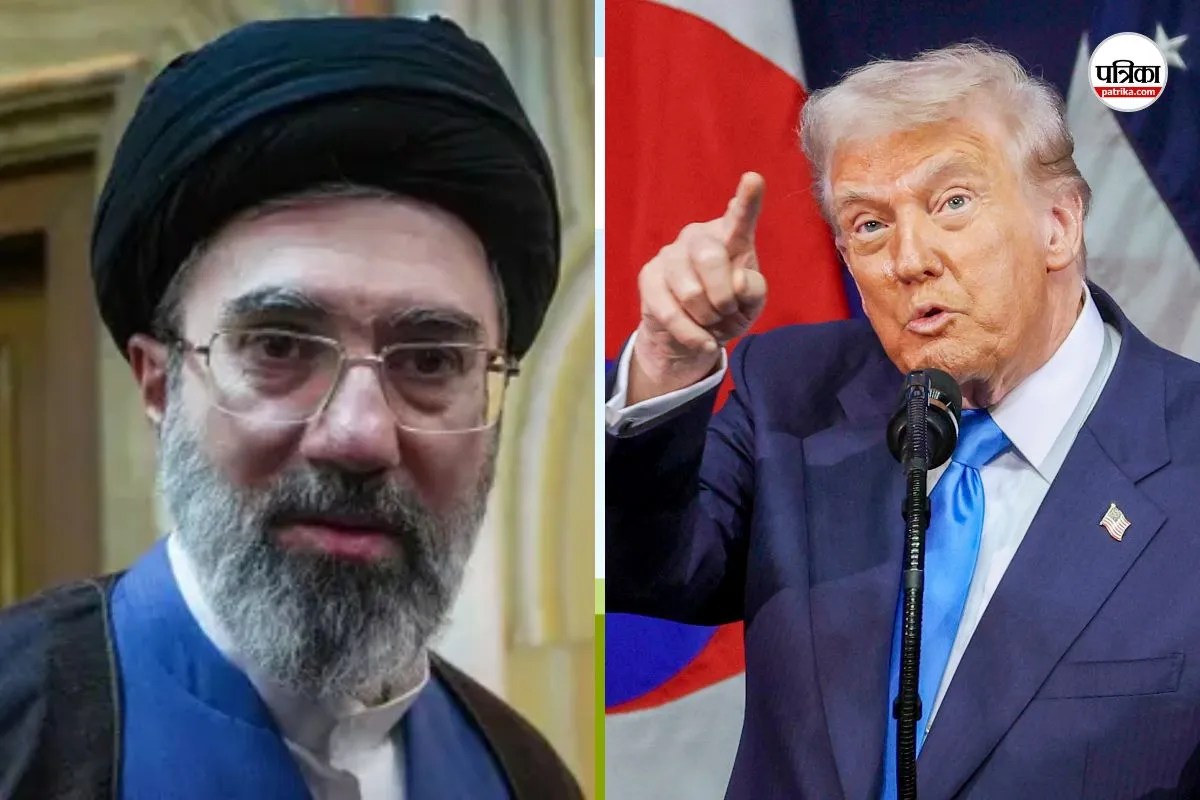
Recently, the United States extended what it called a "peace proposal." On paper, it looked like a diplomatic exit ramp. In reality, it was met with a cold, definitive "no" from Tehran. Iran didn’t just reject the handshake; they pointed toward that narrow strip of water and set a condition that changes everything.
The Mirage of the Olive Branch
Peace is rarely a simple gift. In the corridors of power, a peace proposal is often a tactical maneuver, a way to test the opponent’s resolve or buy time while the cameras are rolling. The latest American overture was designed to lower the temperature in a region that has been simmering at a boiling point for years.
But Iran sees the world through the lens of 1953, 1979, and 1988. They don’t see an olive branch; they see a leash.
When the Iranian leadership flatly rejected the proposal, they weren't just being difficult. They were signaling that the era of "maximum pressure" has reached a stalemate where neither side can move without drawing blood. The rejection was loud, but the condition they attached to any future talk was a thunderclap: the total withdrawal of foreign forces from the Persian Gulf.
Imagine a house where two neighbors are constantly screaming at each other over the fence. One neighbor offers to stop shouting if the other unlocks the front door. The other neighbor responds by saying they won't even talk until the first neighbor moves out of the entire neighborhood. That is the scale of the deadlock. Iran is demanding that the U.S. Navy—the force that has patrolled these waters since the end of World War II—simply vanish.
Twenty One Miles of Terror
To understand why this matters, you have to look at a map.
At its narrowest point, the Strait of Hormuz is only about 21 miles wide. That is roughly the distance of a marathon. Yet, through this tiny gap flows one-fifth of the world’s total oil consumption.
If the Strait closes, the world holds its breath.
It’s easy to think of this as a "foreign" problem. It isn't. If the flow of tankers stops, the ripple effect is instantaneous. Insurance premiums for shipping vessels skyrocket. The price of a barrel of oil jumps by thirty, forty, fifty dollars in a week. Suddenly, the cost of transporting grain across the Midwest doubles. The price of plastic, medicine, and heat follows suit.
Iran knows this. They have mastered the art of asymmetric psychology. They don't need a fleet of supercarriers to win a confrontation; they only need the threat of a blockage. By linking the peace proposal to the removal of U.S. forces, they are holding the world's energy supply hostage to a demand they know Washington cannot meet.
The Ghost in the Machine
Consider a hypothetical captain named Elias. He has spent thirty years at sea. He knows the currents of the Gulf better than the lines on his own palm. To Elias, the "US-Iran conflict" isn't a headline; it's the grey hull of a destroyer on the horizon and the erratic buzzing of a drone overhead.
When he hears that a peace proposal was rejected, he doesn't think about international law. He thinks about the "Tanker War" of the 1980s. He remembers stories of sailors watching the water for the telltale wake of a limpet mine.
The human cost of this diplomatic failure is a persistent, low-grade dread. It is the anxiety of thousands of sailors, the economic fragility of developing nations that can't afford a spike in fuel costs, and the quiet desperation of Iranian civilians living under the crushing weight of sanctions that were supposed to be lifted by a deal that now seems further away than ever.
The rejection of the proposal wasn't just a political "no." It was a door slamming shut on a generation of Iranians who were told that if they played by the rules, the world would let them back in. Now, they are caught between a government that uses the Strait as a shield and a superpower that uses the dollar as a sword.
The Architecture of a Deadlock
Why is the demand for a U.S. exit so significant?
For the United States, the Persian Gulf is more than a body of water; it is a statement of global presence. To leave would be to admit that the era of American hegemony in the Middle East is over. It would leave partners like Saudi Arabia and the UAE feeling exposed, likely sparking a frantic arms race that would make the current tension look like a rehearsal.
For Iran, the presence of the U.S. Fifth Fleet is an existential threat parked in their front yard. They argue that regional security should be handled by regional powers. It sounds logical on the surface, but in a region defined by a thousand-year-old schism and modern rivalries, "regional security" is often code for "our dominance."
The two sides are speaking different languages. Washington speaks the language of "stability" and "freedom of navigation." Tehran speaks the language of "sovereignty" and "resistance."
There is no middle ground when one side’s security is the other side’s cage.
The Invisible Stakes
We often wait for a "big event"—an explosion, a sinking, a declaration. But the real tragedy is the slow erosion of the possible.
Every time a proposal is rejected, the "moderate" voices on both sides lose a bit more skin. The hardliners in Tehran point to the rejection as proof that the West can never be trusted. The hawks in Washington point to the "unreasonable" conditions as proof that diplomacy is a waste of breath.
The space for a creative solution is shrinking. It is being replaced by a grim, mechanical preparation for the inevitable.
We are currently living in the "grey zone." It is a state of neither war nor peace, where the tension is so high that a single mistake—a nervous radar operator, a mechanical failure on a drone, a misunderstood radio transmission—could ignite the very conflagration everyone claims they want to avoid.
The Strait of Hormuz is not just a shipping lane. It is a barometer of human sanity. Right now, the needle is twitching toward the red.
The Condition that Cannot be Met
By demanding the exit of foreign forces as a prerequisite for peace, Iran has created a "poison pill." They have set a price that they know the buyer cannot pay, which allows them to walk away from the table while claiming they were the ones who set the terms.
It is a masterful, if terrifying, bit of theater.
But theater has consequences. While the diplomats return to their air-conditioned offices and the generals update their target lists, the rest of the world remains tethered to that 21-mile stretch of water. We are all passengers on Elias’s tanker, whether we realize it or not.
The rejection of the peace proposal is a signal that we have moved past the era of easy fixes. The "threat" to the Strait isn't a future possibility; it is the current reality. It is a shadow that falls over every gas pump and every grocery store aisle in the world.
The water in the Strait remains blue, calm, and deceptively beautiful. But beneath the surface, the machinery of conflict is grinding. The world’s jugular is exposed, and the hand holding the blade has just tightened its grip.
The silence following the rejected proposal isn't the silence of peace. It’s the silence of a deep breath taken before a plunge.