The cabin of a budget airliner at seven in the morning is a study in collective exhaustion. It is a quiet sanctuary of tilted heads, low-brimmed caps, and the soft, rhythmic breathing of strangers trying to cheat the dawn. You close your eyes just as the wheels tuck into the fuselage. The city of Thessaloniki shrinks into a memory below. The air conditioning hums its familiar, cold lullaby. You are suspended in a pressurized tube, completely insulated from the hostile, sub-zero vacuum just inches past your shoulder.
Then, the world tears open.
It starts with a sound that does not belong in the sky. Not a mechanical whine or a routine thud, but an explosive, violent crack. Like a heavy truck tire bursting at maximum speed, but magnified a hundred times over by the terrifying acoustic chamber of an aluminum hull.
Instantly, the cold hum of the cabin vanishes. It is replaced by a roaring, deafening gale.
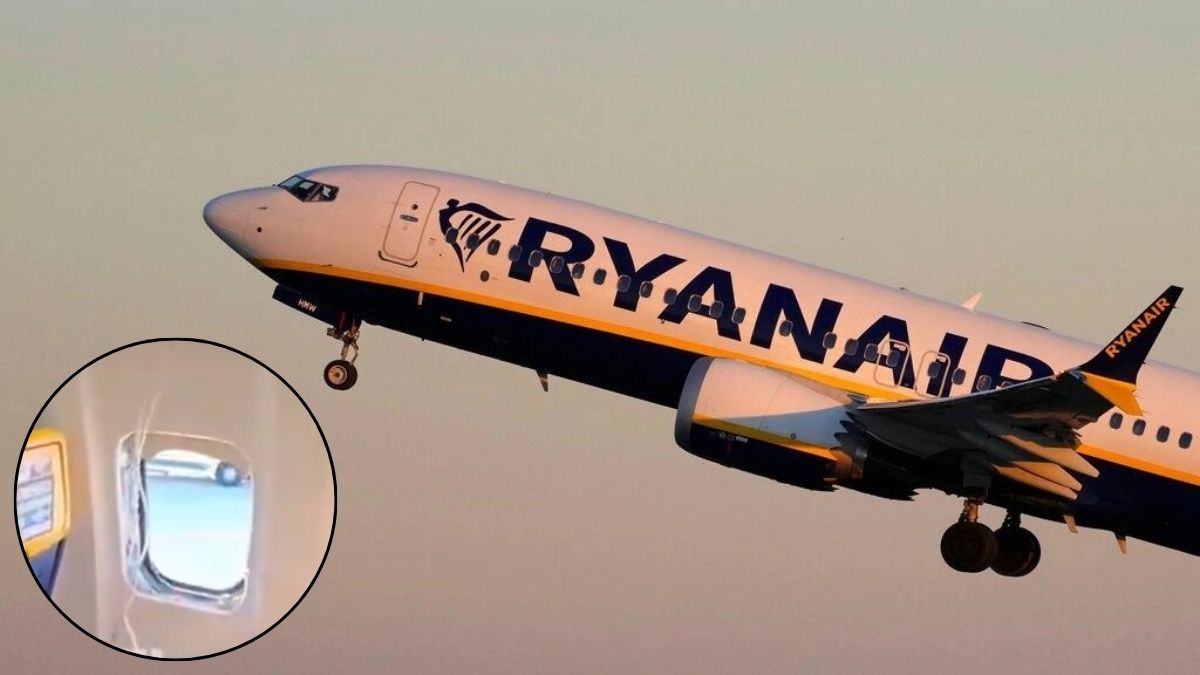
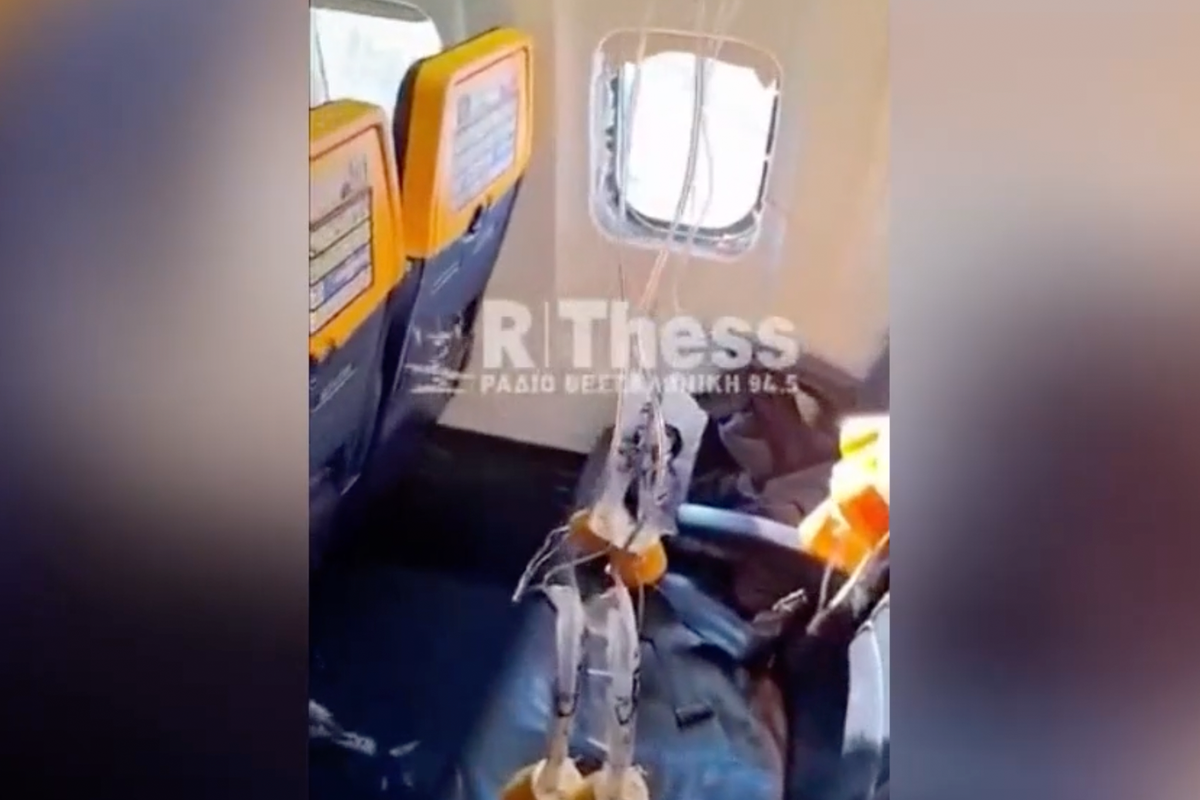
For the passengers aboard Malta Air flight FR1879, a Ryanair subsidiary heading toward Memmingen, Germany, Friday morning began exactly like this. In the space of a single heartbeat, the invisible boundary between a routine commute and a nightmare evaporated. The plastic window at row fifteen did not just crack; it vanished entirely.
Consider what happens next when an aircraft window dislodges at 15,000 feet. The air we breathe at sea level is heavy, thick, and tightly packed. At high altitudes, the atmosphere is thin and desperately starved for density. When a hole appears in the side of a pressurized airplane, the cabin air does not merely leak out. It violently, aggressively escapes, trying to equalize the universe's ledger in a fraction of a second. It creates a localized hurricane, a terrifying vacuum that sweeps toward the opening with predatory force.
Sitting in that exact path was a 61-year-old Serbian tourist. He was wearing his seatbelt. That thin strip of nylon webbing is likely the only reason he is alive to tell his story.
When the acrylic pane shattered—reportedly struck by a rogue piece of debris that had detached from the plane's own engine—the rushing torrent of air grabbed him. The physics of decompression are cold and uncaring. Within a millisecond, the man was lifted cleanly out of his seat. His body was pulled toward the sky. His head, his neck, and his shoulders were yanked clean through the broken frame, thrust violently out into the howling, freezing slipstream of a Boeing 737 cutting through the air at hundreds of miles per hour.
Imagine the sensory assault of that moment. The air outside an airliner at that altitude is bitter, far below freezing, and moving with the force of a category-five hurricane. The wind does not just blow against skin; it tears at it.
Inside the cabin, chaos reigned. Oxygen masks dropped from the ceiling like yellow plastic pendulums against a backdrop of fog and panic. The sudden drop in pressure caused a thick condensation mist to form instantly, blurring the horror unfolding in the middle row. A heavy, metallic smell filled the air. People screamed. Some thought an emergency door had been thrown open. Others simply held onto their armrests, braced for an impact they felt was inevitable.
But the real story of flight FR1879 lies in the immediate, unthinking reflex of the people sitting right next to the vortex.
In moments of extreme terror, human beings generally freeze, flee, or fight. But there is a fourth reaction that rarely gets written into safety manuals: collective survival. The man's wife grabbed his legs. Other passengers, shaken awake from their morning sleep by an explosion and the screams of a man being pulled into the clouds, did not cower. They lunged across the aisle. They fought against the screaming vacuum of the atmosphere. They grabbed onto whatever fabric and flesh they could reach, planting their feet against the floorboards, and physically dragged their fellow traveler back through the broken window into the safety of the cabin.
They held him down as the pilots threw the aircraft into a steep, emergency descent, dropping from 16,000 feet down to a safer, breathable altitude of 6,000 feet in mere minutes.
When the plane finally touched back down on the tarmac in Thessaloniki, just over an hour after it had departed, it did so normally. The passengers returned to the terminal. A replacement aircraft was prepped, and most of the travelers continued their journey to Germany later that morning. The news reports that followed were brief, dry, and clinical, noting that a flight had "returned shortly after takeoff when a passenger window dislodged."
But the 61-year-old man was taken to a local Greek hospital. He survived, but the sky left its mark on him. He was treated for severe shock, neck and shoulder injuries from the violent tug-of-war between the cabin and the vacuum, and deep friction burns—the physical scars left by a freezing, high-altitude wind that tried its hardest to claim him.
We fly because we trust the engineering. We trust that the thin sheets of metal and plastic will hold back the void. Most of the time, they do. But every so often, the universe reminds us of the sheer fragility of our transit. It reminds us that we are fragile creatures riding inside a miracle, held in place by nothing more than a few bolts, a layer of acrylic, and the quick reflexes of the strangers sitting next to us.