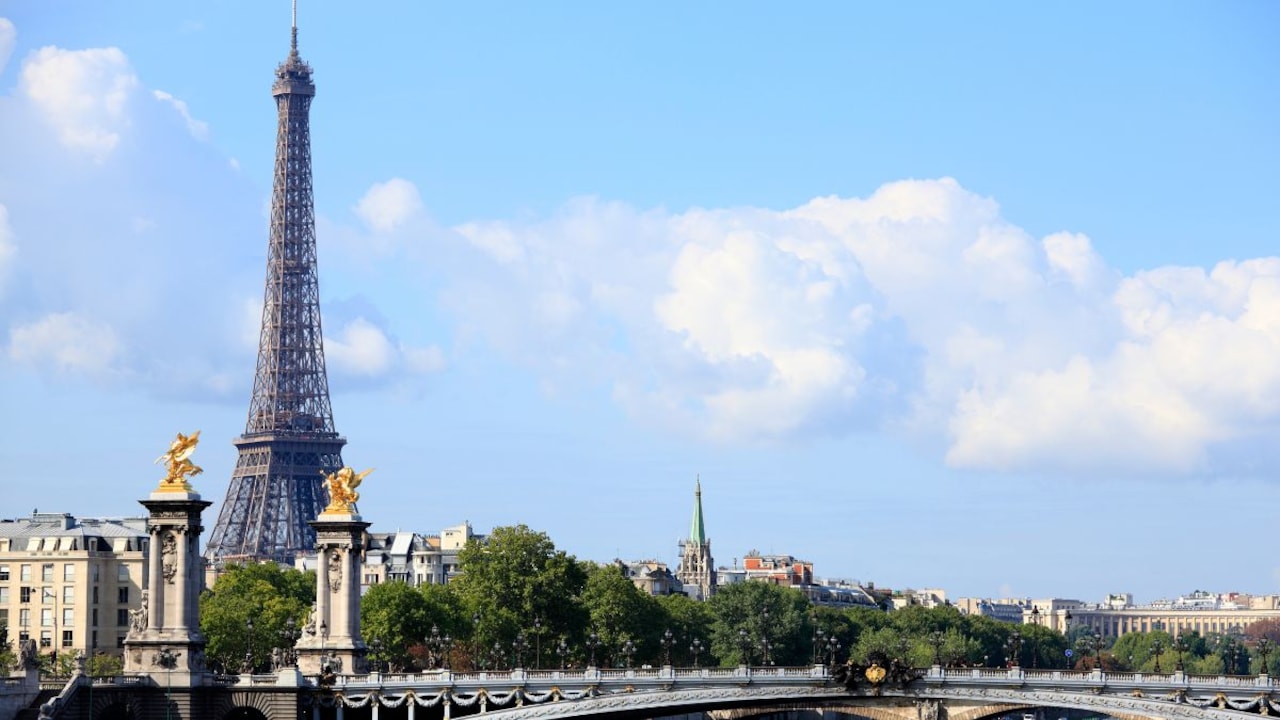
Climate volatility forces a fundamental reassessment of how historic monuments manage operational continuity. When severe heatwaves trigger early closures at high-capacity landmarks like the Eiffel Tower, the standard public narrative attributes the decision to generalized visitor discomfort. The operational reality is governed by a strict intersection of material thermodynamics, crowd logistics, and labor safety regulations. Managing a 10,100-ton puddled iron structure during an extreme thermal event requires balancing structural expansion against human safety thresholds.
The Dual-Constraint Framework of Thermal Vulnerability
The decision to curtail operational hours during a heatwave relies on two distinct but compounding variables: structural thermodynamics and human heat-stress limits.
1. Structural Thermodynamics of Puddled Iron
The Eiffel Tower is constructed from puddled iron, a material highly sensitive to ambient temperature fluctuations. Thermal expansion operates on a predictable linear coefficient. As temperatures rise, the kinetic energy of the iron atoms increases, forcing the structural elements to expand.
- Linear Expansion: A 300-meter iron structure undergoes measurable dimensional shifts when ambient temperatures transition from seasonal norms to extreme heatwaves exceeding 40°C. This expansion is rarely uniform; solar orientation causes differential heating, where the side facing the sun expands faster than the shaded sections.
- Mechanical Tolerances: The tower relies on intricate interlocking components, rivets, and elevator guiding systems. Differential expansion distorts the vertical alignment of the elevator shafts. If the guide rails warp beyond pre-calculated tolerances, the hydraulic and mechanical lift systems face elevated friction, triggering automatic safety overrides or accelerating component wear.
2. Microclimate Heat-Island Effects in Vertical Ascents
The human cost function during a heatwave escalates non-linearly with altitude. The Eiffel Tower creates a unique microclimate that exacerbates thermal stress through several distinct mechanisms.
- Radiant Heat Transfer: The massive iron framework acts as a giant radiator. After hours of direct solar exposure, the iron absorbs shortwave radiation and re-emits it as longwave infrared radiation. Visitors queuing on the platforms are subjected to both direct solar heat and radiant heat from the structure itself, rendering ambient temperature readings deceptive.
- Stagnant Air Pockets: Enclosed observation decks, glass-paneled elevators, and tightly packed queuing areas restrict natural convective cooling. Without adequate airflow, the rate of evaporative cooling from human sweat drops precipitously.
- The Wet-Bulb Threshold: Operational safety risks peak when high ambient temperatures couple with elevated humidity, driving up the wet-bulb temperature. Once the wet-bulb temperature surpasses 31°C, the human body struggles to shed heat via perspiration, leading rapidly to heat exhaustion and exertional heatstroke.
Operational Bottlenecks and Evacuation Metrics
Early closure is not a preventative luxury; it is a mathematical necessity driven by evacuation throughput limitations.
The primary operational risk is an emergency medical evacuation during peak thermal load. If multiple visitors experience heat-related syncope simultaneously, the vertical transportation architecture becomes an immediate bottleneck.
The double-decker elevators possess fixed volumetric and weight capacities. The stairs present a high physical exertion risk, which actively compounds heat stress if used for mass egress. When the influx of visitors outpaces the cooling capacity of the infrastructure, the management team must restrict entry or close entirely to clear the monument before peak daily temperatures destabilize the environment.
Labor Welfare and Regulatory Compliance
French labor laws (Code du Travail) dictate strict employers' obligations regarding environmental working conditions. While the law does not specify a precise maximum temperature for stop-work orders, it mandates that employers implement measures to protect workers from heat-related illnesses.
- Post Isolation: Staff members stationed on open-air platforms or within non-climate-controlled ticketing booths face prolonged, static exposure to radiant heat.
- Operational Rotations: To maintain safety compliance, management must accelerate staff rotation schedules, increase rest periods, and provision hydration stations. This increased labor demand creates an operational deficit; if the available workforce is depleted due to heat exhaustion or rotation limits, the monument can no longer maintain the legally required staff-to-visitor ratio for safe operation.
Strategic Mitigations for Asset Management under Climate Stress
Relying on reactive early closures represents a failure of long-term operational resilience. Mitigating these systemic disruptions requires shifting from crisis management to predictive engineering.
Structural Modification and Passive Cooling
The structural vulnerability to thermal expansion cannot be altered without changing the monument's core material. However, radiant heat transfer to visitors can be managed. Retrofitting high-density waiting areas with high-albedo coatings or integrated retro-reflective sunshades can disrupt the iron’s thermal absorption cycle.
Dynamic Capacity Modeling
Asset operators must transition from static capacity limits to dynamic, algorithmic ticketing systems. These algorithms should ingest real-time meteorological data, including solar irradiance, wind velocity, and relative humidity. When predictive models indicate that the wet-bulb temperature on the upper decks will cross the critical threshold, ticket sales must automatically scale back hours in advance, avoiding the logistical chaos of abrupt physical closures.
Decentralized Air-Handling Upgrades
Enclosed architectural elements require immediate upgrades to industrial-grade HVAC and localized misting systems that utilize low-water, high-pressure nozzles. These systems must be strategically deployed along predictable bottlenecks—specifically elevator staging zones—to depress the local microclimate temperature by a critical 3°C to 5°C, preserving operational viability during tier-one heat events.