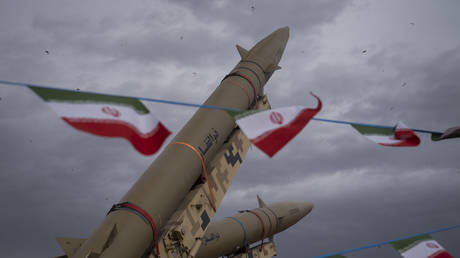
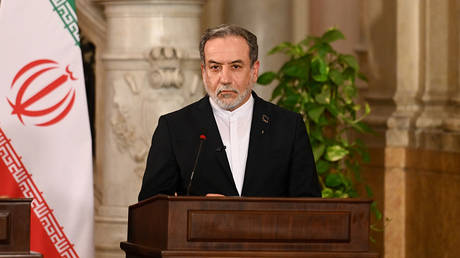
Tehran will not enter any direct or indirect negotiations with the United States unless Washington first takes verifiable, practical action on seven specific preconditions. That blunt directive, relayed by a senior Iranian official to state broadcaster Press TV, signals a calculated freeze in bilateral diplomacy that carries immediate consequences for global energy markets, currency traders, and regional security architecture. Rather than engaging in exploratory talks or confidence-building gestures, the Islamic Republic is demanding upfront concessions before a single diplomat sits at a negotiating table.
Markets hate ambiguity, yet they hate hard ultimatums even more. When traders on platforms like Forex Factory flag a Press TV dispatch, they are not looking for ideological posturing. They are pricing in the risk of prolonged sanctions, constrained crude supply, and elevated geopolitical friction across the Strait of Hormuz.
Understanding this standoff requires looking past the surface-level rhetoric of state media. Over the past two decades, diplomatic cycles between Washington and Tehran have followed a familiar script. Backchannel messages pass through European or Gulf intermediaries, calibrated leaks test domestic political waters, and incremental gestures pave the way for formal talks. The latest declaration breaks that pattern entirely. By insisting on tangible execution across seven distinct benchmarks prior to dialogue, Iranian leadership is shifting the burden of initiation onto the White House while insulating itself from domestic hardline criticism.
The Mechanics of Precondition Diplomacy
Preconditions are rarely designed to be accepted at face value. In international statecraft, issuing a rigid checklist before talks even begin serves two primary functions. First, it establishes a high opening anchor that forces the opposing party to spend political capital just to reach the starting line. Second, it creates a built-in exit ramp that allows the issuing government to blame its adversary for diplomatic paralysis without appearing weak at home.
Tehran has learned hard lessons from past negotiations, most notably the 2015 Joint Comprehensive Plan of Action. From the perspective of Iranian policymakers, trading verifiable nuclear constraints for reversible executive promises proved to be a strategic miscalculation once Washington unilaterally withdrew from the accord in 2018 and reimposed sweeping economic restrictions. That historical scar dictates every diplomatic maneuver coming out of Tehran today. Paper guarantees no longer hold currency in the Iranian capital.
When a senior official demands practical action rather than verbal assurances, the message is unmistakable. Tehran wants irreversible economic or security adjustments—such as the unfreezing of sovereign assets held in foreign institutions, the removal of specific banking restrictions, or concrete security guarantees—before committing to a negotiating framework. Without upfront delivery, Iranian officials argue, entering talks merely grants Washington time to manage the crisis optically while maintaining maximum economic pressure on the ground.
What the Seven Demands Actually Signal to Global Markets
Currency and commodity desks react to geopolitical headlines within milliseconds, though the true economic impact unfolds over months. The refusal to negotiate absent action on seven conditions removes a key deflationary valve from global oil markets. Whenever diplomatic momentum builds between the US and Iran, crude prices typically soften on the expectation that additional Iranian barrels will legally re-enter global supply chains. Conversely, a hardened diplomatic posture reinforces a geopolitical risk premium.
Consider the structural realities facing energy traders. Iranian crude exports have demonstrated remarkable resilience despite stringent US sanctions, largely flowing through opaque shipping networks to buyers in Asia. However, the absence of a diplomatic track increases the likelihood of stricter maritime enforcement, secondary sanctions on shipping insurers, and heightened naval friction in the Persian Gulf.
For foreign exchange markets, prolonged US-Iran hostility reinforces safe-haven flows into the US dollar and the Swiss franc during periods of acute regional tension. Meanwhile, inside Iran, the rial remains acutely sensitive to diplomatic news. Whenever state media broadcasts a hardline rejection of talks, domestic demand for hard currency spikes as citizens hedge against sustained isolation and persistent inflation. The seven conditions are therefore not merely foreign policy talking points; they are direct drivers of capital flight and monetary pressure within Iran's domestic economy.
Domestic Politics and the Fear of Diplomatic Traps
To understand why Tehran is setting such an uncompromising bar, one must examine the internal power dynamics within the Islamic Republic. Foreign policy in Iran is never divorced from factional survival. Any government in Tehran that appears eager to negotiate with Washington risks immediate backlash from powerful conservative institutions, parliamentary blocs, and security organs that view American overtures as existential traps.
By framing the impasse around seven non-negotiable preconditions, the administration can project absolute strength to its domestic base. It demonstrates that the state is dictating the terms of engagement rather than capitulating under economic duress.
There is also a tactical calculation regarding the American political calendar. Iranian strategists closely monitor US election cycles, congressional gridlock, and shifting White House priorities. From Tehran's vantage point, entering protracted negotiations with an American administration that lacks the political bandwidth or legislative backing to deliver durable sanctions relief is a losing proposition. Demanding upfront action filters out performative diplomacy. If Washington cannot or will not fulfill the preconditions, Tehran avoids wasting months in fruitless talks that yield zero economic dividends while allowing the US to claim diplomatic engagement.
Why Washington Cannot Easily Meet Tehran Halfway
Even if the White House wanted to jumpstart negotiations, fulfilling seven sweeping preconditions prior to formal talks presents a severe political and legal obstacle course in Washington. US sanctions architecture is no longer controlled solely by the executive branch. Over the years, Congress has layered statutory restrictions onto Iran's energy, financial, and defense sectors, making unilateral presidential waivers politically costly and legally complex.
A hypothetical scenario illustrates this bind clearly. Suppose the US administration agreed to unfreeze several billion dollars in restricted Iranian funds or issue broad banking exemptions simply to secure a first meeting. Critics on Capitol Hill would immediately frame the move as paying a ransom just to get Tehran into the room. Bipartisan backlash would likely trigger new legislative sanctions, effectively nullifying the executive gesture and poisoning the diplomatic well before substantive discussions could even start.
Furthermore, American negotiators operate under the doctrine of mutual, phased reciprocity. Washington's standard playbook demands that concessions be traded step-by-step at the negotiating table, ensuring that every economic benefit granted to Tehran is matched by a verifiable security or nuclear restraint. Accepting seven upfront conditions flips that model upside down, leaving US diplomats with diminished leverage once talks actually convene.
The Overlooked Role of Regional Intermediaries and Alternative Alignments
While headlines focus on the bilateral standoff between Washington and Tehran, the broader geopolitical context explains why Iran feels confident enough to issue ultimatums. Tehran no longer views Western normalization as its sole path to economic survival. Over the past several years, Iranian leadership has aggressively cultivated deeper trade, security, and diplomatic ties with non-Western powers, particularly Russia and China, alongside its formal entry into blocs like BRICS and the Shanghai Cooperation Organization.
These alignments do not replace the economic value of full access to Western financial markets, nor do they cure Iran's structural inflation or infrastructure deficits. Anyone claiming that Eastern partnerships fully insulate the Iranian economy is ignoring basic trade math. However, these ties do provide enough diplomatic cover and commercial breathing room for Tehran to resist immediate capitulation.
At the same time, traditional regional mediators—such as Oman, Qatar, and Iraq—find their maneuvering room compressed. These Gulf states have spent years quietly ferrying messages between Washington and Tehran, striving to prevent miscalculations from spiraling into open regional conflict. When Iran publicly binds itself to seven rigid preconditions through state media, it limits the ability of backchannel intermediaries to craft face-saving compromises. Quiet diplomacy thrives on constructive ambiguity; public ultimatums destroy it.
How Traders and Analysts Should Read State Media Signals
Veteran observers of Middle Eastern geopolitics know that Press TV is not merely a news outlet; it is an instrument of strategic communication. When an unnamed senior official uses that platform to lay down seven conditions, the audience is multidimensional. The message is aimed simultaneously at the White House, European capitals, regional neighbors, and domestic factions inside Iran.
Yet seasoned analysts also recognize the difference between maximalist opening postures and permanent policy locks. In Middle Eastern diplomacy, hardline public statements frequently serve as a prelude to intense, behind-the-scenes bargaining over what constitutes "practical action." What looks like an immovable wall in a headline can sometimes be broken down into technical micro-steps by skilled intermediaries—provided both sides actually want an off-ramp.
The critical indicator to watch over the coming weeks is not the rhetoric coming out of Tehran or Washington, but the movement of money and enforcement actions on the ground. Watch for subtle shifts in US Treasury sanctions enforcement, quiet releases of humanitarian or restricted funds through third-party banks, or unannounced visits by Omani and Qatari diplomats to either capital. If those silent indicators remain frozen, then the seven conditions have effectively slammed the door on diplomacy for the foreseeable future, leaving markets to price in an extended era of confrontation and volatility.