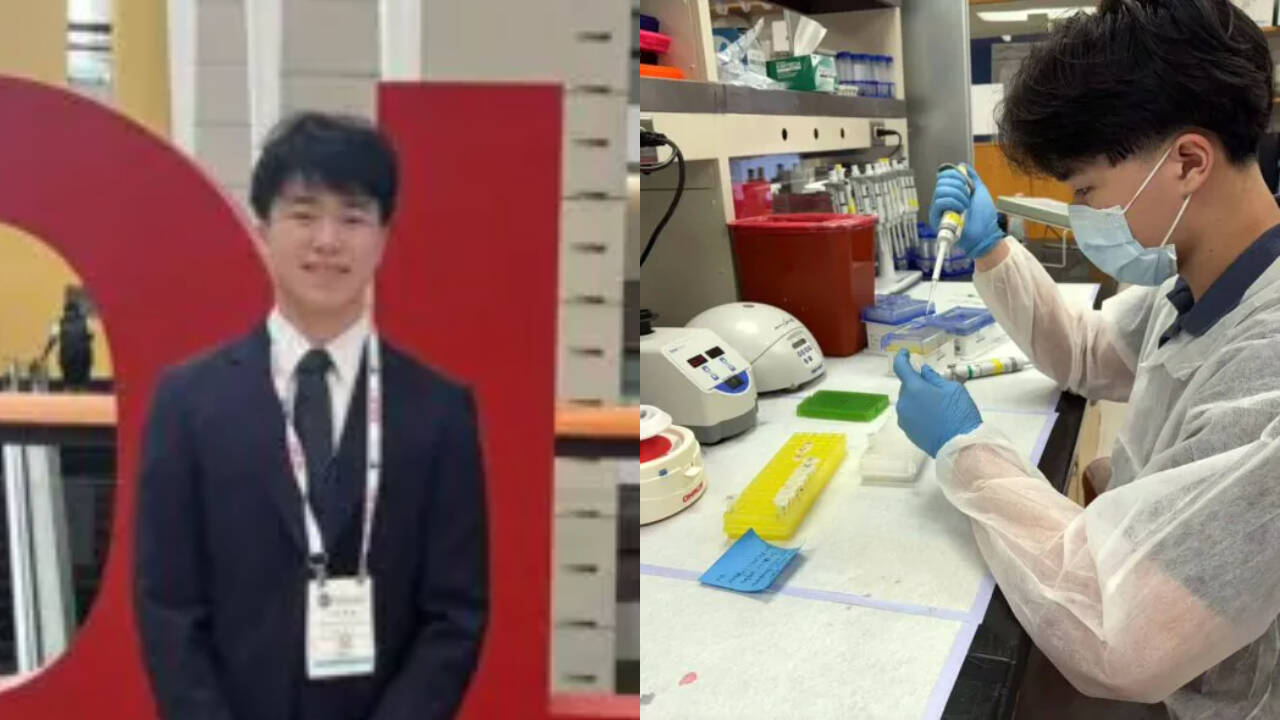
Every few months, tech journalism commits the same predictable sin. A teenager wins a prestigious science fair or a youth fellowship for building a futuristic, high-concept diagnostic tool—like a CRISPR-based microfluidic assay targeting circulating cell-free DNA for drug-resistant tuberculosis. The headlines foam with breathless adoration. They celebrate the youthful prodigy bypassing traditional boundaries, framing the innovation as an imminent solution to humanity’s oldest microbial scourge.
It makes for inspiring theater. It also completely misunderstands why people actually die of tuberculosis.
The lazy consensus in these viral profiles is that global health crises persist because we lack clever molecular engineering. If only we had a sharper assay, a sleeker microparticle workflow, or a novel CRISPR-Cas12a multiplex panel to detect rpoB or rplC mutations at lower concentrations, the disease would retreat.
This is a comforting delusion for Silicon Valley and science fair judges alike. It reduces a catastrophic failure of political economy, infrastructure, and supply chains into a neat, solvable engineering puzzle that can be neatly packaged into a weekend press release.
I have watched venture syndicates and global health initiatives burn millions of dollars chasing silver-bullet diagnostics while basic clinical infrastructure rots. The hard, unvarnished truth is that inventing a brilliant blood serum assay in a well-funded New York laboratory does not solve the reality on the ground in the regions hardest hit by Mycobacterium tuberculosis.
Let us define the actual bottleneck. Tuberculosis is not winning because doctors cannot spot a genetic mutation in cell-free DNA. Tuberculosis is winning because patients live in health deserts without reliable electricity, stable cold chains, trained phlebotomists, or functional primary care networks.
Proponents of futuristic blood-based assays argue that bypassing sputum collection—which children and immunocompromised patients struggle to produce—removes the primary diagnostic barrier. Mechanically, they are correct. Drawing blood is universally cleaner than inducing sputum. But let us look at the operational physics of deploying a microfluidic chip requiring precise fluorescent droplet reading into a rural clinic in sub-Saharan Africa or peri-urban South Asia.
Imagine a scenario where a high-tech CRISPR diagnostic kit arrives at a remote health outpost. The kit relies on microparticle fluorescence, stable reagent storage, and automated digital image analysis. Within forty-eight hours, a routine power surge fries the incubator, or the specialized enzymes degrade because the local refrigeration failed during a three-day blackout. The assay sits on a shelf, useless, while a patient with a drug-resistant strain walks home untreated.
The obsession with high-end molecular wizardry distracts from the unglamorous work of strengthening basic health systems. We do not need more sophisticated detection platforms that require microfluidics and specialized optics; we need robust, low-cost implementation of tools that already exist but fail to reach the end-user due to bureaucratic inertia and logistical failure.
To understand why this happens, look at how science prizes and innovation grants operate. They reward novelty, complexity, and intellectual pedigree. They favor platforms that sound sophisticated in an abstract—multiplex assays, CRISPR-Cas effector proteins, microfluidic droplet generation. They do not reward the engineer who figures out how to make a cheap, sputum-agnostic dipstick stable at forty degrees Celsius without a cold chain.
When we hyper-focus on prodigies building the next generation of molecular diagnostics, we commit an ethical sleight of hand. We imply that the burden of eradicating a disease of poverty rests on inventing a better lab-on-a-chip, rather than distributing food security, adequate housing, and basic antibiotics to the populations who need them most.
Tuberculosis thrives on human misery, overcrowding, and malnutrition. No amount of CRISPR optimization will fix a broken healthcare reimbursement model or eliminate the social stigma that keeps infected individuals from seeking care until their lungs are compromised.
Stop pretending that molecular biology can code away structural inequality. The next time a headline hypes a teenager's miraculous blood test, ask how many clinics can actually afford it, power it, and trust it when the power goes out.
Until we fix the distribution, we are just inventing expensive answers to the wrong questions.