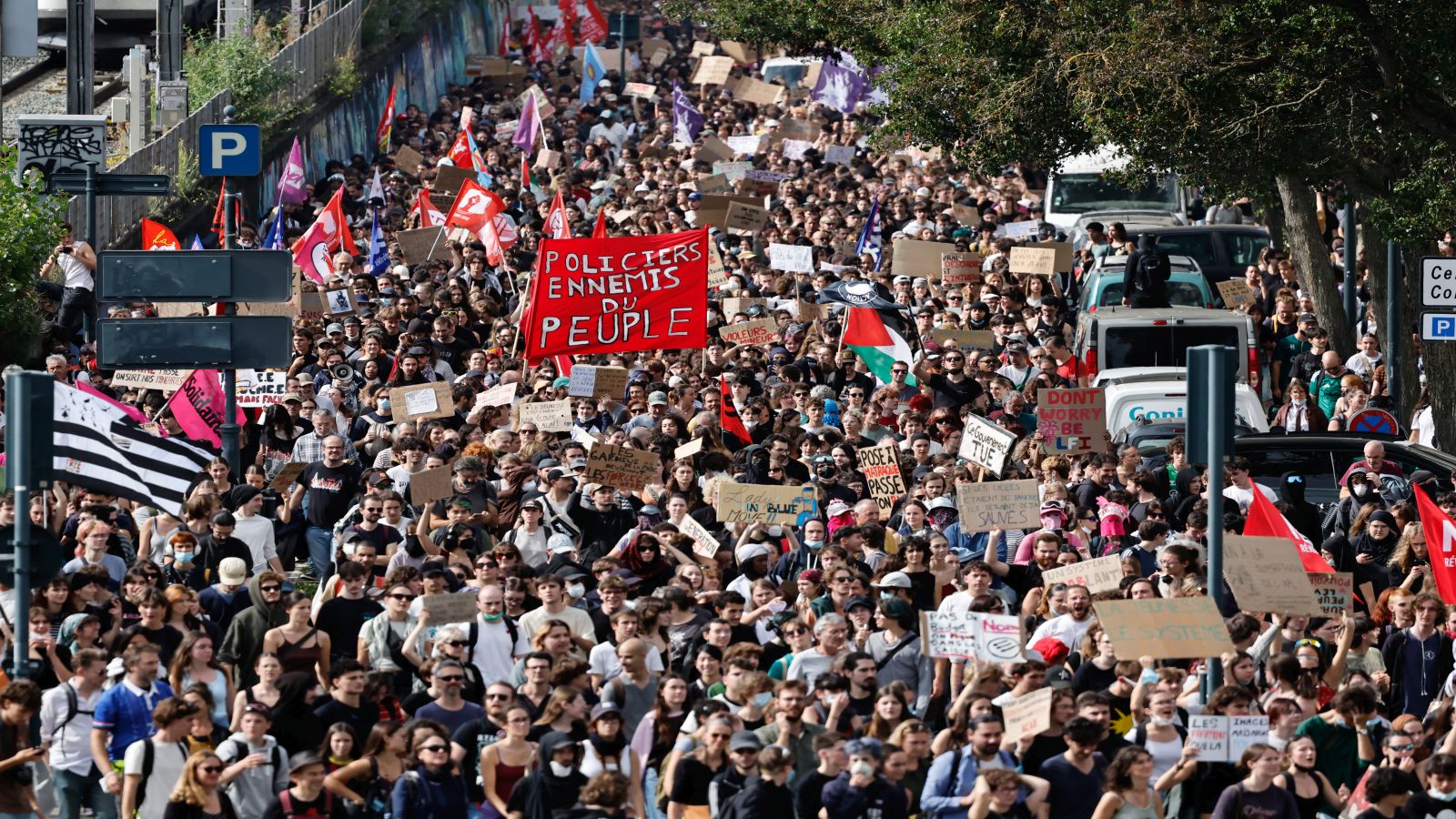
Thousands of teenagers in France are walking out of classrooms, abandoning desks for barricades. They are marching through the streets of Paris, Marseille, and Lyon, demanding urgent reforms to an educational infrastructure that many describe as crumbling.
The immediate trigger behind these widespread student protests involves deteriorating school conditions, ranging from broken heating systems during freezing winter months to overcrowded classrooms and severe staff shortages. Teachers and students alike report facilities that fail basic safety standards, leaking roofs, and a lack of essential learning materials. Yet, viewing these demonstrations merely as a localized reaction to cold classrooms misses the broader institutional decay eating away at the French public education system.
For years, budgets have tightened while administrative demands have multiplied. Teachers face burnout, students face diminished prospects, and the physical spaces meant to foster learning have turned into neglected warehouses. When young people take to the asphalt, blocking entrances with overturned dustbins and burning tires, they are signaling a deep loss of faith in a centralized bureaucracy that has repeatedly promised repairs and delivered bureaucratic inertia.
The Breaking Point Behind the Barricades
Public education in France carries immense symbolic weight. The Republican model promises equal opportunity regardless of background, a pillar designed to bridge social divides through rigorous academic instruction.
Walk through any working-class suburb outside major French cities, known locally as the banlieues, and that promise looks frayed. At several high schools targeted by the recent walkouts, infrastructure failures go far beyond a simple broken radiator. Students share photographs of mold-infested walls, unusable restrooms, and laboratories lacking functional equipment.
The government responds with standard talking points about infrastructure modernization funds. Those funds rarely materialize where the need is most acute. Bureaucratic bottlenecks ensure that money earmarked for emergency repairs gets tied up in regional administration for months or years. By the time a contractor is approved, the winter has passed, the students have moved up a grade, and another roof starts leaking.
This administrative paralysis breeds raw frustration. Teenagers who are told to respect the rules of the Republic notice that the Republic appears indifferent to their basic comfort and safety while they try to study.
Beyond the Slogans
Media coverage of these demonstrations typically focuses on the sensational elements. Burning bins, riot police in full tactical gear, and tear gas clouds dominate evening news broadcasts. Commentators debate whether the teenagers have legitimate grievances or are simply looking for an excuse to skip math class.
That framing ignores the meticulous organization driving these movements. Student unions coordinate across institutional lines, using encrypted messaging apps to share tactics, legal rights, and safety protocols during clashes with law enforcement. They draft manifestos detailing specific demands, such as fixed ratios of students per teacher, mandatory climate-proofing for older buildings, and guaranteed funding for vocational tracks.
Vocational high schools, or lycées professionnels, sit at the very center of this storm. While general academic tracks receive the bulk of political attention, vocational programs absorb a significant portion of working-class youth. These schools suffer disproportionately from underfunding. Apprenticeship placements are scarce, machinery is outdated, and preparation for the modern labor market remains disconnected from economic reality. When students from vocational tracks march shoulder-to-shoulder with their academic peers, they bring a distinct urgency rooted in economic survival. They know that a substandard diploma from a neglected school locks them out of stable employment before their adult lives even begin.
The State Response and Political Fallout
Paris reacts to student unrest with a familiar playbook. First comes containment, deploying mobile police units to manage crowds and protect public property. Then comes dialogue, with regional education authorities inviting student representatives to roundtable discussions that yield vague commitments to study the problem.
This cycle repeats every few years. Governments change, ministers come and go, but the structural funding deficit persists. Officials point to national debt levels and the necessity of fiscal restraint. They argue that public services must become more efficient, a euphemism for doing more with less.
The students and teachers on the front lines reject that trade-off. They argue that starving the educational system guarantees higher social costs down the line, manifesting as rising youth unemployment, deepening inequality, and social alienation.
Opposition politicians quickly capitalize on the unrest, visiting picket lines to decry government neglect. Yet, past administrations from various political alignments share the blame. For decades, successive governments treated education budgets as a flexible pool to trim whenever fiscal targets slipped. The chickens have come home to roost in freezing classrooms and smoke-filled streets.
The Real Cost of Neglect
Fixing this crisis requires more than temporary cash injections or cosmetic paint jobs. It demands an honest reckoning with how public resources are distributed across regions and socio-economic tiers.
As long as urban centers maintain pristine facilities while peripheral institutions crumble, the streets will remain volatile. The young people marching today are not asking for luxury. They want functional heating, secure buildings, teachers who are supported rather than overwhelmed, and a fair chance at a future that does not depend on their postal code.
The tear gas clears by evening, and the debris is swept from the asphalt. But the underlying pressure remains, building beneath the surface until the next cold snap or the next broken promise brings them back outside.