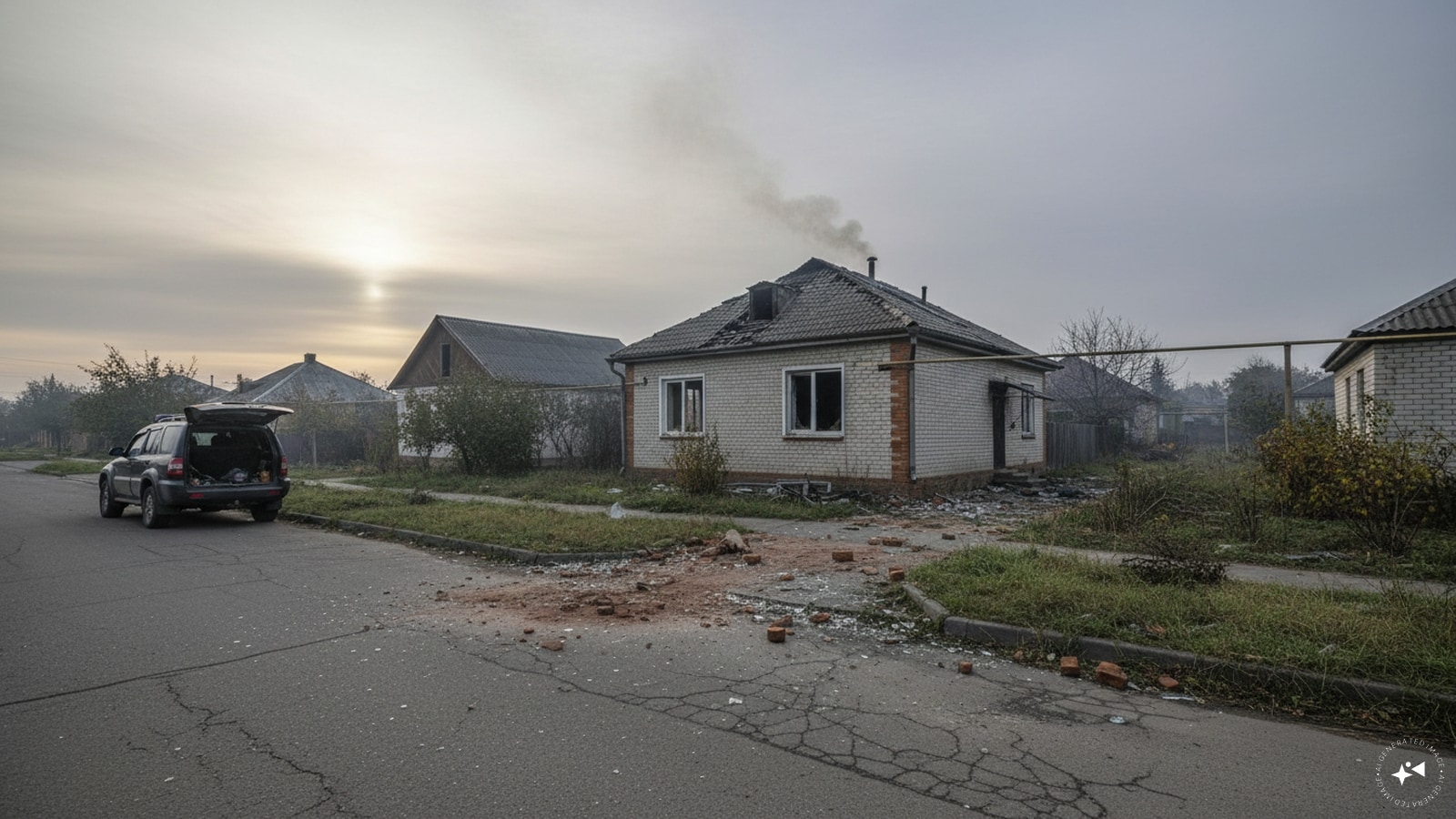
The headlines roll in with depressing regularity. A nocturnal strike near Kharkiv, two dead civilians, routine condemnation, and a collective shrug from a weary international press corps. Everyone treats these overnight drone strikes as isolated tragedies or chaotic acts of desperation by a military machine running on fumes.
That perspective is lazy, comforting, and completely wrong.
When analysts call these strikes senseless brutality, they miss the cold calculus driving modern attrition warfare. War has evolved past territory-grabbing theater into a brutal contest of balance sheets and psychological endurance. The target is never just a warehouse or an apartment block. The target is the clock.
The Attrition Trap Nobody Wants to Talk About
Look past the immediate grief of a destroyed roof in the Kharkiv region and examine the logistics. A cheap loitering munition costs a fraction of the interceptor rocket used to bring it down. That economic mismatch is the engine of this entire campaign.
I have watched defense budgets bleed out in procurement boardrooms for a decade. The math is merciless. When you force an adversary to expend high-tier air defense assets on low-cost flying lawnmowers, you are not just terrorizing a population center; you are engaging in fiscal asphyxiation.
The conventional narrative insists that indiscriminate strikes show a lack of strategic discipline. That is wishful thinking born from a desire to see our enemies as incompetent. In reality, sustained nocturnal harassment serves three distinct purposes:
- Resource Drain: Every interceptor launched at a cheap drone in northeastern Ukraine is an interceptor unavailable for front-line mechanized defense or critical infrastructure protection elsewhere.
- Cognitive Wear and Tear: Sleep deprivation is a weapon of war as old as humanity. Nightly air raid sirens across the Kharkiv oblast ensure a chronic state of exhaustion, reducing industrial productivity and civic resilience over months and years.
- Pattern Testing: Every flight path, electronic warfare response, and radar illumination gives automated targeting systems valuable telemetry data for the next wave.
To call this chaotic is to misunderstand how industrial-scale warfare operates in the twenty-first century. It is methodical, patient, and brutally efficient at the margin.
Dismantling the Air Defense Fallacy
The public conversation around aerial warfare suffers from a severe Hollywood hangover. People imagine sophisticated electronic shields, laser grids, and impenetrable domes protecting every square kilometer of territory.
Physics does not care about your political outrage. No nation on earth possesses enough surface-to-air missile batteries to cover every kilometer of a contested border against swarming low-altitude threats.
When a regional governor reports casualties from an overnight strike, the immediate public demand is always the same: send more air defense systems. But that response ignores the law of diminishing returns. Concentrating mobile defense units around urban centers like Kharkiv creates blind spots on the front lines. Leaving the front lines exposed accelerates tactical breakthroughs by armored columns. It is a zero-sum game of terrible choices, and the aggressor knows it.
We need to stop pretending that this conflict can be solved by simply writing another hardware check or deploying a handful of shiny new batteries. The solution requires a fundamental shift in how we intercept cheap threats. If you are shooting million-dollar missiles at ten-thousand-dollar drones, you are losing even when you win the engagement.
The Unspoken Cost of Chronic Emergency
Living under a permanent yellow alert changes a society in ways economists refuse to model on spreadsheets. Talent migration out of eastern regions is not a byproduct of the war; it is a primary objective of protracted attrition.
When small businesses in the Kharkiv region close early because employees have to shelter in basements, the local tax base crumbles. When hospitals operate under generator power while listening to the buzz of incoming motors overhead, healthcare outcomes plummet.
This is where the contrarian truth cuts deepest. The casualties reported in the morning news are the visible tip of an iceberg made of systemic exhaustion. The physical deaths spark momentary outrage on social media; the slow strangulation of economic vitality happens in silence.
We must stop analyzing these individual tragedies as standalone tactical errors and start viewing them as pixels in a massive picture of systemic pressure. Until defense strategists solve the cost asymmetry of drone warfare, evening sirens will remain the metronome by which this conflict measures its progress.
Stop waiting for a moral epiphany from an aggressor who views human endurance as just another consumable resource. The only way to stop the drones is to make the math unviable for the people launching them. Everything else is just commentary.



