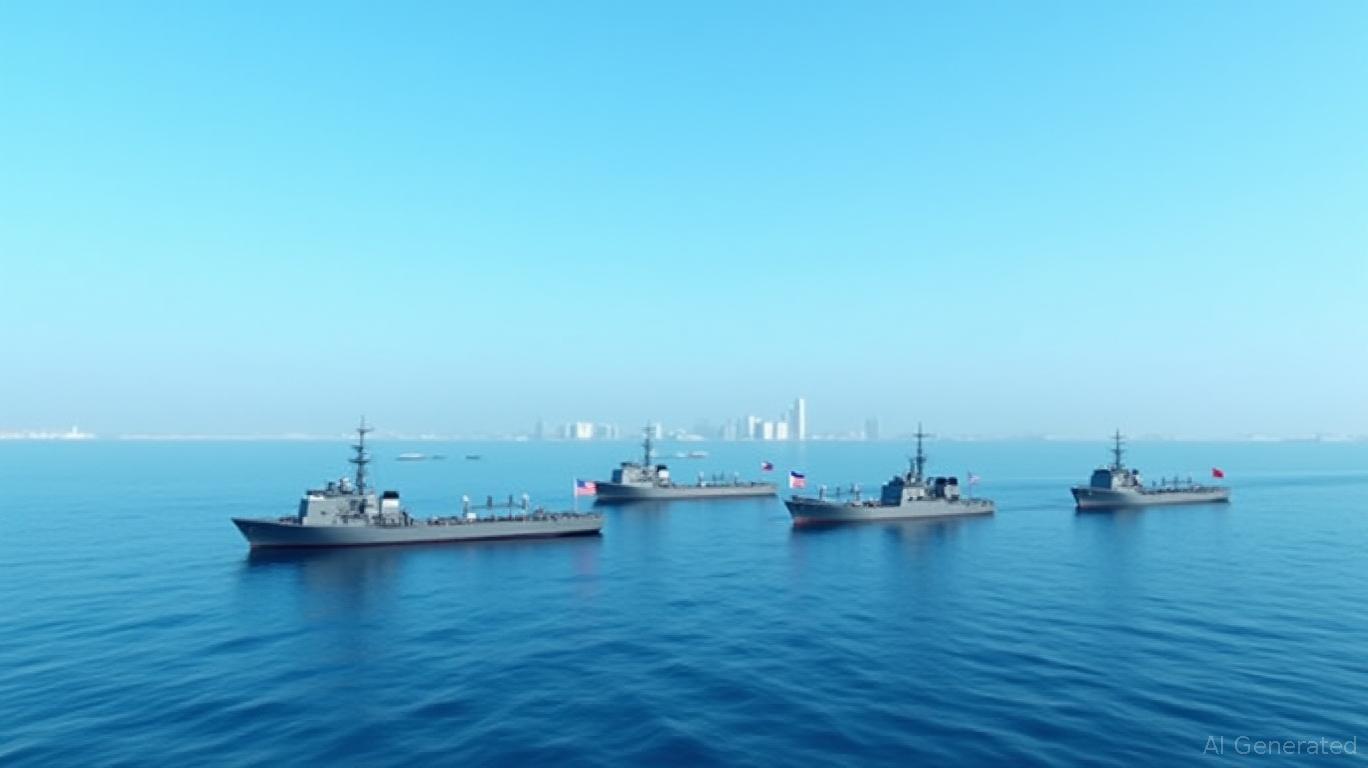
The maritime corridor through the Strait of Hormuz has officially shifted from a high-risk zone to an active combat theater for Indian commercial interests. Following a series of direct kinetic attacks—specifically involving gunfire directed at two Indian-flagged or Indian-crewed tankers—the Directorate General of Shipping in Mumbai has issued a "fresh advisory" that signals a breakdown in the informal protections New Delhi once relied upon. For years, India maintained a delicate balancing act, keeping its naval assets visible but non-aggressive while banking on its historical ties with Iran to shield its energy lifeline. That shield has shattered.
The current escalation is not a random byproduct of regional instability. It is a targeted consequence of the hardening lines in the Middle East. When Indian tankers are fired upon, it isn't just a tactical failure on the water; it is a direct challenge to India’s strategic autonomy. The advisory warns vessels to maintain a high state of alert, use the Maritime Security Chart (Q6099), and participate in the voluntary reporting scheme with the Indian Navy’s Information Fusion Centre (IFC-IOR). But these are administrative band-aids on a deep structural wound.
The failure of the silent protector strategy
Since the launch of Operation Sankalp in 2019, the Indian Navy has maintained a persistent presence in the Gulf of Oman and the Persian Gulf. The mandate was simple: provide a sense of security without escalating the regional arms race. This "silent protector" stance worked as long as the primary threats were non-state actors or shadow-war posturing.
The math changed when the gunfire became literal.
When a tanker is fired upon, the cost ripples through the Indian economy instantly. Insurance premiums, specifically War Risk Surcharges, do not wait for a government press release. They spike the moment a hull is dinged or a bridge is threatened. For a country that imports over 80% of its crude oil, these "minor incidents" represent a massive, unbudgeted tax on the Indian consumer. The Ministry of Shipping is now effectively telling captains that they are on their own until a destroyer can reach them, which, in the vast expanse of the northern Arabian Sea, is often a matter of hours too late.
Why Indian hulls are suddenly vulnerable
The geopolitical alignment of the last twenty-four months has stripped away India's neutrality in the eyes of regional belligerents. While India seeks to maintain its "strategic autonomy," its growing closeness with Western security frameworks—and specifically its role in the IMEC (India-Middle East-Europe Economic Corridor)—has painted a bullseye on its logistical chains.
The attackers, whether state-backed or proxies, are no longer deterred by the Indian flag. In fact, the flag has become a proxy for the broader political friction between the Global South's rising powers and the entrenched interests of the Middle East.
- Tactical Shift: Attackers are moving away from sophisticated limpet mines toward small-arms fire and drone harassment.
- Target Selection: Vessels with even tangential links to Western ownership or destination ports are being singled out, regardless of the crew’s nationality.
- The Response Gap: There is a significant time lag between an initial distress call and the arrival of an Indian Navy boarding party or helicopter.
The brutal economics of maritime fear
Shipping is a business of margins. When the Indian government issues an advisory telling ships to stay 50 nautical miles away from the Iranian coast, they are adding miles to the journey. Miles mean fuel. Fuel means money.
The "fresh advisory" recommends that tankers minimize their time in the Strait and avoid loitering in high-risk areas. This sounds sensible in a briefing room, but on the water, it’s a logistical nightmare. The Strait of Hormuz is a choke point; there is nowhere else to go. Forcing tankers to run "dark"—turning off their Automatic Identification System (AIS)—to avoid detection actually increases the risk of collisions in one of the world's most crowded shipping lanes.
If a captain turns off his AIS to hide from a militia, he is also hiding from the very Indian Navy ships meant to protect him. This creates a paradox where the "safety" measures actually introduce new, more chaotic risks.
The insurance trap
Lloyd’s of London and other global insurers view these advisories as confirmation of increased risk, not a mitigation of it. Every time the DG Shipping updates its warnings, the "Joint War Committee" in London takes note.
- Direct Costs: Higher premiums for Every Single Transit.
- Indirect Costs: Diversion of ships to other, safer routes (if they exist), which raises the price of the cargo.
- Liability: If a ship ignores the advisory and is hit, the insurer may have grounds to deny the claim.
The Indian government is effectively caught between a rock and a hard place. If they don't issue the advisory, they are negligent. If they do, they trigger a cascade of financial penalties for the very companies they are trying to support.
Security theater versus naval reality
The Indian Navy is one of the most professional forces in the world, but it cannot be everywhere at once. Operation Sankalp is an escort mission, but you cannot escort every tanker when hundreds pass through the throat of the Gulf every week.
The advisory mentions "increased surveillance," but surveillance is not the same as protection. A drone can watch a ship get fired upon, but it cannot stop the bullets. The reality is that Indian merchant mariners are being asked to take "extreme caution" while the state struggles to define what a red line looks like.
If an Indian sailor is killed by a state-backed proxy, does New Delhi retaliate? The answer, so far, has been a resounding silence. This silence is interpreted as weakness by the groups operating in the Strait. They know that India is hesitant to jeopardize its relationship with Tehran, and they are using that hesitation to test how much pressure the Indian maritime sector can take before it cracks.
The hidden role of the IFC-IOR
The Information Fusion Centre – Indian Ocean Region (IFC-IOR) is the nerve center mentioned in the advisory. It is a high-tech hub that tracks every vessel in the region. It is brilliant for data, but data doesn't patch a hole in a hull.
The advisory’s insistence on reporting to the IFC-IOR is an attempt to centralize control, but it also highlights the vulnerability of the system. If the communication links are jammed—a common tactic in the electronic warfare environment of the Gulf—the entire safety net collapses.
Beyond the advisory
To truly protect its interests, India needs to move past the issuance of paper warnings and into the realm of hard-power deterrence. The current approach is reactive. It waits for a ship to be fired upon and then tells everyone else to be careful.
A "superior" strategy would involve:
- Armed Guards: Changing domestic law to allow for more robust Private Maritime Security Companies (PMSCs) on Indian-flagged vessels.
- Direct Convoys: Moving from "area security" to mandatory convoy transits for high-value energy assets.
- Diplomatic Leverage: Making it clear to regional powers that attacks on Indian commerce will result in immediate economic or energy-based sanctions.
The Strait of Hormuz is not a place for "cautious optimism" or bureaucratic advisories. It is a place where the projection of strength is the only currency that matters. As long as New Delhi treats these attacks as isolated incidents rather than a coordinated challenge to its sovereignty, the gunfire will continue.
The advisory is a clear admission that the status quo is dead. The "safe" waters of the Gulf are gone, replaced by a gray zone where merchant ships are pawns in a much larger, much more dangerous game. Shipping companies are now forced to decide if the price of oil is worth the life of a crewman. When the government tells you to "remain vigilant," they are essentially telling you that the protection you thought you had doesn't exist.
The next time a shot is fired, the Indian Navy won't be judged by how quickly it issues a PDF advisory, but by how it responds to the people who pulled the trigger. Until then, the Strait remains a shooting gallery with the Indian tricolor as the target.
Owners must now weigh the cost of additional security details against the rising price of silence.