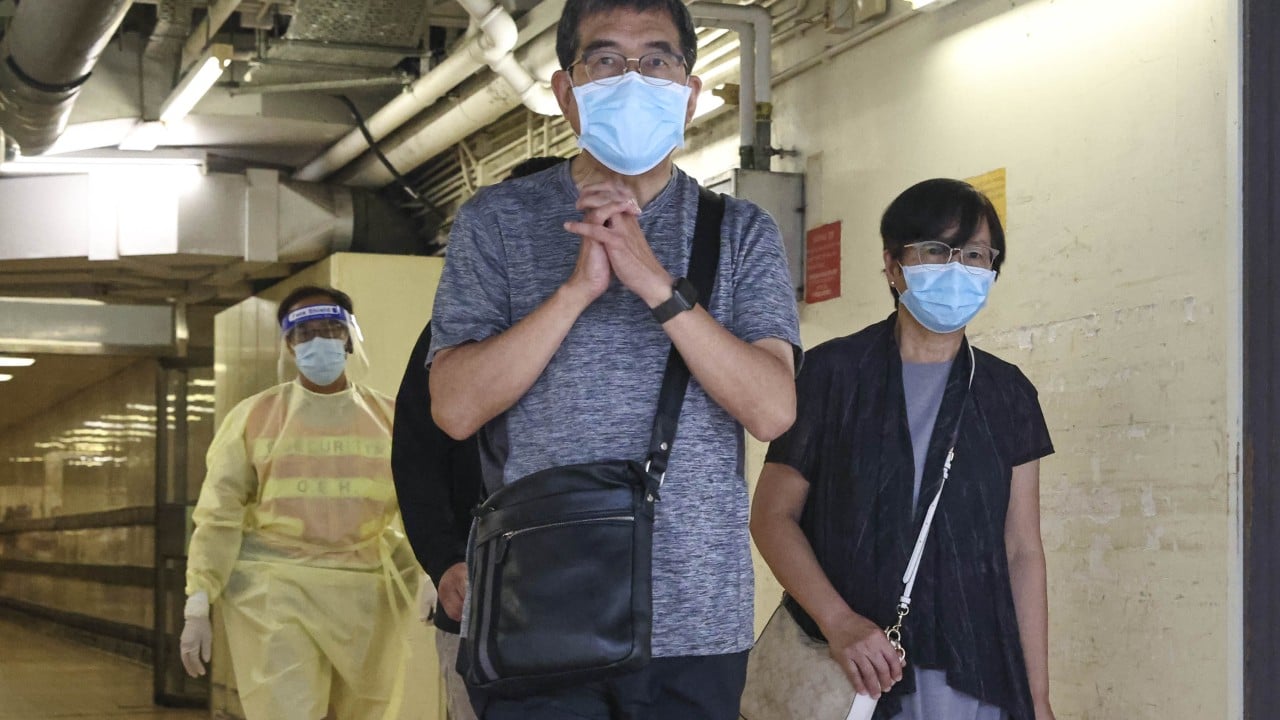
The death of Derek Li, father of Mo Li, represents the closure of a primary advocacy channel in one of the most significant industrial safety failures in the history of live entertainment. While news cycles treat the funeral as a biographical milestone, a structural analysis reveals it as a pivot point in a multi-year legal and regulatory bottleneck. The 2022 Mirror concert incident was not a random mechanical failure; it was the inevitable output of a fragmented subcontracting chain where accountability was diluted through four distinct layers of corporate shielding.
The Anatomy of the Subcontracting Cascade
To understand the delays in justice and the subsequent toll on the Li family, one must map the "Accountability Gap" created by the Hong Kong entertainment industry's standard operating procedures. The 600kg LED screen collapse was the physical manifestation of a breakdown in three specific systemic pillars:
- The Engineering Oversight Vacuum: In high-stakes stage production, the delta between "design" and "execution" is managed by a Certifying Engineer. In this instance, the mismatch between the reported weight of the screen and the actual tensile strength of the suspension cables suggests a failure in the Verification Protocol. When a primary contractor offloads specialized tasks to sub-contractors, the internal audit trail often dissolves.
- The Insurance-Liability Paradox: In the wake of the incident, the primary friction point for the Li family was not just medical recovery, but the determination of the "Employer of Record." If a dancer is classified as an independent contractor rather than an employee, the burden of long-term care shifts from the corporate entity to the individual. Derek Li’s public advocacy was effectively a counter-force to this legal insulation.
- Regulatory Latency: Government investigations by the Labor Department and the Leisure and Cultural Services Department (LCSD) operate on a timeline that is often incompatible with the immediate financial and psychological needs of victims. This creates a "stagnation period" where no civil settlements can be finalized because the criminal evidence is still being processed.
The Physiological and Psychological Cost Function
The trajectory of Mo Li’s recovery—characterized by a transition from total paralysis to the early stages of sensory-motor reintegration—has been documented almost exclusively through his father’s "Prayer Letters." From a clinical perspective, these letters served as the only public-facing transparent data on the Neurological Recovery Curve of a C3/C4 spinal cord injury.
The mechanism of injury involved a high-velocity blunt force trauma resulting in vertebral displacement. The long-term management of such an injury requires a multidisciplinary stack:
- Respiratory Maintenance: At the C4 level, the phrenic nerve is compromised, necessitating mechanical or assisted ventilation in the acute phase.
- Exoskeleton Integration: The use of robotic-assisted gait training is not merely for mobility; it serves to prevent bone density loss and muscle atrophy through weight-bearing simulation.
- Sensory Mapping: The gradual return of sensation follows a non-linear path, where the brain must re-learn signals that were previously severed.
Derek Li acted as the de facto "Case Manager," a role that usually requires a professional team. The stress of managing a high-profile medical recovery while simultaneously navigating a complex legal environment creates a "Caregiver Attrition" effect. His death on the eve of the two-year anniversary of the event removes the most vocal critic of the slow-moving judicial process, potentially altering the momentum of the remaining civil proceedings.
The Legal Bottleneck: Criminal vs. Civil Tracks
The upcoming funeral on June 6 coincides with a period of intense legal scrutiny for the organizers, MakerVille and Music Nation, alongside the technical contractors Engineering Impact and Hip Hing Loong. The legal strategy employed by these entities centers on the Delegation of Duty defense.
In this framework, the primary organizer argues that by hiring a "specialist" contractor, they have fulfilled their duty of care. However, the prosecution's logic hinges on the "Control Test": Who had the final authority to stop the show when the screen showed signs of instability during rehearsals? The failure to exercise this authority constitutes gross negligence.
The delay in the trial of the production managers—charged with conspiracy to defraud regarding the weights of the equipment—is a significant variable. By under-reporting equipment weight to the LCSD, the contractors bypassed the requirement for more rigorous structural support, effectively choosing a lower-cost, higher-risk configuration. This "Risk-Reward Imbalance" is a recurring feature in rapid-turnover concert tours where the schedule allows for minimal load-in and testing time.
Strategic Shift in Public Advocacy
With the passing of the elder Li, the communication strategy regarding the case will likely shift from emotional/spiritual advocacy to a more sterilized, legalistic approach led by legal counsel. This change has three immediate implications for the industry:
- Loss of Public Pressure: Derek Li’s weekly updates kept the incident in the public consciousness, preventing the organizers from "waiting out" the news cycle.
- Professionalization of the Claim: The transition from personal letters to formal legal filings might accelerate the settlement phase, as the emotional barriers to negotiation are replaced by actuarial calculations.
- Policy Precedent: The LCSD’s revised guidelines for "mechanical installations" in public venues are a direct result of this advocacy. These now require a third-party audit for any moving overhead structure, effectively ending the era of self-certification in Hong Kong venues.
The Long-Tail Liability Forecast
The Mirror incident serves as a terminal case study in why the entertainment industry must move toward a Universal Safety Standard (USS). The current fragmented model, where every jurisdiction has different requirements for cable tension and weight distribution, is unsustainable for international touring acts.
The "Cost of Failure" in this scenario far exceeds the $10 million+ HKD in medical expenses. It includes the permanent loss of brand equity for the artists involved and a systemic increase in insurance premiums for all future large-scale events in the region.
The strategic priority for the industry now is the implementation of real-time load-monitoring systems. Using IoT-enabled sensors on all suspension points would allow for an automated "Kill Switch" that triggers if the tension deviates by more than 5% from the engineered load. This removes the human element of hesitation that led to the June 2022 tragedy.
The transition of the Mo Li case into its next phase, following the June 6 services, will be defined by the resolution of the "Duty of Care" lawsuits. Stakeholders should expect a landmark settlement that will redefine the price of negligence in the Asia-Pacific entertainment sector. The focus must remain on the technical audit of the lifting machines and the procurement of the suspension cables, as these remain the definitive evidence of systemic cutting of corners in the pursuit of production speed.



