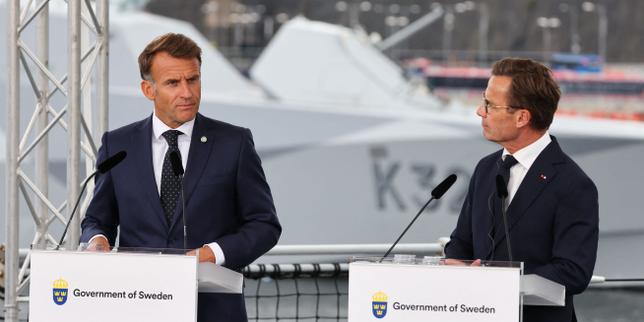
Everyone in defense procurement is popping champagne over Stockholm dropping 4.3 billion euros on four French frigates. The lazy consensus says this deal proves European defense integration works. It says interoperability is winning. It calls the agreement a triumph for naval manufacturing.
That narrative is complete nonsense. For an alternative perspective, read: this related article.
Sweden just handcuffed its naval strategy to a continental exporter that views defense contracts through the lens of domestic industrial subsidies rather than tactical Baltic realities. I have watched defense ministries light cash on fire for decades chasing grand diplomatic symbols while ignoring operational friction. This multi-billion-euro acquisition does not secure Sweden's coastline. It imports a logistical nightmare disguised as European solidarity.
The Geography Mismatch Nobody Mentions
Let us look at actual maritime geography instead of diplomatic press releases. The Baltic Sea is a cramped, shallow, archipelagic bathtub. It is choked with islands, prone to severe ice conditions for months out of the year, and heavily monitored by hostile anti-access capabilities. Operating heavy blue-water surface combatants designed around French Mediterranean and Atlantic operational profiles in these waters makes zero tactical sense. Further coverage on this trend has been shared by The New York Times.
Naval architecture is not one-size-fits-all. When you buy a multi-mission frigate built by a major naval power accustomed to projecting force globally, you are buying a Swiss Army knife that excels at nothing specific in a regional theater. Sweden’s domestic shipyards mastered littoral stealth corvettes like the Visby class for a reason. Those vessels feature carbon-composite hulls, extreme low observability, and shallow drafts built explicitly to hide among thousands of Swedish skerries.
Trading that bespoke capability for heavy French steel is like bringing an urban transit bus to a rallycross race. The signatures are larger, the drafts are deeper, and the maintenance chains are thousands of miles away from home ports.
The Logistics Trap of Continental Procurement
Defense analysts love to talk about joint capabilities on paper. They rarely talk about spare parts availability during an acute crisis.
Imagine a scenario where a regional conflict in Northern Europe sparks a naval blockade. Stockholm needs emergency repairs on a French-designed combat management system or a specialized propulsion turbine. Under this procurement contract, where do those components come from? Lorient. Through layers of bureaucratic export controls, union-mandated factory holidays, and supply chains that route through continental manufacturing hubs.
When your primary deterrent depends on maintenance technicians catching a flight from Brest, you do not have a sovereign defense posture. You have an expensive lease on foreign dependency.
Sweden used to understand that national survival requires a closed-loop industrial base. By outsourcing heavy surface combatant construction to Paris, Stockholm is repeating the historic mistake of trading operational independence for short-term political alignment.
The Price Tag Illusion
Let us talk about the 4.3 billion euro price tag. Defense budgets are finite pools of capital. Every euro spent on overpriced, foreign-built hulls is a euro stripped from domestic capabilities that actually matter in a Baltic kinetic scenario: distributed anti-ship missile batteries, autonomous underwater mining swarms, electronic warfare hardening, and hardened coastal defense networks.
France builds magnificent ships for global power projection. The French Navy operates in the Indian Ocean, the Mediterranean, and across distant overseas territories. Their doctrine requires multi-role frigates capable of independent global deployments for months at a time.
Sweden does not need global power projection. Sweden needs regional denial.
Attempting to force a global blue-water platform into a regional coastal defense role creates an efficiency penalty that compounds over decades through maintenance overhead, crew training divergence, and upgrade bottlenecks.
The Real Agenda Behind the Signatures
Why did Stockholm sign this deal? Follow the political economy.
Major defense acquisitions at this scale are rarely about pure tactical optimization. They are grand bargains traded in the back rooms of European Council meetings. It is industrial policy masquerading as national security. It is about buying political capital in Brussels and Paris, securing reciprocal industrial votes, and playing the European defense integration game to avoid being sidelined in future security architectures.
That might be clever diplomacy. It is terrible naval strategy.
When the shooting starts, nobody cares about diplomatic goodwill or industrial co-production shares. They care about whether the missile batteries fire, whether the hull can hide in the archipelago, and whether the crew can fix the engines without waiting for a diplomatic clearance memo from a foreign capital.
Stop cheering for multi-billion-euro export spectacles. Sweden just bought a very expensive anchor.


:max_bytes(150000):strip_icc()/moscow-kremlin-and-st-basil-cathedral-at-dusk-158200423-5a64f4594e46ba00377331fb.jpg)