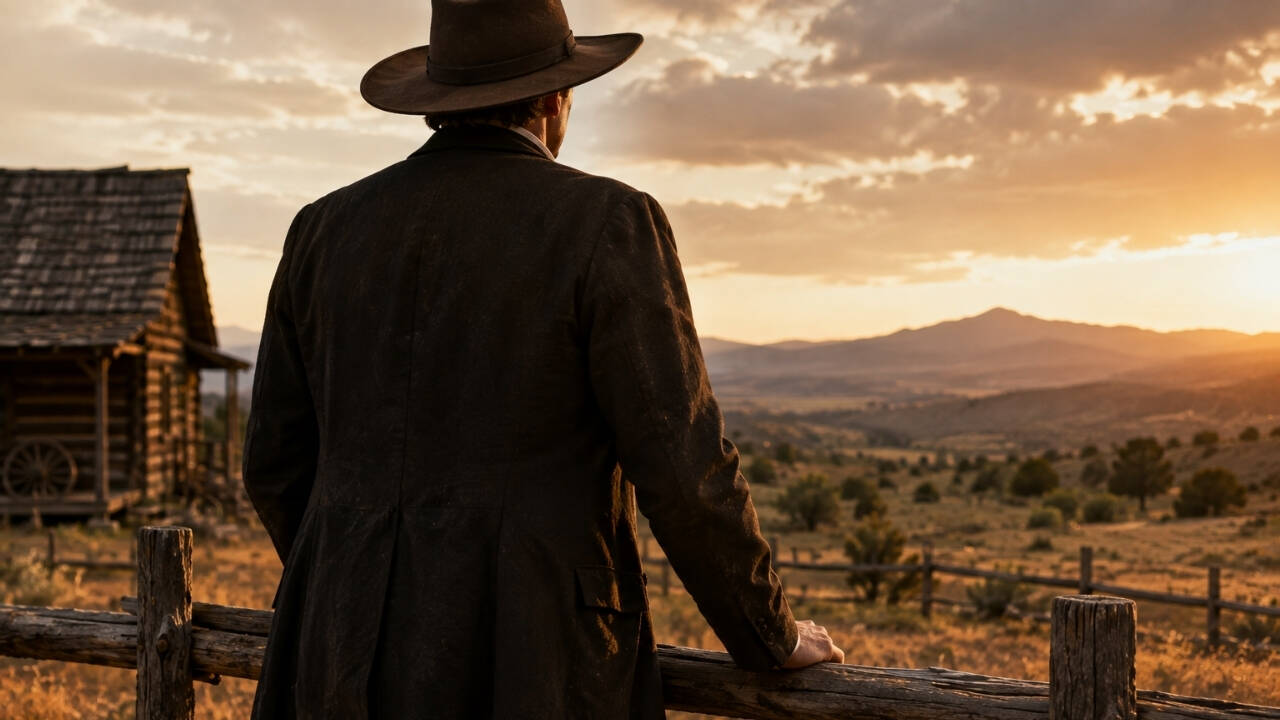
The dust in 1860s Nebraska didn’t just coat your clothes. It became part of your skin, a gritty reminder that the land owed you nothing. If you were a homesteader like the hypothetical Elias Thorne—a man who traded his last silver coin for a plow and a prayer—the "making of America" wasn’t a grand political theory. It was a blister that wouldn’t heal. It was the sound of a hammer hitting a rail spike three hundred miles away, a rhythmic thud that promised his grain might actually reach a mouth in New York before it rotted.
We often talk about the rise of the United States as if it were an inevitable march of progress. We look at maps and see the westward expansion as a clean, colored ink wash moving from right to left. But maps lie. They hide the chaos. They hide the fact that for most of the nineteenth century, the "United States" was less a unified nation and more a collection of bickering islands separated by a sea of impassable mud and unmapped forest. Recently making news recently: The Ceramic Escape Artist That Fooled Dynasties.
The Geography of Despair
To understand how a superpower is forged, you have to understand isolation. Before the steam engine, distance was a physical enemy. If you lived in the Ohio River Valley, shipping goods to the East Coast was often more expensive and time-consuming than shipping them to Europe. The mountains were walls. The rivers were temperamental highways that dried up in summer and froze in winter.
Economic growth was strangled by the sheer physics of the continent. A farmer could grow enough corn to feed a city, but if he couldn't get it to the city, that corn was worthless. It was a cycle of subsistence that kept the young nation's pulse slow and thready. The "making" of the country required a literal rewiring of the earth. More details into this topic are detailed by Bloomberg.
Consider the Erie Canal. When it was proposed, critics called it "Clinton’s Ditch," a fool’s errand to cut 363 miles through solid rock and malarial swamps. They used shovels and black powder. They died by the hundreds from cholera and exhaustion. But when the water finally flowed from Lake Erie to the Hudson River, the cost of shipping a ton of grain dropped from $100 to $10.
Suddenly, the "islands" were connected. New York City didn’t become a global capital because of its beauty; it became a capital because it was the mouth of a straw that could suck the wealth out of the American interior. This was the first great vein in the new circulatory system.
The Iron Pulse
If the canals were the veins, the railroads were the arteries. This is where the story shifts from water to fire. The Transcontinental Railroad wasn’t just a feat of engineering; it was an act of brutal, desperate will.
Imagine standing at the foot of the Sierra Nevada mountains with nothing but a hand drill and volatile nitroglycerin. This was the reality for the thousands of Chinese laborers who did the work the rest of the country was too terrified to attempt. They weren't "building a nation" in their minds. They were surviving. They were hanging from ropes in baskets, setting charges in the rock, and praying they’d be pulled up before the fuse hit the powder.
The steel rails did something the canals couldn't: they conquered time. A journey that once took six months by wagon now took six days. This collapsed the American psyche. The vastness that had been a source of terror became a source of opportunity. But this speed came with a hidden price.
Standardized time was born here. Before the trains, every town kept its own "sun time." High noon in Chicago was different from high noon in St. Louis. The railroads couldn't operate in that chronological soup. They demanded a synchronized world. They forced the sun to answer to the clock, a shift that fundamentally changed how humans experienced their own lives. We stopped living by the seasons and started living by the schedule.
The Alchemy of the Assembly Line
While the rails stitched the land together, a different kind of revolution was brewing in the dark, oily sheds of the Midwest. We’re taught to credit Henry Ford with the invention of the car, but his real genius was far more surgical. He didn't just build a machine; he built a way to build.
In the early 1900s, a car was a luxury item, handcrafted by artisans. It was finicky, expensive, and rare. Ford looked at the slaughterhouses of Chicago—where a carcass moved on a hook and each man performed one specific cut—and saw the future. He reversed the process.
Imagine a worker named Joe. In 1905, Joe might have spent all day fitting a single engine. By 1914, Joe stood in one spot while the chassis came to him. He tightened one bolt. Every twelve seconds. Over and over.
This was the birth of the middle class, but it was also the birth of a specific kind of modern fatigue. The "Five Dollar Day" was a miracle of its time, doubling the average wage and allowing the people who built the cars to actually buy them. Yet, it turned the human body into a cog. The wealth of the nation was being built on the repetition of the limb.
This wasn't just business. It was a social contract. The deal was simple: give us your autonomy and your physical endurance, and we will give you a house with a lawn, a radio, and a future for your children. For forty years, that deal held the country together.
The Invisible Grid
As the smoke cleared from the industrial age, the next layer of "making" was invisible. It was the movement of electrons.
Electrification wasn't just about lightbulbs; it was about the death of the night. It transformed the home from a place of rest into a place of consumption. The washing machine, the vacuum, the refrigerator—these weren't just conveniences. They were the tools that allowed women to enter the workforce in unprecedented numbers, shifting the entire economic gravity of the family unit.
But electrification also created a new kind of vulnerability. We became a nation of wires. In the 1930s, the Rural Electrification Act brought power to the corners of the country that the private companies had ignored as "unprofitable."
Imagine a farmhouse in Georgia that had relied on kerosene lamps for three generations. The night the lights came on, the world didn't just get brighter; it got larger. You could hear a voice from Washington D.C. on the radio. You were no longer just a resident of a county; you were a participant in a national conversation. The grid was the final stitch in the fabric.
The Architecture of the Suburb
Post-World War II America didn't just grow; it sprawled. The GI Bill and the creation of the Interstate Highway System under Eisenhower were the final strokes in the portrait of the modern state.
The highway system was marketed as a defense project—a way to move troops quickly in case of an invasion—but its true impact was the invention of the "commute." We sliced through ancient neighborhoods with concrete ribbons. We created the Levittowns, where every house looked the same and every lawn was a uniform shade of green.
This was the climax of the American project: the democratization of space. The idea that a regular person could own a piece of land, a car to leave it, and a road to take them anywhere. It was a triumph of logistics over nature.
Yet, as we paved over the wild spaces to create this utopia of convenience, we began to lose the very thing the homesteaders like Elias Thorne were looking for. The struggle was gone, replaced by a sanitized, predictable comfort. We had conquered the mud, the mountains, and the dark.
The Unfinished Work
We look back at the steel, the steam, and the wires and call it history. But the making of a nation isn't a static event. It’s a continuous, grinding process of maintenance and reinvention.
Today, the "steel" is fiber optic cable. The "canals" are the data streams that move trillions of dollars in the blink of an eye. We are still the people in the baskets over the nitroglycerin, trying to build the next bridge to a future we can’t quite see yet.
The blisters have changed. They are now the mental strain of a hyper-connected world, the anxiety of a shifting climate, and the crumbling of the very bridges our grandfathers built with such pride. We are living in the house they built, noticing for the first time that the foundation needs work.
America wasn't made by a signature on a piece of parchment in 1776. It was made by the guy who stayed in the ditch when the rain started. It was made by the woman who worked the line until her fingers went numb. It was made by the engineers who looked at a mountain and refused to turn around.
The story of the country isn't found in the speeches of the men in suits. It’s found in the grease under the fingernails of the people who actually turned the literal and metaphorical wrenches. It is a story of grit, yes, but also of a profound, restless dissatisfaction—a belief that the horizon is something to be chased, caught, and paved.
Elias Thorne’s plow is gone, rusted into the Nebraska soil. But the impulse that drove him to push it into the earth remains. We are still a people defined by what we build, and more importantly, by what we are willing to break to build it. The map is still being drawn. The ink is still wet.
The hammer is still falling. Thud. Thud. Thud.