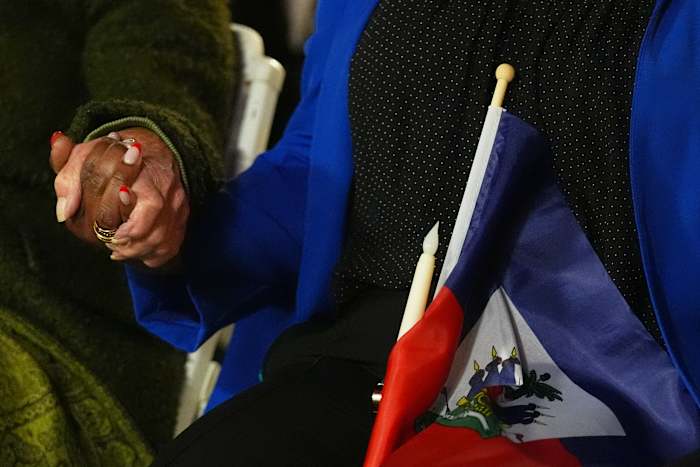
Hundreds of thousands of immigrants just lost their legal right to stay in the United States overnight. On Thursday, June 25, 2026, the Supreme Court handed down a crushing 6-3 decision that allows the administration to strip Temporary Protected Status (TPS) from Haitian and Syrian nationals. The ruling doesn't just reshape immigration enforcement. It immediately strips work authorizations, fractures neighborhoods, and sets a legal precedent that could upend the lives of 1.3 million people across the country.
If you think this is just another political headline, you're missing the true scope of the crisis. This decision fundamentally alters how humanitarian protection works in America. Families who have spent over a decade building businesses, buying homes, and raising American children now face a grim choice between hiding in the shadows or facing forced removal to a country torn apart by gang warfare.
The fallout is swift. Panic is spreading through diaspora hubs from Springfield, Ohio, to Miami, Florida. People are wondering if they should pull their life savings out of the bank or clear out their desks at work. Here is what the ruling actually does, why the legal justifications are so controversial, and what happens next for the vulnerable communities caught in the crossfire.
The Legal Mechanism That Unraveled Decades of Protection
Temporary Protected Status was established by Congress in 1990. The goal was simple. The federal government could grant temporary safe haven and work permits to foreign nationals already inside the U.S. if their home countries were suffering from armed conflict, environmental disasters, or extraordinary, temporary conditions. For decades, administrations from both political parties renewed these protections because conditions on the ground in places like Haiti remained catastrophic.
The Supreme Court ruling in Mullin v. Doe completely alters that dynamic. Writing for the conservative majority, Justice Samuel Alito stated that federal courts have no authority to review executive branch decisions regarding the termination of TPS. According to the majority, the law governing the program explicitly bars judicial review. If the Secretary of Homeland Security decides a country is safe enough for returns, the courts cannot step in to audit that assessment or check the data.
This leaves TPS holders entirely at the mercy of whoever occupies the White House. The ruling effectively checked the power of lower courts, which had previously blocked the administration's aggressive enforcement strategies. U.S. District Judge Ana C. Reyes had earlier halted the terminations, pointing out deeply troubling justifications used by officials. The highest court in the land has now wiped that protection away, establishing that executive discretion on humanitarian status is absolute.
The Debate Over Racial Bias and Executive Intent
One of the most fiercely contested aspects of the case was whether the push to end protection for Haitian nationals was rooted in racial animus. Under the Constitution's equal protection clause, government actions cannot be driven by discrimination. Lawyers representing the Haitian plaintiffs pointed to a long history of hostile public statements made by top officials, including debunked rumors about Haitian immigrants in Ohio during the 2024 campaign cycle.
Justice Alito dismissed these arguments directly. He noted that none of the cited remarks were overtly racial within the official policy text. He argued that the administration's actions could rest entirely on race-neutral policy views. To the majority, political rhetoric during a campaign doesn't automatically invalidate the legal execution of government policy.
Justice Elena Kagan issued a sharp dissent, joined by Justices Sonia Sotomayor and Ketanji Brown Jackson. Kagan argued that the law explicitly requires thorough consultations regarding country conditions before ending protections. She stated that the evidence showing race played a significant role in the administration's Haiti decision was plain. In her view, the administration bypassed standard administrative vetting procedures, letting external political bias taint what should have been a neutral assessment of human safety.
Adding another layer to the legal shift, Justice Clarence Thomas wrote a concurring opinion that sent shockwaves through immigration law circles. Thomas suggested that noncitizens might not possess equal protection rights against the federal government under the Fifth and Fourteenth Amendments. While a concurring opinion isn't binding law, it signals a radical willingness to strip constitutional due process protections from millions of noncitizens residing legally within U.S. borders.
What This Means on the Ground for American Towns
Vague policy debates feel abstract, but the immediate economic and social consequences are brutally concrete. Haitians make up more than half of all TPS holders nationwide. They aren't living on the margins; they are deeply integrated into local economies.
Take Springfield, Ohio, as a clear example. The local Haitian community has spent years filling labor shortages in light manufacturing, logistics, and food processing. Viles Dorsainvil, executive director of the Haitian Support Center in Springfield, has spent the hours following the ruling trying to keep families from panicking. The sudden loss of work authorization means people can no longer legally show up to their jobs. Employers face hefty fines if they keep undocumented workers on the payroll, meaning thousands will lose their livelihoods in a matter of weeks.
The crisis hits Florida and New York just as hard. Data from organizations like the International Rescue Committee highlights that TPS holders have contributed roughly $262 billion to the U.S. economy since 2001, including more than $20 billion into the Social Security system. Stripping their legal status doesn't make these people vanish. It forces them into the underground economy, slashes local tax bases, and leaves industries like agriculture, healthcare, and construction scrambling for workers.
The human toll is even heavier. Many families feature mixed-status households where parents hold TPS but their children are American citizens born on U.S. soil. Parents are now drafting emergency guardianship papers. They are forced to decide whether to take their American children back to a dangerous homeland or leave them behind with relatives in the United States.
The Reality of Forcible Returns to Haiti
White House adviser Stephen Miller cheered the ruling, stating that America’s doors are fully closed to asylum seekers and that individuals should leave the country. He dismissed concerns about safety by comparing Haiti's current instability to crime rates in American cities. This assessment is heavily disputed by international observers, human rights organizations, and the U.S. State Department itself.
Haiti has been under a national state of emergency since 2024. The State Department still maintains a strict "Do Not Travel" advisory for the nation due to rampant gang violence, kidnappings, and the near-total collapse of central governance. Armed gangs control vast swaths of the capital city, Port-au-Prince, and have choked off critical supply lines for food, clean water, and medical supplies. Over 6 million people inside Haiti need urgent humanitarian aid, and more than half the population faces acute hunger.
Forcing hundreds of thousands of people back into this environment is a logistical and humanitarian nightmare. More than 270,000 people were returned to Haiti in 2025 alone. Many of those returnees find themselves instantly displaced. Nearly 20% of them had already lost their homes to gang violence before they left the country in the first place. Without infrastructure or funding for reintegration, returnees become immediate targets for extortion, gang recruitment, and violence the moment they step off an airplane.
What Stays the Same and Who Is Exempt
It is crucial to understand that the Supreme Court's ruling specifically targets Temporary Protected Status. It does not automatically strip status from every Haitian national living in the United States. If you or someone you know is trying to navigate this chaotic situation, you need to understand who is currently safe from immediate enforcement.
- Naturalized Citizens and Green Card Holders: If an individual has already successfully adjusted their status to permanent residency or completed the naturalization process to become a U.S. citizen, this ruling has zero legal impact on their standing.
- Approved Asylum Seekers: Individuals who have been formally granted asylum by an immigration judge or U.S. Citizenship and Immigration Services (USCIS) retain their protected status.
- Pending Asylum and Humanitarian Parole: Those who entered through other specific programs, like the humanitarian parole program introduced in recent years, or who have active, independent asylum applications winding through the courts are governed by separate legal frameworks.
However, a separate 6-3 Supreme Court ruling issued on the same day allows the government to heavily limit asylum processing at the southern border through a practice known as "metering". This means finding alternative legal pathways inside the U.S. just became significantly more difficult.
Immediate Next Steps for Affected Individuals
The temptation right now is to panic, withdraw all your money, or completely disappear. That often makes a bad legal situation worse. If you are currently holding TPS, you need a calculated strategy to protect yourself and your family.
First, do not rely on advice from community rumors or social media. Seek a formal consultation with a licensed immigration attorney or a representative accredited by the Department of Justice. Avoid "notarios" or unauthorized consultants who promise quick fixes. You must find out if you qualify for an adjustment of status through other legal avenues, such as family sponsorship or specific employment visas, before your current TPS window officially expires.
Second, organize your documentation immediately. Keep physical and digital copies of your work authorization cards, tax returns, bank statements, rental agreements, and identity documents. If you have children who are U.S. citizens, speak with a family lawyer to establish clear, legal power of attorney plans. This ensures your children are protected and cared for by trusted individuals if you face sudden detention or enforcement actions. Knowledge and preparation are the only real leverage left.