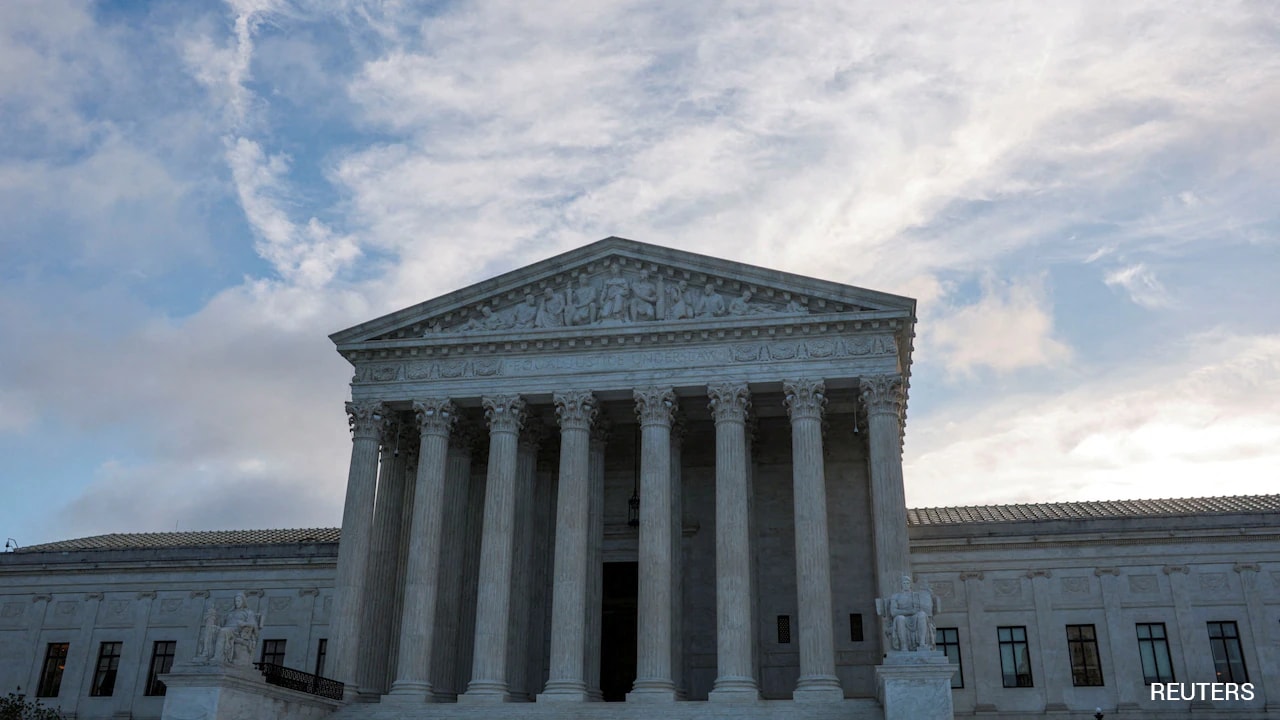
The Supreme Court just handed the White House an emergency loss in federal prisons.
On October 21, 2026, the justices denied the Trump administration's request to immediately enforce new limits on gender-affirming medical care for people in federal custody. The order was brief and unsigned, with Justices Clarence Thomas and Samuel Alito noting they would have granted the request. No explanation came with it.
Still, the practical impact is huge right now. A lower court's injunction stays in place, keeping treatment flowing for roughly 1,000 transgender people held in federal prisons while the underlying lawsuit in Kingdom v. Trump plays out.
If you've been following the court's recent streak on transgender issues, this denial looks surprising on paper. Over the past year and a half, the Supreme Court allowed several administration moves or state restrictions to take effect, including limits on gender-affirming care for minors in United States v. Skrmetti, passport sex-marker rules, military service restrictions, and state bans on trans girls in school sports. Prisons are different. Inside a locked facility, inmates can't walk down the street to see another doctor or pay out of pocket for prescriptions. The government holds the keys to their health care.
What the Bureau of Prisons Policy Would Have Changed
To understand why this fight got so heated, look at what federal officials tried to put in place. Following President Trump's January 20, 2025 executive order directing federal prisons to stop funding transition-related care, the Bureau of Prisons rolled out Program Statement 5260.01 in February 2026.
The policy was sweeping. Under that directive, federal prisons would have:
- Stopped providing gender-affirming surgeries.
- Refused to start new patients on hormone therapy for gender dysphoria.
- Placed incarcerated people already taking hormones on individual tapering plans to phase them off medication.
- Ended social accommodations like wigs, makeup, and chest binders, confiscating those items when practicable.
- Limited gender dysphoria care to psychotherapy, counseling, and psychiatric medication.
Bureau of Prisons leaders argued they reached the policy independently of the executive order, while Justice Department lawyers told the courts that prior care raised security concerns and could no longer be justified.
Advocates saw it differently. Lawyers from the ACLU, the ACLU of D.C., and the Transgender Law Center—representing plaintiffs in federal facilities across states including Florida, Minnesota, and New Jersey—argued the administration was overriding clinical judgment and putting vulnerable people at serious risk.
Why Judge Lamberth and the Appeals Court Pushed Back
When a ruling is an unsigned emergency order, you have to read the lower-court opinions to see the real legal friction. Those opinions explain why the administration hit a wall before even reaching the Supreme Court.
U.S. District Judge Royce Lamberth, a Ronald Reagan appointee, blocked the Bureau of Prisons policy in June 2025 and kept that block going in August. He called the new directive a near-total ban on gender-affirming care and ordered prison officials to stick with the standards that existed before January 20, 2025.
In his 31-page ruling, Lamberth made a point of separating the legal question from political noise. He wrote that the court was not wading into a culture war, but finding that the government violated federal law when it restricted care for inmates diagnosed with gender dysphoria. He also flagged the medical stakes of abrupt cutoffs, noting that untreated gender dysphoria can trigger severe depression, anxiety, and suicidal thoughts.
A divided panel of the U.S. Court of Appeals for the D.C. Circuit agreed to keep Lamberth's order intact on September 18, 2026. In that 2-1 decision, Judges Robert Wilkins and Bradley Garcia wrote that the Bureau of Prisons failed to adequately weigh its own prior experience providing this care. Even sharper, the panel noted that skipping over its own track record and the unreasonableness of the shift made the stated rationales look contrived to match the president's executive order.
Honestly, that administrative-law angle is the part most people miss. Even if officials want a policy change, rushing through a major reversal without confronting your own agency's prior data and medical history invites courts to hit pause.
The Constitutional and Medical Clash Behind the Scenes
Beyond agency procedure, this dispute sits right on top of two competing arguments that have shaped prison health litigation for decades.
On one side is the Eighth Amendment, which bars cruel and unusual punishment. Advocates like ACLU attorney Li Nowlin-Sohl and Human Rights Campaign President Kelley Robinson argue that withholding medically necessary care from people in custody violates basic constitutional protections and flies in the face of mainstream medical guidance. When the state locks someone up, courts have long held it takes on an obligation to treat serious medical and mental health needs.
On the other side is the administration's position on taxpayer money, security, and executive authority. White House officials called the Supreme Court's denial a loss, and administration lawyers have argued that federal funds shouldn't go toward transition-related treatments or conforming an inmate's appearance to the opposite sex, while claiming security risks in prison settings.
What makes this area tricky—and why you shouldn't treat emergency orders as the final word—is the gap between interim relief and final judgment. An emergency stay denial keeps the status quo alive today. It does not decide the ultimate constitutional or statutory merits of Kingdom v. Trump.
What This Means Right Now
Because the Supreme Court left the injunction standing, incarcerated individuals covered by the court's order continue receiving their existing care and accommodations while litigation moves forward in the lower courts. That doesn't mean the fight is over. The government can keep litigating on the merits, and disputes over the scope or renewal of court orders can return to appellate judges or the justices later.
If you're tracking this case closely—whether as a legal observer, advocate, family member, or policy reader—focus on three practical moves:
- Watch the docket in Kingdom v. Trump in the D.C. federal courts rather than relying solely on emergency-order headlines, since final rulings on the merits will carry far more weight than stay denials.
- Read full lower-court orders from Judge Lamberth and the D.C. Circuit to see whether the case turns primarily on federal administrative law or Eighth Amendment constitutional standards.
- Check primary filings from the Bureau of Prisons and legal groups like the ACLU and Transgender Law Center when new motions drop, since prison policy details often shift quietly in court exhibits.


