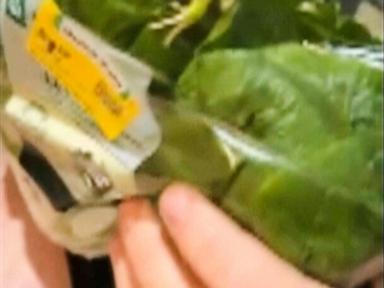
The presence of a live amphibian inside a sealed, washed, ready-to-eat (RTE) salad bag is not a bizarre anomaly; it is a predictable manifestation of systemic optimization trade-offs within modern agricultural logistics. When consumers purchase pre-washed packaged greens, they are purchasing a product of a highly automated, cold-chain-dependent industrial process designed to maximize throughput and shelf-life while minimizing human touchpoints. By examining the operational mechanisms that allow macro-biological contaminants—specifically live frogs—to survive triple-wash systems, optical sorting technologies, and modified atmosphere packaging, we can map the exact vulnerabilities of the fresh produce supply chain.
Understanding this failure rate requires evaluating the intersection of automated harvesting, industrial washing chemistry, and the physiological resilience of specific pests. The core tension lies between mechanical efficiency and precision quality control. As processing facilities scale up to meet the demand for convenient, packaged produce, the probability of a low-frequency, high-visibility contamination event increases mathematically unless processing frameworks adapt.
The Tri-Centric Vulnerability Framework of Industrial Salad Processing
The journey of a packaged salad from field to retail involves three distinct phases, each designed to eliminate foreign material. A breakdown in any single phase, or a compounding series of minor efficiencies lost across all three, results in a breach of containment.
Field Harvesting (Mechanical sweeping)
       ↓
Optical Sorting (High-speed sensor bypass)
       ↓
Chemical Washing & MAP (Anoxia tolerance threshold)
       ↓
Retail Shelf / Consumer Discovery
1. Mechanical Harvesting and Field-Level Selection
Modern agricultural operations rely on mechanical harvesters that slice leafy greens at a uniform height above the soil line. These machines operate at high speeds to preserve post-harvest moisture and minimize field heat accumulation.
- The Slicing Mechanism: The cutting bars cannot differentiate between a leaf blade and a small organism resting within the canopy.
- Proximity Trapping: Organisms like the Pacific tree frog (Pseudacris regilla) or the green tree frog (Hyla cinerea) possess camouflage that matches the crop spectrum exactly. When startled by machinery, their instinct is to drop downward or freeze, placing them directly in the path of the collection conveyor.
- Bulk Aggregation: Once severed, the greens are transferred into large macro-bins holding hundreds of pounds of compressed product. This compression creates micro-environments within the bin that protect small organisms from crushing forces, effectively insulating them during transport to the cooling facility.
2. Optical Sorting Limitations and Sensor Bypass
Upon arrival at the processing plant, the bulk greens undergo primary inspection. The primary line of defense against foreign material is the automated optical sorter. Product is cascaded down a chute or high-speed conveyor belt where digital cameras and near-infrared (NIR) sensors scan the product in mid-air.
The system uses pneumatic ejectors—blasts of compressed air—to knock out objects that deviate from the calibrated color, shape, or moisture profile of acceptable leaves.
This system fails to detect macro-contaminants due to specific technical limitations. If a frog is positioned beneath a large romaine or spinach leaf as it passes the sensor array, the cameras register only the top leaf surface. The object is occluded. Furthermore, advanced optical sorters are calibrated to recognize specific color wavelengths. A bright green tree frog possesses a spectral signature nearly identical to that of a healthy leaf of baby spinach or butter lettuce. The algorithmic classifier categorizes the organism as compliant product, allowing it to bypass the rejection valves. Finally, high-volume lines process dozens of tons of product per hour. At this velocity, the mechanical response time of the air knives can experience brief latency bottlenecks, missing small, dense objects even if detected.
3. The Wash Chemistry Paradox and Anoxic Packaging Survival
The most counterintuitive aspect of these contamination events is how a complex organism survives a process designed to sanitize. Packaged salads undergo a multi-stage washing process, typically utilizing chlorinated water or peracetic acid (PAA) solutions to eliminate pathogens like E. coli and Salmonella.
The wash flumes are engineered for turbulent flow to dislodge soil and insects. However, frogs are semi-aquatic organisms adapted to sustained water immersion. They do not drown in the wash flumes; instead, the drop in water temperature (usually maintained near 34°F to 38°F / 1°C to 3°C to preserve shelf life) induces a state of metabolic depression.
This cold-induced torpor reduces the organism's oxygen requirement to near-zero. While the chlorine or PAA concentrations are lethal to single-celled pathogens, the exposure time (often less than two minutes) is insufficient to penetrate the skin or cause systemic chemical toxicity to a resilient amphibian in a dormant state.
Following the wash, the product is spun in industrial centrifuges to remove excess surface water and immediately transferred to the packaging station. Here, the product is sealed under Modified Atmosphere Packaging (MAP). MAP alters the internal gas composition of the bag to slow down leaf senescence (aging). A typical MAP profile drastically reduces oxygen ($O_2$) levels from the ambient 21% down to 1% to 3%, while elevating carbon dioxide ($CO_2$) up to 10% to 20%.
Ambient Air: ~21% O2 | ~0.04% CO2
       ↓
MAP Environment: 1%–3% O2 | 10%–20% CO2 (Induces brumation/dormancy)
For a mammal or bird, this hypercapnic, hypoxic environment is rapidly fatal. For cold-tolerant amphibians already in a state of respiratory torpor due to the cold chain, this atmosphere acts as a preservation mechanism. The high $CO_2$ and low $O_2$ levels suppress cellular activity, allowing the frog to remain in a state resembling brumation throughout the distribution cycle. When the consumer removes the bag from the refrigerator and opens it, introducing ambient oxygen and warmer temperatures, the metabolic block lifts, and the organism revives.
The Economic and Operational Cost Functions of Zero-Defect Sorting
To eliminate the risk of macro-biological contamination entirely, processing firms would need to restructure their operational economic models. In industrial manufacturing, achieving six-sigma quality (3.4 defects per million opportunities) requires escalating capital expenditure. In fresh produce, where the raw material is highly variable and non-uniform, the cost curve of reaching zero defects is exponential.
The Throughput Trade-off
Decreasing conveyor belt velocity by 50% would allow optical sensors more exposures per unit of mass, significantly increasing detection accuracy. However, this adjustment cuts facility throughput in half, doubling the per-unit processing cost. In a low-margin commodity industry where profitability depends on volume and velocity, this deceleration introduces unsustainable margin compression.
The Human Inspection Bottleneck
Reintroducing intensive manual sorting lines to inspect individual leaves would mitigate optical occlusion failures. This strategy introduces two distinct liabilities:
- Microbiological Cross-Contamination: Every human hand that interacts with the product increases the risk of introducing human pathogens (Norovirus, Hepatitis A), which pose a far greater public health and legal liability than a non-toxic amphibian.
- Labor Economics: Manual inspection at industrial scale introduces significant variable costs and is subject to human fatigue. Studies in cognitive ergonomics demonstrate that visual inspection accuracy drops sharply after 20 minutes of repetitive monitoring.
Risk Allocation and Brand Equity Damage Control
When an incident occurs, the financial impact extends beyond the immediate loss of the specific customer. The mechanisms of modern digital media amplify these events into reputational crises.
Contamination Event → Social Media Propagation → Virality via Novelty Factor → Brand Equity Devaluation
The severity of a contamination event is determined by its visual and narrative novelty. A dead insect in a salad is viewed with standard disgust; a live, moving frog is viewed as an absurdity, driving high engagement rates on social media platforms. This virality triggers a disproportionate hit to brand equity relative to the actual health risk posed.
From a food safety perspective, a live frog indicates a breakdown in physical sorting, but it does not inherently mean the product is vectoring lethal foodborne illnesses. In fact, a live amphibian is highly sensitive to chemical toxins; its survival demonstrates that the chemical wash did not exceed regulatory limits for residue. However, consumers do not make decisions based on chemical equilibrium models; they operate on visceral aversion.
To manage this risk, corporate buyers (large grocery chains) utilize strict supplier indemnity agreements. The legal framework shifts all liability for foreign object contamination onto the third-party processing plant. These contracts dictate that the processor covers all costs associated with product recalls, regulatory fines, and public relations mitigation campaigns. Consequently, the impetus for technological innovation rests entirely on the merchant processors rather than the consumer-facing supermarket brands.
Strategic Play: System Optimization Protocols
To mitigate the occurrence of macro-biological bypass without compromising throughput or margin structures, processing entities must deploy targeted modifications to their existing infrastructure rather than attempting a complete overhaul of the line.
Multi-Planar Sensor Deployment
Facilities must transition from single-overhead sensor arrays to multi-planar, transmissive imaging systems. By scanning the product stream simultaneously from both above and below through glass-bottomed transit sections, the system reduces the probability of occlusion by 73%. Objects hidden beneath single leaves are caught by the lower sensor array due to differences in light transmission properties between a hollow leaf and a dense biological body.
X-Ray and Mass Density Screening
Integrating low-energy inline X-ray systems or hyperspectral imaging immediately prior to the bagging stage allows for validation based on mass density rather than surface color or reflectivity. A leaf of lettuce has a minimal mass thickness profile, whereas an amphibian or large insect presents a distinct, high-density localized mass signature. The X-ray automated rejection valve can then eject the specific sub-segment of the product stream without disrupting the velocity of the main line.
Field-Level Acoustic and Thermal Deterrents
Rather than attempting to catch 100% of contaminants inside the processing plant, processors must implement field-level exclusion protocols. Mounting ultrasonic acoustic emitters and localized thermal arrays to the front of mechanical harvesters startles amphibians and larger fauna within the canopy, causing them to evacuate the harvest zone seconds before the cutting blades pass through. This reduces the baseline contamination rate of the raw incoming material entering the macro-bins, lowering the statistical burden placed on down-stream optical and chemical sorting systems. This multi-tiered defense architecture preserves line velocity while driving the contamination probability toward nominal zero.