The morning alarm cuts through the pre-dawn stillness at five o'clock. It is not an alarm meant to rouse someone for leisure, but a command that must be obeyed without hesitation. In a high-rise flat overlooking Victoria Harbour, a pot of congee goes on the stove. Uniforms are ironed. Curtains are drawn back just an inch to let the gray light of a Hong Kong Sunday bleed into the hallway.
For hundreds of thousands of families across the city, the domestic worker is the invisible thread holding the daily routine together. She is the one who knows precisely how much ginger to put in the soup, how the youngest child likes his shoes tied, and where the spare keys are hidden. Yet, when Sunday arrives—the one legally mandated day of rest—the city transforms. The bridges turn into living rooms. The sidewalks of Statue Square become community centers. You might also find this similar article insightful: The Feathered Crown Myth: How Fast Fashion and Folklore Strangled Artisanal Craft.
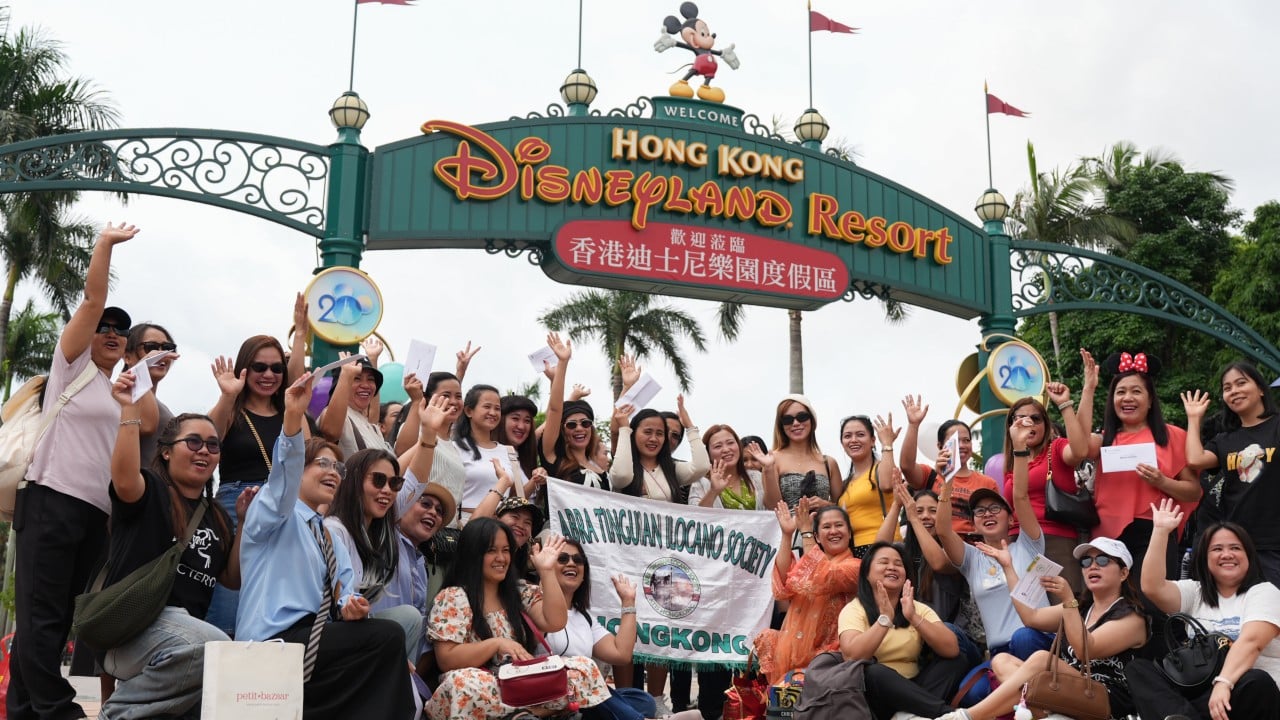
Maria knows this pavement intimately. For six years, she has spent her Sundays sitting beneath the concrete arches of the footbridge near Central, sharing a flask of coffee with women who left their own children behind in the Philippines to raise someone else's. They talk in rapid-fire Tagalog about the rising cost of remittance fees, the latest updates from home, and the quiet ache of missing a daughter's graduation through a pixelated screen.
Affording a trip to a movie theater, let alone buying a ticket for an international blockbuster, is a rare luxury when every dollar sent home matters. Entertainment is often a distant abstraction, a glowing billboard glimpsed from the window of a packed double-decker bus. As reported in detailed reports by Apartment Therapy, the results are significant.
Then came an announcement that changed the math of a weekend.
A Quiet Partnership in Generosity
The Li Ka Shing Foundation, working alongside Disney, quietly finalized a massive initiative to distribute 24,000 complimentary movie tickets for the upcoming release of Toy Story 5 specifically to domestic helpers in Hong Kong.
Numbers on a page rarely capture the texture of reality. Twenty-four thousand is a statistic. But translate that number into footsteps echoing down the aisles of a darkened theater, into the collective gasp of thousands of adults remembering what it felt like to be small, and the statistic becomes a movement.
Consider what happens next: a woman who spends six days a week managing the chaotic rhythm of a bustling household suddenly finds herself holding a piece of heavy cardstock that grants her admission into a realm of pure, unadulterated imagination. No chores waiting. No grocery lists to check twice. Just two hours of animated wonder alongside peers who share her exact journey.
This is not merely about a film. It is an acknowledgment of presence. In a society that often relies on migrant labor while simultaneously rendering it invisible, a gesture of this scale acts as a public validation. It says that leisure is not reserved solely for those who own the homes; it belongs to the hands that help build them.
The Weight of Distance
To understand the emotional core of this gesture, one must look closely at the architecture of migration.
Maria still remembers the first time she arrived in the city. The humidity hit her like a wall at the airport doors. The towering skyscrapers felt like vertical monoliths designed to dwarf human scale. Everything was fast, expensive, and relentlessly loud.
"When you first come here, you feel like a ghost," Maria explains, her voice dropping to a reflective murmur as she recalls those early months. "You are inside a family's most intimate spaces, cooking their meals, bathing their babies, but when you step outside on your day off, you disappear again. You are just a silhouette against the concrete."
The psychological toll of domestic work is rarely quantified in economic reports. The constant negotiation of boundaries—living where you work, working where you live—creates a peculiar kind of fatigue. Sleep does not always equal rest.
When organizations step in to bridge the gap between commercial entertainment and underserved communities, they chip away at that invisible wall. A ticket to a movie like Toy Story is uniquely suited for this bridging act. It taps into universal themes of loyalty, growing up, letting go, and the enduring power of friendship. When Woody and Buzz Lightyear face the uncertainties of a changing world, the emotional resonance hits home for someone who knows all too well what it means to adapt to a foreign environment while holding onto a core identity.
Logistics and Human Impact
Translating a philanthropic vision into 24,000 occupied theater seats requires an intricate dance of coordination. Partnering with local NGOs, labor unions, and community groups, the distribution effort had to reach deep into the networks where domestic workers actually communicate.
Flyers were passed hand-to-hand outside churches in Tsim Sha Tsui. Messages pinged across encrypted chat groups late into Saturday night. For a demographic that relies heavily on digital lifelines to stay connected to their families overseas, the digital word-of-mouth campaign spread like wildfire.
Critics might dismiss a movie ticket as a temporary fix for larger systemic issues. Wages, working hours, and legal protections remain ongoing battles fought in legislative chambers and courtrooms. But to reduce community-building initiatives purely to their policy impact is to misunderstand the human spirit entirely. People do not live by policy alone; they live by moments of joy, shared laughter, and the simple dignity of being included in the cultural fabric of the city they serve.
When Maria received her ticket through her community center network, she did not calculate its monetary value. Instead, she immediately thought of her friend Ana, who has not been to a cinema since arriving in Hong Kong four years ago. They plan to go together on a Sunday afternoon, buying bubble tea beforehand and talking about the plot long after the credits roll.
The Screen Goes Dark
The lights in the theater dim. The familiar blue castle logo fades onto the giant screen, and for a brief moment, the frantic pace of the metropolis outside ceases to exist.
Two thousand miles away, in a province bathed in afternoon sunlight, Maria’s teenage daughter is sitting in a classroom, studying the same stars that her mother looks at from the deck of a public park. They are under the same sky, separated by an ocean of geography, yet united by the quiet resilience that mothers everywhere master.
As the opening notes of the film fill the room, Maria leans back in the plush seat, letting out a breath she didn't realize she was holding. Her shoulders drop. The constant mental checklist of household chores fades into the background. Here, in the dark, she is not an employee, not a foreigner, not an invisible worker navigating the margins of a high-speed economy.
She is simply an audience member, waiting for the story to begin.