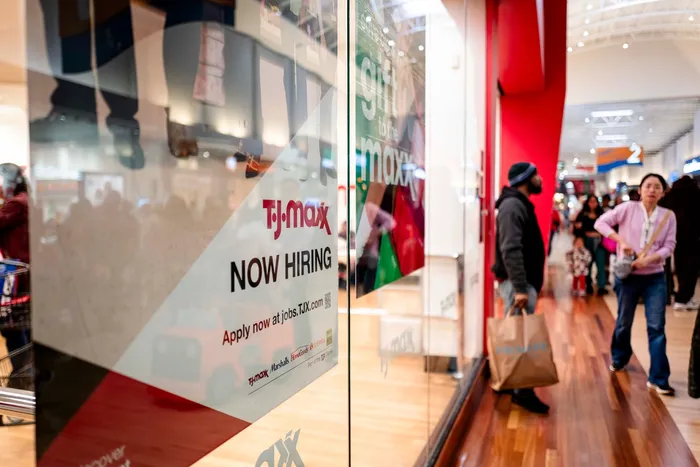
Initial jobless claims function as the highest-frequency thermometer for the U.S. economy, providing a weekly readout of involuntary separations. When these claims settle at levels significantly below the 200,000 threshold, they signal more than just "low unemployment." They indicate a structural imbalance between labor demand and labor supply that forces a reconfiguration of corporate margin management. The current persistence of claims near historic lows, despite a high-interest-rate environment, suggests that the traditional Phillips Curve—the inverse relationship between unemployment and inflation—has reached a point of extreme verticality.
The Mechanism of Labor Hoarding
The primary driver behind suppressed jobless claims is a phenomenon known as labor hoarding. Businesses that struggled to rehire during the post-pandemic recovery have internalized the high cost of talent acquisition. This creates a specific decision-making framework for firms facing economic headwinds:
- Fixed Cost Transition: Labor is increasingly viewed as a fixed cost rather than a variable one. The expense of recruiting, onboarding, and training a new employee now exceeds the temporary cost of maintaining an underutilized one during a minor slowdown.
- The Skills Gap Barrier: Low claims reflect a scarcity of specialized skills. Firms recognize that letting go of technical or highly experienced staff is a permanent loss of institutional capital, as the replacement pool is non-existent.
- Asymmetric Risk Profile: The risk of being understaffed during a sudden demand uptick is perceived as greater than the risk of carrying excess payroll for two to three quarters.
This behavior fundamentally alters the transmission mechanism of monetary policy. Typically, higher interest rates cool the economy by forcing layoffs; however, if firms refuse to cut staff, the "lag" in monetary policy extends significantly, requiring rates to remain higher for longer to achieve the same cooling effect.
Dissecting the Claim-to-Population Ratio
Raw numbers in isolation provide a distorted view of economic health. To understand why 200,000 claims today is "tighter" than 200,000 claims in the 1990s, one must apply a denominator that accounts for the expansion of the civilian labor force.
In 1968, when jobless claims hit historic lows, the U.S. labor force was approximately 76 million people. Today, it exceeds 167 million. On a proportional basis, current claims represent a smaller fraction of the workforce than at almost any other point in modern industrial history. This creates a state of Full Employment Equilibrium, where the natural rate of unemployment (NAIRU) may be lower than previously estimated by the Federal Reserve.
The friction in this system is not the lack of jobs, but the lack of "fluidity." When claims are this low, the quit rate—often tracked via the JOLTS report—becomes the more vital metric. Low claims plus high quits indicate a confident workforce; low claims plus low quits suggest a frozen market where neither employers nor employees are willing to move, leading to stagnation in productivity growth.
The Three Pillars of Labor Market Resilience
The resilience of the current labor market rests on three distinct structural pillars that prevent a surge in claims:
- Service Sector Dominance: Unlike the manufacturing-heavy economy of the 20th century, the current U.S. economy is driven by services. Service industries are less capital-intensive and less sensitive to immediate interest rate fluctuations than goods-producing sectors, which rely on heavy financing.
- Remote Work Efficiency Gains: Remote and hybrid models have allowed firms to tap into geographic talent pools that were previously inaccessible, lowering the "friction" of hiring and allowing companies to keep staff longer by offering flexibility instead of raw salary increases.
- The Retirement Cliff: The demographic reality of the "Silver Tsunami" means that for every worker laid off, there is often a vacancy created by a retiring Baby Boomer. This natural attrition absorbs potential claimants before they ever enter the system.
The Divergence Between Claims and Sentiment
A significant delta has emerged between hard data (jobless claims) and soft data (consumer and business confidence surveys). While claims show stability, sentiment often reflects anxiety. This divergence is explained by the Cost of Living Adjustment Lag.
While workers have job security (low claims), their purchasing power has been eroded by cumulative inflation. This creates a "Rich Recession" feel, where the labor market is technically perfect, but the individual's economic utility is declining. For the strategist, this means that while mass layoffs are unlikely, consumer discretionary spending will remain under pressure because the quality of employment—measured by real wage growth—is not keeping pace with the quantity of employment.
Impact on the April Jobs Report and Macro Projections
Heading into the April jobs report, the stability in weekly claims serves as a leading indicator for the Non-Farm Payroll (NFP) print. There is a direct mathematical correlation between low initial claims and a "beat" in payroll additions, provided the labor force participation rate remains steady.
However, the risk is no longer "downside" (a sudden spike in unemployment), but rather "upside" (wage-price persistence). If claims remain at these levels, the Federal Reserve faces a "No Landing" scenario. In this framework, the economy does not slow down enough to bring inflation to the 2% target, forcing a re-evaluation of the neutral interest rate ($r^*$).
The Operational Strategy for Firms
In an environment of permanent labor tightness, the corporate playbook must shift from headcount management to output optimization.
- Automation as a Defensive Hedge: Investment in AI and robotics should not be viewed as a way to replace existing workers, but as a way to maintain growth capacity in the absence of new hires.
- Total Compensation Restructuring: Since the labor market is too tight to allow for easy replacement, firms must pivot toward retention through equity, performance-based bonuses, and healthcare benefits, which are less inflationary than straight base-salary increases.
- Productivity-Linked Wage Growth: To avoid a margin squeeze, any increase in labor cost must be tied to a measurable increase in unit labor productivity. Firms that fail to make this link will see their valuations compressed as the "cost of labor" consumes an increasing share of EBITDA.
The labor market is not merely "strong"; it is structurally rigid. This rigidity suggests that the era of "easy hiring" is over for the foreseeable decade. Strategy must now account for a baseline where the supply of labor is the primary constraint on GDP growth, rather than the supply of capital or consumer demand. The most successful organizations will be those that treat their existing payroll as a scarce resource to be leveraged through technology rather than a variable cost to be managed through cycles.