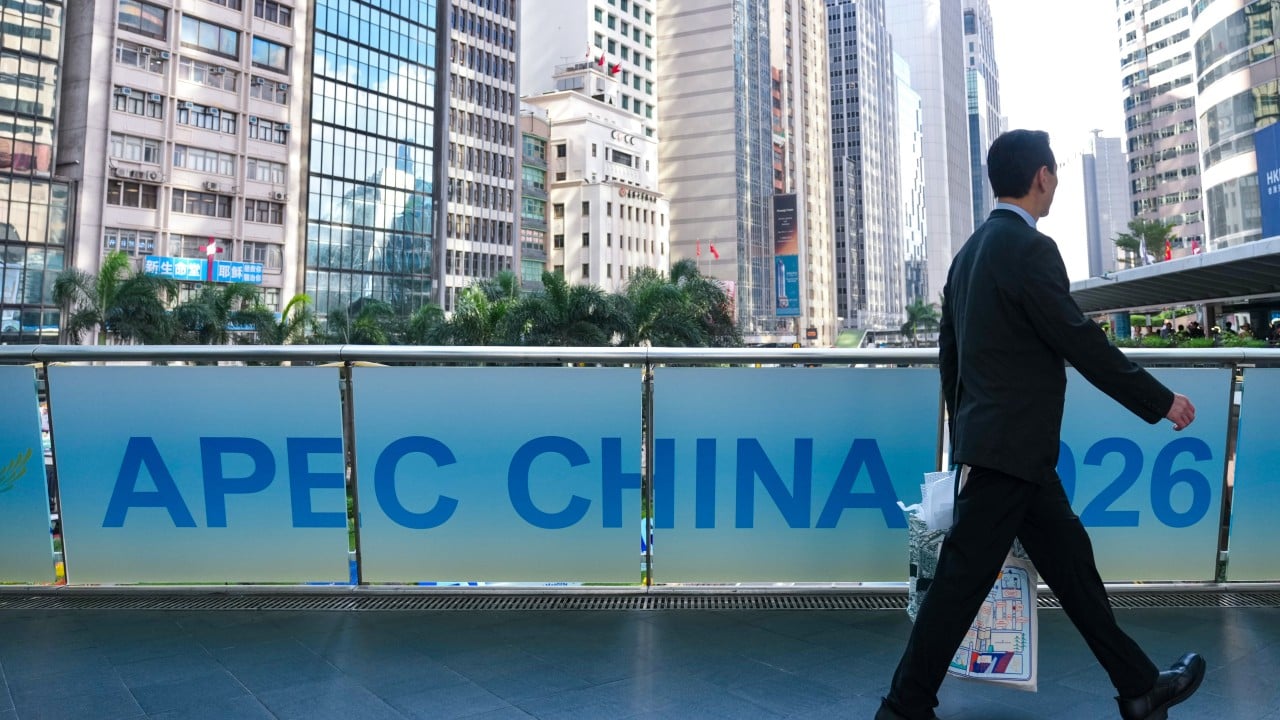
Economic discourse concerning regional trade hubs relies heavily on morphological metaphors. Terms like gateway, bridge, and conduit obscure the underlying transactional mechanics that determine whether an intermediary adds value or extracts rent. When policy advisers promote institutional alignment and regulatory harmonization under the banner of soft connectivity, they describe a reduction in friction coefficients across cross-border markets. To evaluate these claims accurately, we must deconstruct how Hong Kong operates within the broader topography of the Greater Bay Area and international trade flows, moving past diplomatic rhetoric to examine the actual cost functions of trade intermediation.
The economic utility of any intermediary rests on its ability to lower transaction costs relative to direct bilateral exchange. These costs manifest across three distinct vectors: informational asymmetry, legal and regulatory friction, and capital allocation overhead.
Informational asymmetry occurs when buyers and sellers lack transparent pricing or credibility metrics. Hong Kong historically mitigated this by supplying trusted common law adjudication, transparent accounting standards, and international arbitration frameworks. Yet, as mainland financial centers mature and regional regulatory systems evolve, the comparative advantage of this legal infrastructure depends on execution speed and interoperability rather than static historical reputation.
Regulatory friction represents the administrative drag imposed by divergent compliance regimes, customs protocols, and capital controls. Soft connectivity attempts to minimize this drag through mutual recognition agreements, digital customs documentation, and professional qualification equivalencies. When a professional credential earned in Hong Kong is recognized across neighboring jurisdictions, the marginal cost of deploying human capital across borders drops toward zero. This reduction directly expands the addressable market for specialized services.
Capital allocation efficiency dictates how rapidly liquidity can flow to productive assets. Hong Kong functions as a liquidity accumulator, drawing international capital seeking exposure to mainland growth and mainland capital seeking diversified global deployment. The efficacy of this function is measured by bid-ask spreads, foreign exchange conversion velocities, and the depth of secondary markets.
A rigorous evaluation of regional integration strategies requires mapping the friction points that impede capital, talent, and data movement. Traditional economic analysis focuses on hard infrastructure—ports, high-speed rail networks, and logistics terminals. However, marginal returns on physical infrastructure investment diminish rapidly once baseline capacity matches or exceeds throughput demand. At that juncture, economic expansion becomes bottlenecked by institutional incompatibility.
The primary constraint on regional velocity is not physical transit time, but regulatory misalignment. For instance, when data cannot move freely across jurisdictional boundaries due to divergent data privacy and cybersecurity mandates, multinational enterprises must duplicate data storage and processing infrastructure. This duplication introduces a structural tax on digital commerce. Similarly, professional service providers face licensing barriers that prevent the unified delivery of legal, accounting, and engineering services across municipal borders.
Addressing these bottlenecks requires a shift from harmonized compliance—which is politically intractable given distinct sovereign legal frameworks—to mutual recognition and interoperable standards. Interoperability allows distinct systems to exchange value without requiring either system to alter its domestic architecture. In financial technology, this is observed in cross-border payment linkages that settle transactions instantly without forcing participating central banks to merge ledger systems. Applying this principle to trade finance and professional services creates an institutional harbour that reduces compliance overhead without triggering jurisdictional disputes.
Intermediaries face a continuous risk of bypass as technological and structural shifts alter market topology. Direct connectivity tools—ranging from algorithmic direct market access to decentralized supply chain platforms—allow primary producers to interact with end markets without traditional brokers. To survive this disintermediation pressure, an intermediary must evolve from a passive tollbooth into an active value-adder.
Value-add intermediation relies on complex problem-solving, risk transformation, and specialized trust architecture. While basic capital routing can be automated, structuring multi-jurisdictional compliance for complex infrastructure projects or navigating cross-border intellectual property enforcement requires high-context human expertise. Hong Kong position within regional trade networks must therefore pivot toward specialized institutional engineering. This involves acting as a testing ground for experimental regulatory frameworks, such as controlled sandboxes for digital asset regulation or cross-border data transfer protocols that satisfy both national security and commercial utility requirements.
Strategic planners must abandon the assumption that geographical proximity or historical status guarantees long-term economic relevance. The future performance of trade hubs depends on the precise calibration of their institutional offerings against the shifting cost functions of global enterprises. Policy initiatives should abandon vague exhortations regarding prosperity and instead target quantifiable friction reduction metrics: the time required to establish a cross-border entity, the reduction in dual-compliance overhead for technology firms, and the liquidity depth of offshore capital pools. By systematically dismantling administrative barriers and focusing on institutional interoperability, regional intermediaries can secure a durable economic function in an increasingly fragmented global trade environment.