The geopolitical competition between Washington and Beijing is frequently evaluated through physical and financial ledgers. Observers track semiconductor fabrication yields, capital expenditure on artificial intelligence infrastructure, and state subsidies directed toward domestic manufacturing. This hardware-centric lens misses the primary engine of technological dominance. The decisive variable in the modern innovation race is not capital or silicon; it is the institutional architecture governing the global mobility of elite human capital.
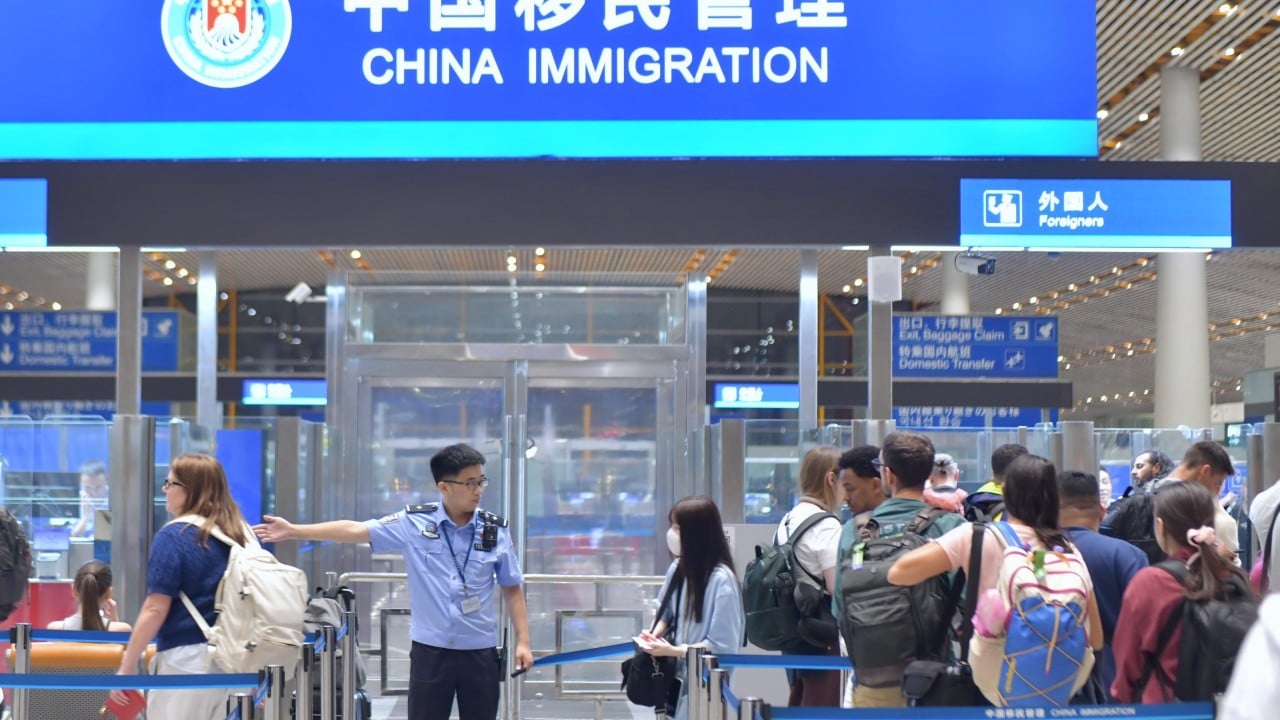
China possesses vast financial resources and unmatched manufacturing scale, yet its structural inability to absorb and retain international scientific talent creates a critical asymmetry in its rivalry with the United States. While Washington struggles with bureaucratic gridlock and increasingly restrictive vetting procedures in its immigration pipelines, Beijing operates within a rigid domestic framework that fundamentally discourages long-term integration for foreign engineers, researchers, and entrepreneurs. Resolving this constraint requires more than incremental adjustments to work permits; it demands a fundamental redesign of how the state defines national identity, legal status, and professional autonomy.
The Epistemology of Scientific Velocity
Technological breakthroughs do not emerge from isolated national laboratories operating under strict administrative mandates. They are the product of intellectual collisions occurring within dense, cosmopolitan ecosystems. Modern research in artificial intelligence, synthetic biology, and quantum information science relies on tacit knowledge—expertise that cannot be codified in manuals or transferred via academic papers, but travels exclusively within human networks.
Empirical analyses of global artificial intelligence research demonstrate that a disproportionate percentage of the world's leading scientists originate from a small number of geographic hubs, with China producing a massive share of undergraduate engineering degrees. However, the movement of these researchers has historically followed a unidirectional vector toward Western institutions, driven by predictable legal frameworks, open publication norms, and higher ceilings for professional autonomy.
When a nation restricts its talent pool to domestic graduates, it limits the variety of heuristic approaches applied to complex problems. Homogeneous research environments tend to reproduce existing paradigms rather than challenge them. The United States historically derived its technological supremacy from a global recruitment model, acting as a gravitational sink for international brilliance. China's current strategy relies heavily on repatriating domestic talent through programs like the Thousand Talents Plan. While repatriation brings back significant technical expertise, it fails to capture the broader demographic of non-Chinese innovators who drive diversity of thought in global technological centers. Winning the tech rivalry requires capturing mobile talent from every continent, not merely recalling citizens from abroad.
The Administrative Friction of China's Talent Framework
To understand why China struggles to attract non-Chinese technical talent, one must examine the mechanics of its legal and social infrastructure. Obtaining permanent legal status in China—often referred to colloquially as acquiring the world's most difficult green card—has historically required extraordinary, narrowly defined contributions, such as major national awards or senior executive positions in specific state-prioritized industries. For standard mid-career software architects, machine learning researchers, or biotech founders, the pathway to legal permanence is opaque and discretionary.
This friction manifests across three distinct operational dimensions:
- Regulatory Predictability: Foreign nationals operating in Western tech ecosystems face bureaucratic delays, but the rules governing visa duration, status adjustments, and employment mobility are codified in statute and subject to judicial review. In contrast, China's residence and work permit procedures often involve decentralized local administration, creating high variance in enforcement and compliance expectations across different municipal jurisdictions.
- Social and Cultural Integration: Technological talent evaluates lifestyle factors alongside professional compensation. Linguistic barriers, strict data localization mandates, restricted digital communication platforms, and a social fabric deeply anchored in shared cultural heritage create steep barriers to entry for expatriate professionals who lack familial ties to the region.
- Institutional Autonomy: Top-tier researchers prioritize freedom of inquiry, open access to international data sets, and decentralized collaboration. China's state-directed research model, while efficient for targeted engineering challenges like hypersonic deployment or high-speed rail, introduces administrative friction and ideological oversight that stifle exploratory, high-risk scientific inquiry favored by global research talent.
These operational hurdles create a leaky pipeline. Even when Chinese tech giants offer compensation packages that rival or exceed Silicon Valley baselines, international engineers frequently decline offers due to long-term uncertainty regarding family status, property ownership rights, and the enforceability of labor contracts under local legal frameworks.
The Dual Vulnerability of Washington and Beijing
Both superpowers currently manage flawed immigration systems, but their vulnerabilities stem from opposite pathologies. Washington suffers from bureaucratic calcification, political polarization, and statutory caps established decades before the advent of modern software and artificial intelligence. The H-1B visa lottery system relies on random allocation rather than meritocratic filtering, and multi-decade green card backlogs for applicants from high-volume source countries trap critical technical personnel in precarious employment loops.
Despite these dysfunctions, the United States retains an intrinsic structural advantage: institutional prestige and cultural soft power. Foreign engineers tolerate the friction of the U.S. immigration system because the potential career upside, access to venture capital, and integration into elite research clusters remain unparalleled.
Beijing faces the inverse challenge. Its leadership recognizes that dominance in foundational technologies requires foreign expertise, leading to various pilot programs, such as specialized talent zones in Shenzhen and Shanghai offering streamlined visas and tax incentives. Yet, these localized experiments remain constrained by national security imperatives, strict data controls, and a broader political philosophy that prioritizes state security over open migration.
The friction between national security and economic openness creates a policy paradox for Beijing. To insulate its digital infrastructure from foreign espionage and ideological influence, the state maintains strict controls over information flows and cross-border data transfers. However, these exact controls suffocate the open, collaborative environment required to attract top-tier global researchers who are accustomed to unrestricted access to global repositories, cloud infrastructure, and academic partners.
Quantifying the Cost of Talent Isolation
The economic cost of restrictive immigration policies can be modeled through the lens of human capital productivity multipliers. In advanced technology sectors, a single principal architect or lead researcher does not merely execute tasks; they anchor clusters of productivity, mentoring dozens of junior engineers and attracting venture capital to adjacent startups.
When a country fails to integrate foreign talent, it experiences a compounding deficit in innovation velocity. Consider the lifecycle of artificial intelligence infrastructure development. Algorithmic architecture, hardware acceleration design, and dataset curation require multidisciplinary inputs. Restricting the flow of international practitioners narrows the pool of available problem-solvers, forcing domestic firms to reinvent frameworks that have already been optimized elsewhere.
Furthermore, demographic realities compound this challenge for China. With a rapidly aging population and a shrinking domestic workforce entering retirement age, China's total factor productivity growth faces severe downward pressure. Relying solely on automation and domestic labor augmentation is insufficient to offset the demographic deficit. Sustained technological leadership requires an ongoing influx of young, highly productive human capital from abroad to maintain the necessary ratio of innovators to dependents.
Strategic Restructuring for National Competitiveness
To alter this trajectory and establish parity or superiority in the global talent market, a state must transition from viewing immigration through the lens of population control to treating it as an essential industrial input. This requires a pragmatic overhaul of policy mechanics across legal, economic, and institutional domains.
First, the legal framework for residency must be decoupled from immediate employer sponsorship. In competitive technology markets, talent thrives on mobility. Permitting elite researchers and startup founders to hold independent residency status—contingent upon demonstrated earnings, academic credentials, or venture backing—eliminates the coercive dynamic of employer-tied visas and encourages risk-taking.
Second, administrative transparency must replace bureaucratic discretion. The criteria for permanent legal status and eventual citizenship must be clear, objective, and insulated from shifting political winds. If international talent cannot forecast their legal status over a five-to-ten-year horizon, they will allocate their human capital to jurisdictions offering higher legal certainty.
Third, institutional environments within research universities and corporate labs must be granted greater operational insulation. Creating dual-track research zones where international scientists can operate under global standards of data access, peer review, and publishing freedom—while maintaining national security firewalls around sensitive dual-use defense technologies—can reconcile the tension between state control and scientific openness.
The global tech rivalry will not be decided by who builds the largest manufacturing plant or imposes the most restrictive export controls. It will be decided by which nation creates an environment where the world's most capable minds can live, work, and build without administrative paralysis. Until Beijing addresses the foundational friction of its immigration and social integration architecture, its technological ambitions will remain artificially capped by the limits of its domestic talent pool.