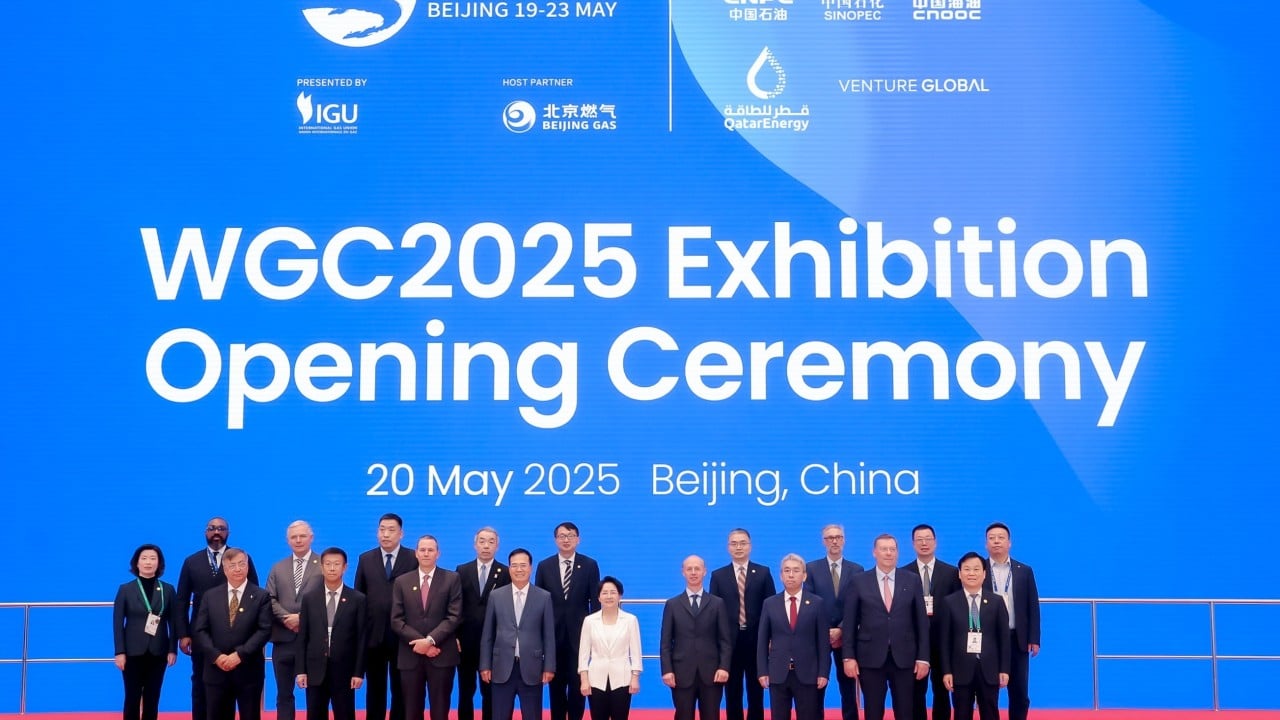
The operational stability of regional energy markets depends entirely on continuous baseload supply, infrastructure liquidity, and regulatory alignment across import terminals and pipeline networks. When industry stakeholders convene at major sector assemblies such as the International Gas Union gathering in Hong Kong, the underlying driver is not diplomatic consensus, but the rigorous coordination of capital allocation, long-term contracting mechanisms, and supply chain resilience. Assessing the strategic implications of such summits requires deconstructing the economic variables governing cross-border gas trade, liquefaction capacity constraints, and the balancing act between decarbonization mandates and energy security.
The Structural Drivers of Regional Gas Demand
Market stability in densely populated, import-dependent urban centers relies on minimizing supply volatility. Natural gas serves as a transition fuel and a primary grid stabilizer, balancing intermittent renewable generation profiles. Urban and industrial consumers in economies like Hong Kong operate within constrained geographical footprints, limiting localized renewable generation or utility-scale energy storage solutions. Consequently, the demand function for gas is inelastic in the short term, dictated by baseline power generation needs and industrial heating requirements.
Analyzing this demand reveals a dual pressure vector. First, utility operators must secure reliable liquefied natural gas shipments through spot markets or multi-decade purchase agreements. Second, these procurement strategies face escalating scrutiny regarding lifecycle carbon intensity, driving demand for infrastructure upgrades such as carbon capture integration at terminal sites and fugitive emission monitoring along supply corridors.
Capital Allocation and Liquefaction Constraints
Global supply capacity is bounded by capital-intensive upstream extraction projects and downstream regasification bottlenecks. The economic viability of moving gas across maritime routes depends on three distinct cost variables:
- Liquefaction economics at the point of origin, which are tied directly to feedstock gas prices and capital expenditure cycles for mega-scale processing trains.
- Maritime shipping logistics, where charter rates fluctuate based on vessel availability, propulsion technology efficiency, and route-specific geopolitical friction.
- Regasification terminal throughput efficiency, determining how quickly liquid fuel can be vaporized and injected into transmission pipelines.
When industry executives gather to deliberate market trajectory, financing structures for these capital assets take precedence. The transition from oil-indexed pricing models to hub-based pricing creates valuation risks for project developers, necessitating sophisticated risk-hedging instruments. Without predictable capital flows, infrastructure expansion stalls, creating structural deficits that materialize during peak demand cycles or supply disruptions.
Regulatory Alignment and Cross-Border Interoperability
Regional energy architectures are rarely self-contained. Hong Kong functions as a vital node within a broader Asian energy web that includes mainland transmission grids and regional floating storage and regasification units. Effective operation requires technical interoperability and synchronized regulatory frameworks governing safety standards, environmental compliance, and open-access pipeline rules.
Regulatory fragmentation introduces friction into emergency supply responses. If neighboring jurisdictions maintain conflicting specifications for gas quality, sulfur content, or odorization, diverting shipments during a supply crunch becomes logistically complex. Industry forums provide the necessary multilateral venue to harmonize technical standards, reducing transaction costs for multinational energy traders and improving systemic shock absorption.
The Decarbonization Mandate within Fossil Fuel Infrastructure
Integrating environmental targets into legacy gas networks presents a complex engineering and financial puzzle. Asset owners face the risk of premature obsolescence as policy mandates tighten carbon emissions ceilings. To mitigate this structural depreciation, asset strategies must incorporate decarbonization vectors directly into operational workflows:
- Electrification of upstream and midstream compression stations to eliminate direct combustion emissions.
- Deployment of continuous optical gas imaging and IoT sensor arrays to detect and eliminate methane leaks across distribution networks.
- Preparation for hydrogen blending into existing pipeline transmission systems, which requires metallurgical stress testing and seal replacement protocols.
These modifications require significant upfront capital expenditure without immediate revenue enhancement, altering the risk-return profile for institutional investors backing energy assets.
Strategic Asset Management and Supply Chain Resilience
Operating within this environment requires transitioning from reactive procurement to predictive supply chain engineering. Asset operators must continuously stress-test their portfolios against extreme weather events, maritime choke-point disruptions, and geopolitical trade restrictions. Diversifying procurement portfolios across multiple geographic basins mitigates concentration risk, while maintaining strategic storage buffers protects against sudden spot-market price spikes.
The long-term viability of the gas sector rests on disciplined asset management, transparent contractual frameworks, and continuous efficiency gains across the value chain. Organizations that successfully align their capital deployment with tightening environmental constraints while maintaining operational redundancy will dictate regional energy security.