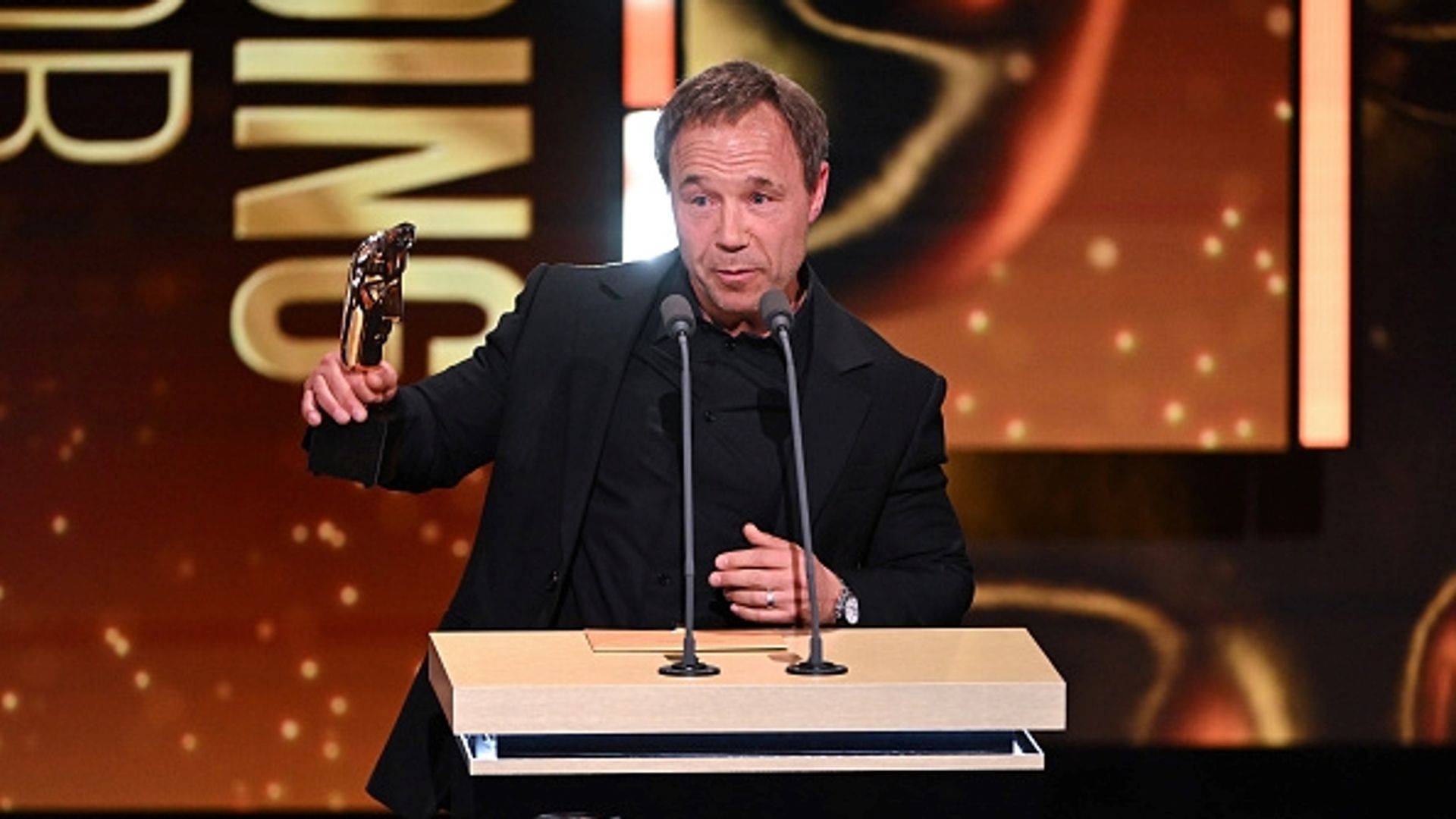
The BAFTA Television Awards function as a high-stakes valuation mechanism for the British creative economy, serving less as a celebratory highlight reel and more as a definitive audit of industry power dynamics. While casual spectators view these events through the lens of individual achievement, the 2024 ceremony revealed a shifting landscape in the distribution of "prestige equity" between traditional public service broadcasters and global streaming conglomerates. The central tension lies in the industry's attempt to reconcile historical institutional prestige with the aggressive capital deployment of platforms like Netflix and Apple TV+. Understanding the true impact of the 2024 results requires a breakdown of three core pillars: institutional dominance, the "creator-performer" hybrid model, and the geopolitical export value of British intellectual property.
The Institutional Dominance Matrix
The distribution of awards across networks follows a predictable but evolving power law. The BBC continues to operate as the primary incubator for domestic talent, using a subsidized risk-taking model that commercial entities often avoid. However, the 2024 results highlighted a specific bottleneck in the mid-budget drama category. While the BBC secured significant wins with The Sixth Commandment, the financial delta between domestic production budgets and global streamer investment is widening. Learn more on a connected issue: this related article.
This creates a two-tier system of cultural output:
- High-Frequency/High-Risk Incubation: Public service broadcasters (PSBs) like Channel 4 and the BBC fund experimental narratives and localized stories that lack immediate global scale.
- Prestige Extraction: Global streamers wait for talent to be "de-risked" by PSBs before acquiring them for large-scale, high-production-value projects.
The dominance of Top Boy (Netflix) in the Drama Series category signifies a critical inflection point where the streaming model has successfully localized its production logic to capture British cultural nuances, previously a protected moat for UK broadcasters. The victory for Jasmine Jobson and the series itself demonstrates that the "Netflix Effect"—the massive expansion of reach and budget—now pairs seamlessly with grit-focused British realism. More analysis by GQ delves into comparable perspectives on this issue.
The Rise of the Multi-Hyphenate Creator-Performer
A defining characteristic of the 2024 winners was the concentration of creative agency within single individuals. The "The Anatomy of the Auteur-Actor" framework explains why certain projects dominated the night. Sarah Lancashire’s win for Happy Valley and the show’s success are inseparable from the specific synergy between performer and writer. This is not merely about acting quality; it is about the "Creative Control Premium."
The industry is moving toward a model where the highest ROI is found in projects where the lead performer also serves as an executive producer or has a long-standing collaborative relationship with the showrunner. This minimizes "narrative drift" and ensures that the marketing of the series is anchored by a recognizable face with deep skin in the game. The success of Squid Game: The Challenge in the Reality category further complicates this, as it demonstrates that IP-driven content can now replicate the prestige of original scripted works through sheer scale and brand recognition.
Quantitative Success and the Export Value of "Britishness"
The BAFTA TV Awards serve as a primary marketing engine for the UK’s £4 billion TV export market. Awards act as a "quality signal" that reduces friction in international licensing deals. When a show like Such Brave Girls wins for Scripted Comedy, its valuation in the North American and Asian markets increases immediately. This "Award-Driven Valuation Bump" is the underlying economic driver of the ceremony.
The 2024 ceremony underscored a specific exportable commodity: the "True Crime Prestige" genre. The success of The Sixth Commandment suggests that the British "prestige procedural" is currently the most stable asset class in the industry. These productions rely on a specific cost-to-prestige ratio:
- Low Cost: Limited locations, minimal VFX, reliance on established character actors.
- High Prestige: High-stakes moral dilemmas, "true story" branding, critical acclaim.
This creates a high-margin product that performs exceptionally well on both linear TV and global streaming libraries. The 2024 wins for Timothy Spall and the series itself validate this "efficiency model" of prestige television.
The Technical Deficit in Live Broadcasting
While the content being celebrated represents the pinnacle of storytelling, the ceremony's live broadcast format faces an existential crisis of relevance. The gap between the cinematic quality of the nominated works and the traditional "variety show" format of the ceremony is widening. The 2024 production highlighted a disconnect between the target demographic (younger, digital-native audiences) and the delivery mechanism (linear broadcast with long-form speeches).
The "Engagement Decay Function" in live awards shows is driven by:
- Latency: Winners are often leaked on social media before the broadcast reaches specific segments of the audience.
- Fragmentation: The most valuable "moments" (speeches, red carpet interactions) are consumed as sub-30-second clips on TikTok and Instagram, bypasses the three-hour broadcast entirely.
- Format Stagnation: The reliance on traditional hosting and scripted banter conflicts with the authentic, raw tone of the celebrated content.
To maintain its status as a market-shaping event, the BAFTA TV Awards must evolve into a "content-first" distribution model where the live broadcast is merely one node in a larger digital ecosystem.
Narrative Arbitrage: The Case of "The Bear" and International Categories
The International category win for The Bear illustrates the concept of "narrative arbitrage"—the ability of a show to transcend its specific cultural origins (Chicago high-pressure kitchens) to resonate within the British prestige framework. This suggests that the criteria for "British Excellence" are increasingly influenced by global standards of pacing, cinematography, and "stress-driven" storytelling.
The inclusion and victory of such high-octane American content alongside more understated British dramas like Slow Horses creates a competitive pressure cooker. British producers are now forced to compete for attention not just with their domestic peers, but with the best-funded writers' rooms in the world. This raises the "quality floor" for entry into the BAFTA conversation, effectively pricing out smaller, less capitalized production houses unless they find a highly specific niche.
The Sociopolitical Feedback Loop
The 2024 ceremony did not shy away from the sociopolitical tensions currently defining the UK creative sector. Baroness Floella Benjamin’s Fellowship award served as a structural reminder of the industry’s ongoing "Legacy Correction" phase. This is an effort to rebalance the historical lack of representation within the industry’s upper echelons.
However, the "Representation Tax" remains a factor. Diverse creators often face higher scrutiny regarding the "educational" or "socially relevant" value of their work, whereas their white counterparts are more frequently allowed to exist in the realm of "pure entertainment." The wins for Extraordinary and other genre-bending content suggest a slight loosening of this dynamic, but the core of the BAFTA "prestige" remains heavily weighted toward dramas that tackle heavy social or historical themes.
Structural Challenges in the Talent Pipeline
The frequent mentions of industry strikes and funding cuts throughout the evening highlighted a fragility in the UK talent pipeline. While the 2024 winners represent the culmination of years of work, the current economic climate threatens the next generation of "Prestige Assets."
The industry is currently facing a "Mid-Level Crisis":
- Entry Level: Oversaturated with graduates but lacking stable, paid pathways.
- Elite Level: Concentrated among a small group of highly successful, award-winning creators who secure the bulk of the funding.
- The Missing Middle: A lack of sustainable careers for mid-career directors, writers, and technicians, leading to a "brain drain" toward US-based productions or other industries entirely.
The BAFTA ceremony acts as a mask for these systemic issues, presenting a polished surface that belies the volatility of the production sector.
The Strategic Shift Toward Genre Deconstruction
The 2024 winners indicate a move away from "pure" genre toward "deconstructed" genre. Happy Valley is not just a police procedural; it is a multi-generational family tragedy. Top Boy is not just a crime drama; it is a sociological study of urban neglect. This "Genre Plus" strategy is essential for projects seeking to cut through the noise of the "Peak TV" era.
Strategic recommendations for producers looking to enter the BAFTA-tier valuation bracket:
- Prioritize "Internalized Conflict": The 2024 acting wins focused on internal psychological states over external action. Budget should be allocated toward scripts that allow for long, uninterrupted performances.
- Aggressive Co-Production: To compete with the scale of Netflix, domestic producers must utilize the "Co-Pro Bridge," leveraging BBC/C4 prestige for domestic launch and US streamer capital for global scale.
- Intellectual Property Longevity: The success of Happy Valley’s final season proves that "strategic scarcity"—ending a show at its peak—maximizes its long-term asset value more than infinite seasons of declining quality.
The 2024 BAFTA TV Awards confirmed that while the BBC remains the emotional heart of British television, the economic lungs of the industry are increasingly global. The future of British TV prestige depends on the ability of domestic creators to leverage their unique cultural perspective while adopting the ruthless production efficiencies of the global streaming giants. Producers must now design content with a dual-purpose architecture: localized enough to secure PSB funding, yet modular enough to integrate into a global streaming library without losing its "British" premium. Any project failing to satisfy both ends of this spectrum will find itself excluded from the winner’s circle and, more importantly, from the future of the global content marketplace.