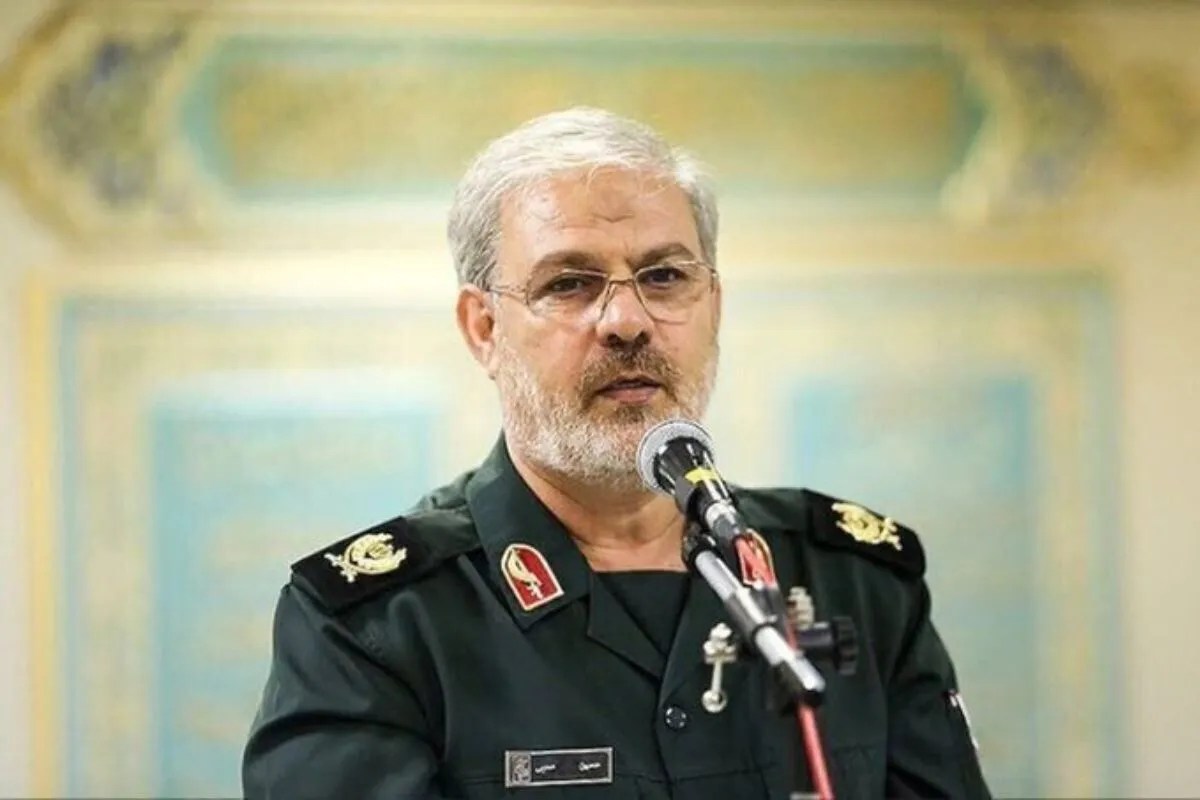
Evaluating grand strategic posturing requires separating operational reality from domestic political signaling. When the Islamic Revolutionary Guard Corps asserts that Washington has been compelled to alter its strategic calculus, the claim relies on an asymmetrical definition of victory. A rigorous analytical breakdown reveals that Tehran’s declarations mask structural economic vulnerability, while Washington's operational posture reflects an ongoing containment strategy rather than a retreat.
To deconstruct the actual dynamics governing the theater, the confrontation must be analyzed through three operational pillars: the maritime choke-point dynamic, the economics of attrition, and the limits of signaling.
The Maritime Choke Point and Force Projection Costs
The primary theater of friction centers on the Strait of Hormuz, where the IRGC attempts to establish localized sea-denial capabilities. From a naval strategy perspective, physical control of a waterway does not require absolute dominance; it requires raising the insurance, transit, and operational risks for opposing commercial and military vessels to an unacceptable threshold.
By enforcing transit restrictions, deploying maritime mines, and utilizing swarm tactics via fast attack craft, Tehran imposes a constant economic friction tax on global energy flows.
However, Washington's response—exemplified by continuous naval task force deployments and enforcement mechanisms—operates on a different cost function. The United States maintains global power-projection capabilities designed to absorb localized disruptions without collapsing core economic frameworks.
When the IRGC claims that Washington's regional plans have failed because regime change has not been achieved through short-term campaigns, it misrepresents the objective function. Contemporary great-power competition rarely relies on rapid, decisive ground invasions; instead, it employs prolonged maritime interdiction, secondary sanctions, and targeted military deterrence to degrade long-term state capacity.
The Asymmetric Cost Function and Economic Attrition
The core metric of success in this protracted standoff is not territory seized or radar installations targeted, but economic sustainability. Financial projections indicate that comprehensive enforcement measures, including targeted secondary sanctions and naval blockades, place severe structural stress on state revenues.
- Revenue Constriction: Restrictions on oil export channels reduce foreign currency reserves, forcing the state to manage severe domestic energy and inflation pressures.
- Reconstitution Bottlenecks: Modern military forces relying on asymmetric drone and missile inventories depend on external supply chains for dual-use microelectronics and guidance components. Interdicting these procurement networks systematically degrades the rate at which expended munitions can be replaced.
- Signaling Expenditure: Kinetic actions, such as drone launches against regional radar systems or naval assets, consume asymmetric financial resources for the defender relative to the interceptor costs borne by air defense architectures.
While IRGC statements frame these exchanges through tactical wins—such as retaliatory strikes or navigational challenges—they bypass the macro-level economic contraction that defines the broader strategic balance.
The Limits of Signaling and Deterrence Failure
Strategic signaling loses utility when the baseline objectives of opposing actors are mutually exclusive. Tehran’s articulated preconditions for de-escalation—demanding the total lifting of sanctions, asset repatriation, and control over regional transit corridors without reciprocal verification—are designed primarily for internal consumption. They present domestic audiences with an narrative of defiance while ignoring the structural realities of international financial systems.
Conversely, Washington’s reliance on naval persistence and economic containment aims to cap the ceiling of Iranian regional proxy operations without triggering a full-scale systemic war that would destabilize global energy markets. This creates a frozen operational stalemate where neither side achieves total victory, but the structural asymmetry of global trade heavily penalizes the isolated actor over a multi-year horizon.
Maintain force posture readiness by monitoring the baseline transit metrics through the Strait of Hormuz alongside the enforcement efficacy of secondary financial sanctions on external dual-use procurement networks.