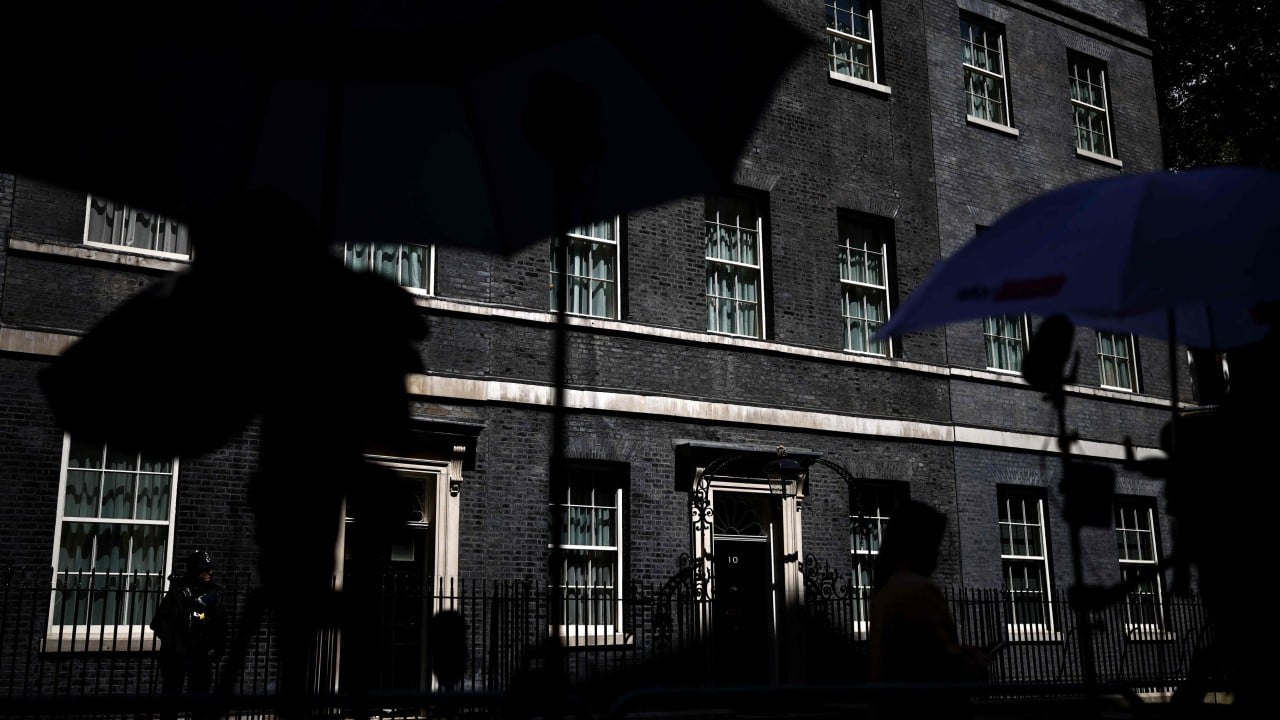
The resignation of a UK Health Secretary specifically to trigger a leadership contest against Prime Minister Keir Starmer represents more than a political disagreement; it is a calculated bet on the failure of the current administration's central delivery mechanisms. This move signals a breakdown in the collective responsibility framework that governs the British Cabinet system. When a senior minister at the helm of the state’s largest spending department—the Department of Health and Social Care (DHSC)—publicly breaks ranks, they are identifying a terminal divergence between executive strategy and departmental viability.
The Architecture of Ministerial Resignation
A ministerial exit of this magnitude functions as a high-stakes stress test for parliamentary discipline. In the Westminster system, the Prime Minister’s authority rests on a fragile equilibrium of backbench consent, cabinet loyalty, and public polling. This defection targets the first two pillars simultaneously.
The decision-making process behind such a resignation follows a predictable logic model:
- Policy Paralysis: The minister identifies that the central government's fiscal or ideological constraints have rendered their department's objectives unachievable.
- Reputational Hedging: The minister concludes that remaining in office will result in shared culpability for an inevitable system failure (e.g., a winter crisis in the NHS).
- Coordination of the Challenge: The resignation serves as a signaling device to other disgruntled MPs, lowering the "cost of rebellion" for others to follow.
The current challenge to Starmer’s leadership suggests that the internal "whip" system—the mechanism used to maintain party discipline—has lost its ability to provide credible threats or incentives to senior figures. This occurs when the perceived probability of the Prime Minister’s survival drops below a critical threshold.
The DHSC Bottleneck and Fiscal Reality
The Health Secretary occupies a unique position in the UK government. The NHS accounts for approximately 40% of all day-to-day government spending on public services. Any friction between the Treasury and the Health Secretary creates an immediate bottleneck in the state’s ability to function.
The departure likely stems from a failure to reconcile the Health Care Cost Curve with the government's Fiscal Rules. As the population ages, the cost of maintaining the current service level increases at a rate higher than GDP growth. If the Prime Minister refuses to authorize either higher taxes or increased borrowing to cover this gap, the Health Secretary is left with two choices: manage a declining service and take the political blame, or resign and claim the leadership is at fault.
By calling for a leadership contest, the outgoing minister is effectively arguing that the "Starmer Doctrine" of fiscal restraint is incompatible with the operational reality of the UK’s most critical infrastructure. This creates a binary choice for the parliamentary party: maintain the current fiscal path and risk service collapse, or change leadership to pivot toward a different economic model.
The Dynamics of Parliamentary Insurrection
Leadership contests in the UK do not happen in a vacuum. They are governed by the specific rules of the 1922 Committee (for Conservatives) or the National Executive Committee (for Labour). However, the informal mechanics are dictated by The Law of Momentum.
A single resignation can be dismissed as an isolated grievance. Two or three resignations within a 24-hour window constitute a "cascade event." In a cascade, the risk of remaining loyal increases exponentially. If the Prime Minister is ousted, those who stayed loyal to the end are often purged from the future cabinet. Therefore, ministers begin to resign not because they necessarily agree with the first defector, but because they cannot afford to be the last person standing on a sinking ship.
The strategic objective of the Health Secretary’s announcement is to maximize the "First Mover Advantage." By being the one to strike first, they frame the narrative of the contest, positioning themselves as the candidate of "principle" rather than "opportunism."
Quantifying the Damage to Executive Authority
The Prime Minister’s power is largely derivative of their perceived invincibility. Once a formal challenge is initiated, the executive's capacity to pass legislation effectively vanishes. Civil servants, sensing a change in leadership, begin to slow-walk departmental initiatives, waiting for new directives from a potential successor.
This creates an Authority Void. The Prime Minister must now spend 100% of their political capital on survival rather than governance. Every meeting with a backbench MP becomes a negotiation for a vote; every policy announcement is scrutinized for its impact on the leadership race.
The vulnerability of Keir Starmer in this context is amplified by the specific nature of his mandate. If his "Iron Discipline" approach is viewed as the cause of the rebellion, his only path to survival is to offer concessions that undermine that very discipline. This paradox often leads to a "Lame Duck" period where the leader remains in office but is stripped of the ability to lead.
Strategic Forecast and the Next Move
The success of this ouster attempt depends on the immediate response of the "Big Four" Cabinet members: the Chancellor, the Foreign Secretary, the Home Secretary, and the Deputy Prime Minister.
- If they issue joint statements of support: The rebellion is likely to be contained to the backbenches and the single high-profile defector. The Prime Minister survives but is weakened.
- If they remain silent: The silence acts as a green light for lower-level ministers to resign.
- If a second senior minister resigns: The Prime Minister’s position becomes untenable within 48 to 72 hours.
For the incumbent, the only viable counter-strategy is a rapid reshuffle to fill the Health Secretary's vacancy with a loyalist, combined with an immediate vote of confidence to "flush out" the rebels before they can coordinate. However, calling a vote of confidence is a high-risk maneuver; it forces undecided MPs to take a side, and if the margin of victory is slim, the Prime Minister is often forced to resign anyway due to a lack of moral authority.
The British state is currently entering a period of extreme volatility. The transition from a stable majority to a contested leadership creates a vacuum that markets and international partners will view with skepticism. The strategic move for any observer is to watch the "payroll vote"—the 100+ MPs who hold government jobs. When the resignations reach the junior minister and Parliamentary Private Secretary (PPS) level, the collapse is systemic and irreversible.