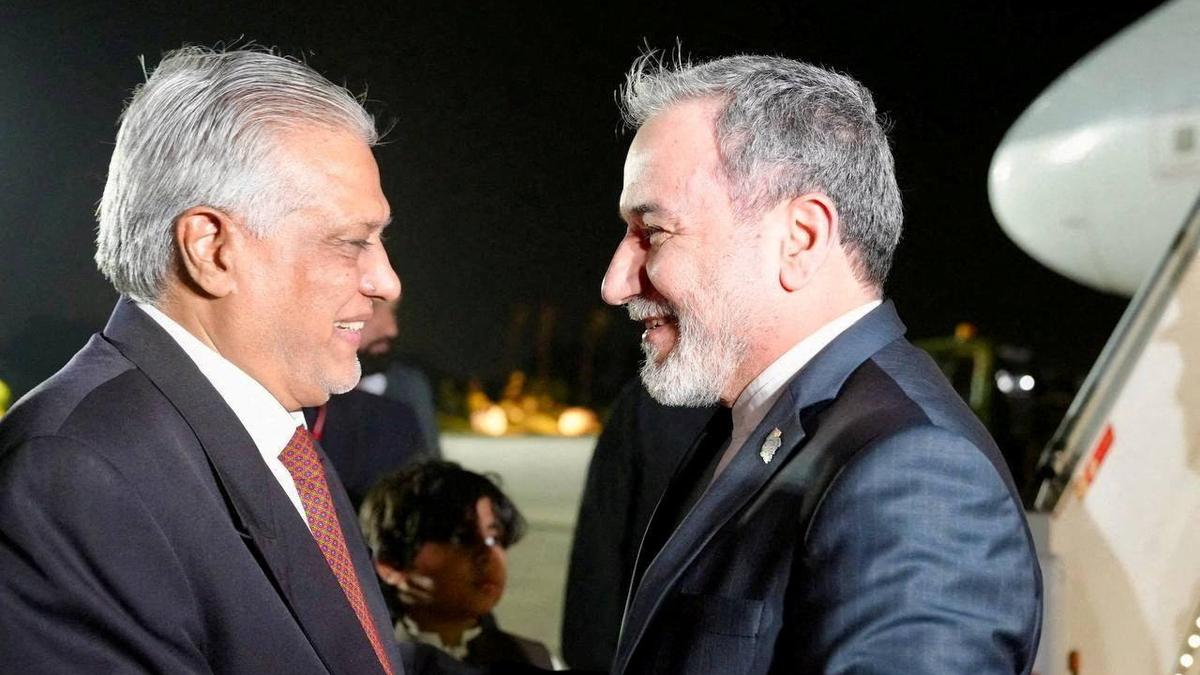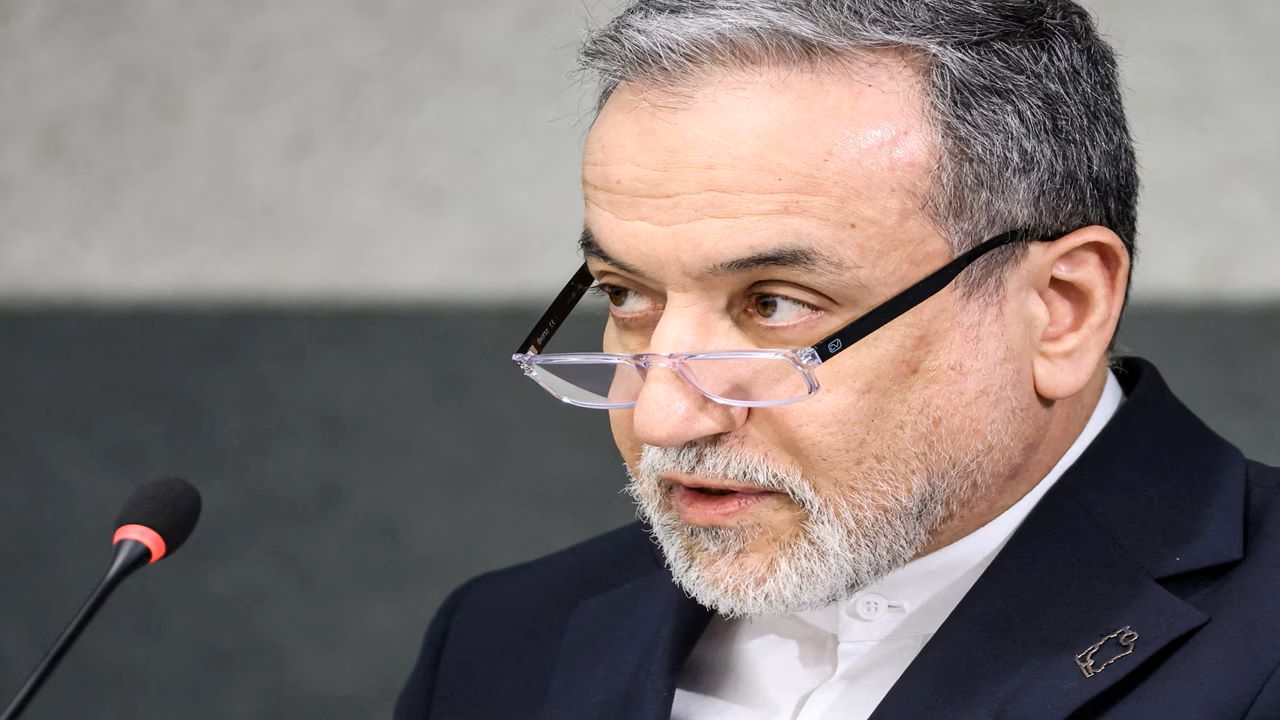
The recent departure of Iranian Foreign Minister Abbas Araghchi from Islamabad, following consultations with Prime Minister Shehbaz Sharif and Chief of Army Staff (COAS) General Asim Munir, signals a recalibration of the "managed tension" model that has defined Iran-Pakistan relations for decades. While superficial reports focus on the optics of high-level handshakes, the actual structural reality is a complex interplay of kinetic border security requirements, competing energy transit ambitions, and the looming shadow of the Middle East’s widening conflict. The stability of this relationship is not a byproduct of shared sentiment but a calculated response to a specific cost-benefit function: the necessity of preventing a second front for both nations during a period of extreme internal and regional volatility.
The Security Quadrant Border Management and Kinetic De-escalation
The primary friction point remains the 900-kilometer border separating Iran's Sistan-Baluchestan province from Pakistan's Balochistan. This corridor functions as a high-entropy zone where three distinct variables intersect: ethnic insurgency, transnational smuggling networks, and third-party intelligence operations.
- The Insurgency Variable: Groups such as Jaish al-Adl (operating against Tehran) and various Baloch liberation fronts (operating against Islamabad) utilize the porous nature of the terrain to evade capture. The January 2024 exchange of missile strikes between the two nations served as a definitive stress test for their bilateral crisis-management protocols.
- The Intelligence Bottleneck: Despite formal mechanisms like the Border Management Committee, intelligence sharing is hampered by deep-seated institutional distrust. Each side views the other's border security apparatus as being either willfully negligent or covertly supportive of proxy elements.
- The Kinetic Response Mechanism: The discussions between Araghchi and General Munir suggest an attempt to formalize a "hotline" architecture. This is intended to replace reactive military strikes with preemptive, coordinated security sweeps. The goal is to lower the probability of accidental escalation that could force both nations into a conflict neither can afford economically.
The Energy-Trade Paradox The IP Pipeline and Sanction Constraints
Economic engagement between Tehran and Islamabad is defined by a massive gap between potential and reality, primarily dictated by the global financial architecture and the U.S. sanctions regime. The Iran-Pakistan (IP) gas pipeline project serves as the ultimate case study in systemic paralysis.
- Contractual Liabilities: Iran has completed its portion of the pipeline. Pakistan, facing the threat of multi-billion dollar penalties for non-completion, remains trapped between Iranian legal pressure and American secondary sanctions.
- The Energy Deficit: Pakistan’s industrial sector faces a chronic shortage of affordable natural gas. Importing Iranian gas is the most logical geographic solution, yet the geopolitical risk premium makes traditional financing impossible.
- Barter and Informal Trade: To bypass the SWIFT banking system, both nations have increasingly turned to barter trade mechanisms. While this provides a valve for local border economies, it lacks the scale required to impact national-level GDP metrics or address Pakistan's larger balance-of-payments crisis.
The talks in Islamabad likely focused on "carve-outs" or specialized economic zones that could facilitate trade in essential commodities—rice, textiles, and petroleum products—without triggering specific sanction triggers. This is not a strategy for growth, but a survival tactic for border-adjacent populations.
Regional Alignment and the Counter-Terrorism Calculus
The visit occurred against the backdrop of heightened Israeli-Iranian hostilities and the ongoing instability in Afghanistan. For Pakistan, the objective is neutrality; for Iran, the objective is the neutralization of potential threats from its eastern flank while it manages the "Axis of Resistance" in the West.
The presence of the Afghan Taliban as a neighbor to both states adds a layer of complexity. Both Tehran and Islamabad are grappling with the fallout of the Taliban's inability or unwillingness to curb the activities of the IS-K (Islamic State Khorasan Province). This shared threat creates a temporary alignment of interests. However, their long-term visions for Kabul remain divergent. Iran prioritizes a multi-ethnic government that protects Shia minorities, whereas Pakistan’s security establishment focuses on neutralizing the Tehrik-i-Taliban Pakistan (TTP), which uses Afghan soil as a launchpad.
Strategic Implications of the Araghchi-Munir Dialogue
The meeting with the COAS is more significant than the meeting with the Prime Minister. In Pakistan’s hybrid governance structure, the military holds the pen on "hard" security files, including the relationship with Tehran. The shift from civilian rhetoric to military-to-military coordination suggests a move toward "Border Hardening."
This strategy involves:
- Fencing and Surveillance: Accelerated physical barriers to limit the movement of non-state actors.
- Joint Patrol Protocols: Moving beyond verbal agreements to synchronized movements along the Zero Point.
- Communication Redundancy: Establishing direct links between the Islamic Revolutionary Guard Corps (IRGC) and Pakistan's Frontier Corps (FC).
Forecast The Path of Pragmatic Containment
The relationship will not evolve into a strategic partnership in the near term. The structural constraints—Pakistan’s reliance on Saudi/UAE financial injections and Iran’s pariah status in Western financial markets—create a hard ceiling for cooperation.
Success for both delegations is measured by the absence of crisis rather than the presence of collaboration. The strategic play for Islamabad is to maintain a "Cold Peace" that allows it to focus on its internal economic stabilization and its western border with Afghanistan. For Tehran, ensuring that Pakistan does not become a staging ground for external intelligence services is the absolute priority.
The most probable trajectory is a continuation of the "low-level equilibrium." Expect periodic security flare-ups followed by high-level diplomatic "shuttle diplomacy" to reset the status quo. The IP pipeline will remain a dormant asset, used primarily as a rhetorical tool in domestic politics and as a bargaining chip in international forums. The real victory lies in the fact that the two nations are talking at all, given the explosive volatility of the current regional environment.
Pakistan must now pivot to managing the expectations of its Gulf allies, ensuring that its engagement with Araghchi is viewed as border management rather than a shift in regional alignment. The failure to maintain this balance would result in a simultaneous loss of Gulf investment and an increase in Iranian-backed border instability—a dual-threat scenario that would be catastrophic for the Pakistani state.