The introduction of a bipartisan resolution targeting Chinese threats to Taiwan ahead of a high-stakes summit between Washington and Beijing represents a calculated move to narrow the executive branch's diplomatic maneuvering room. This legislative maneuver is not merely symbolic; it functions as a preemptive "tripwire" designed to codify US commitment levels before any private bilateral concessions can be negotiated. By hardening the legislative stance, lawmakers are effectively raising the floor for what constitutes an acceptable diplomatic outcome, thereby shifting the equilibrium of the upcoming summit from broad de-escalation toward a more rigid, performance-based stability.
The Tri-Pillar Framework of US-Taiwan Security Policy
To analyze the current legislative push, one must look past the rhetoric of "defending democracy" and examine the three structural pillars that sustain the current status quo. Lawmakers utilize these pillars to calibrate the cost-benefit analysis for Beijing.
- The Legislative Anchor: The Taiwan Relations Act (TRA) and the Six Assurances provide the legal basis for arms sales and non-official relations. This resolution reinforces the TRA by signaling that any deviation from "strategic ambiguity" must trend toward "strategic clarity" rather than accommodation.
- The Silicon Shield: The concentration of advanced semiconductor manufacturing (specifically nodes below 7nm) within Taiwan creates a global economic dependency that functions as a non-military deterrent. Damage to this infrastructure would trigger a global GDP contraction of an estimated 5% to 10% within the first year, making the cost of kinetic conflict prohibitively high for all parties.
- The Maritime Chokepoint: Taiwan’s geography dictates the operational reach of the People’s Liberation Army (PLA) Navy. Controlling Taiwan grants "Blue Water" access to the Pacific, fundamentally altering the defense calculus for Japan, the Philippines, and US bases in Guam.
Quantifying the Cost of Ambiguity
Strategic ambiguity has long served as a tool to prevent a unilateral change in the status quo by either side. However, the efficacy of this policy is decaying as the military balance in the Taiwan Strait shifts. The bipartisan resolution addresses this decay by attempting to re-quantify the "Cost of Aggression" for the Chinese leadership.
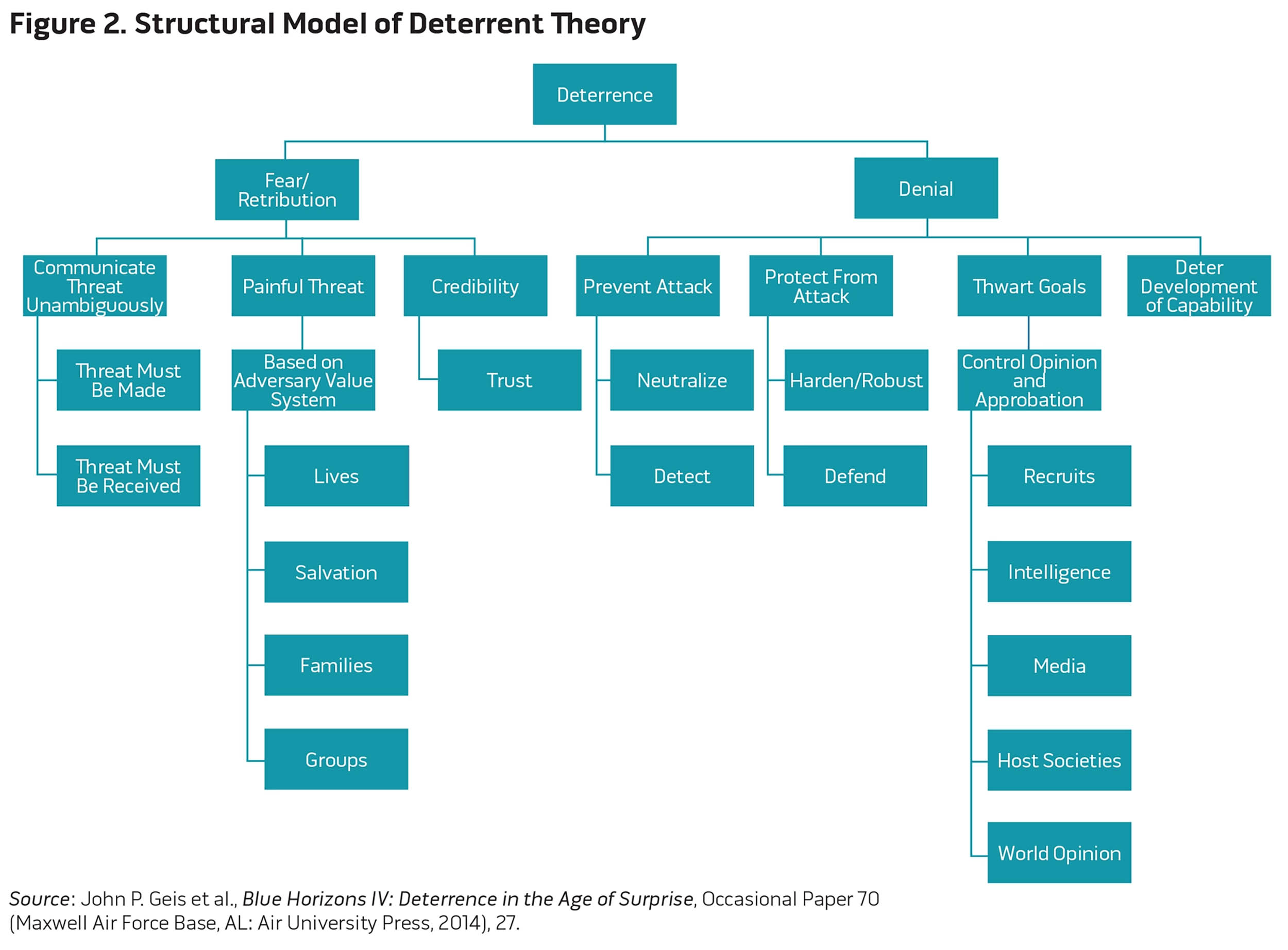
In a standard deterrence model, the formula for deterrence is:
$D = P \times C > B$
Where $D$ is Deterrence, $P$ is the perceived Probability of intervention, $C$ is the Cost of that intervention, and $B$ is the Benefit of the action.
Lawmakers perceive that $P$ (the probability of US intervention) has been diluted by shifting domestic priorities and conflicting global engagements (Ukraine, Middle East). By passing a resolution ahead of the Trump-Xi summit, Congress is attempting to artificially inflate $P$. They are signaling to Beijing that the US political apparatus is unified, even if the executive branch seeks a "grand bargain." This limits the ability of any single administration to trade Taiwan-related concessions for trade or climate gains.
The Technology Transfer and Supply Chain Bottleneck
A primary driver of the current legislative urgency is the accelerating pace of China’s "Military-Civil Fusion" (MCF) program. The resolution specifically targets the intersection of commercial technology and military capability. The logic follows a specific progression:
- Dual-Use Erosion: Commercial investments in Chinese AI and quantum computing directly enhance PLA targeting systems and cyber-warfare capabilities.
- Infrastructure Dependency: Chinese-made telecommunications and port infrastructure (cranes, logistics software) create "passive intelligence" streams that could be activated during a blockade or invasion.
- Decoupling Velocity: The resolution pressures the administration to accelerate the removal of Chinese components from critical supply chains, viewing economic integration not as a stabilizer, but as a vulnerability.
The "Cost Function" of a conflict is no longer just measured in hulls lost or aircraft downed; it is measured in the systemic failure of just-in-time global manufacturing. Lawmakers are arguing that the only way to lower the probability of conflict is to increase the speed of technological decoupling, thereby reducing China’s ability to use economic coercion as a tool to prevent US intervention.
Gray Zone Tactics and the Threshold Problem
Beijing’s current strategy relies on "Gray Zone" activities—actions that fall below the threshold of kinetic war but erode the sovereignty and psychological resilience of Taiwan. This includes:
- ADIZ Incursions: Frequent flights into Taiwan's Air Defense Identification Zone to exhaust Taiwanese pilots and airframes.
- Cognitive Warfare: Disinformation campaigns designed to polarize Taiwanese society and undermine trust in the US.
- Economic Coercion: Targeted bans on Taiwanese agricultural products or electronics to create domestic political pressure within the island.
The resolution seeks to redefine these actions not as "routine maneuvers," but as "preparatory aggression." This is a significant shift in definitions. If Gray Zone tactics are categorized as a precursor to war, the US can justify a wider range of "Left of Launch" responses—such as pre-emptive sanctions or increased forward deployment of naval assets—without appearing to be the primary aggressor.
The Logic of the Summit Pre-emptor
Timing is the most critical variable in this legislative action. By introducing this resolution immediately before a presidential-level summit, Congress creates a "Locked-In" effect. If the President meets with Xi Jinping and fails to address the specific points raised in the resolution, it creates a domestic political vulnerability.
This creates a Two-Level Game scenario:
- Level I (International): The President negotiates with Xi to find a stable equilibrium and avoid accidental escalation.
- Level II (Domestic): The President must satisfy a bipartisan coalition in Congress that views any concession as a sign of weakness.
The resolution effectively reduces the set of "Win-Sets" (outcomes acceptable to both levels). While this may appear to handicap the President, it can also be used as a bargaining chip: "I would like to offer X, but my legislature will not allow it." This "tied-hands" strategy can be an effective way to extract deeper concessions from a counterparty.
Assessing the Limits of Legislative Deterrence
While the resolution strengthens the appearance of unity, it has inherent structural limitations. Legislative "will" does not equate to "capacity."
- The Industrial Base Gap: Even if a resolution mandates increased arms support for Taiwan, the US defense industrial base faces significant lead times for critical systems (e.g., Harpoon missiles, F-16 components). Symbolic support without a corresponding surge in production capacity creates a "Deterrence Gap" where rhetoric outpaces reality.
- The Allied Consensus Variable: The resolution is a US-centric document. However, effective deterrence in the Indo-Pacific requires a multilateral framework involving Japan, Australia, and potentially South Korea. If the US moves too fast toward strategic clarity without coordinating with regional allies, it risks isolating itself or forcing allies into a neutral stance to avoid becoming "front-line" targets.
- The Escalation Ladder: Every action intended to deter can also be perceived as a provocation. Increasing the "Cost of Aggression" for Beijing may also increase their "Fear of Inaction," leading them to believe that the window for "peaceful reunification" is closing permanently. This could inadvertently accelerate their timeline for a forced solution.
Strategic Realignment Requirements
To move beyond the symbolic nature of the current resolution, the US strategy must transition from reactive legislative statements to proactive structural shifts. This involves three specific operational movements:
- Hardening of Information Environments: Moving beyond mere "recognition" of disinformation to active, technical countermeasures that insulate Taiwanese and US domestic audiences from state-sponsored influence operations.
- Diversification of the Silicon Shield: While maintaining Taiwan’s centrality, the US and its allies must create a "Distributed Fabric" of semiconductor production. This ensures that the global economy is not single-threaded through the Taiwan Strait, which ironically makes the defense of Taiwan more sustainable by reducing the global "suicide pact" nature of a potential conflict.
- Expansion of Asymmetric Capabilities: Rather than focusing solely on large-platform sales (ships, planes), the focus must shift to "porcupine" defenses—man-portable anti-tank and anti-aircraft systems, sea mines, and autonomous drone swarms. These systems are harder to target in a first-strike scenario and provide a higher "Denial" value per dollar spent.
The upcoming summit will be judged not by the joint statements released, but by the tangible changes in the PLA’s operational tempo in the months following. If the resolution successfully constrains the executive's ability to offer "empty" de-escalation, it will have served its purpose. If it merely adds noise to an already volatile communication channel, it may contribute to the very miscalculation it seeks to prevent. The strategic play now is to synchronize this legislative signal with a hard-coded increase in regional surge capacity, ensuring that the cost of changing the status quo remains higher than any possible benefit of doing so.