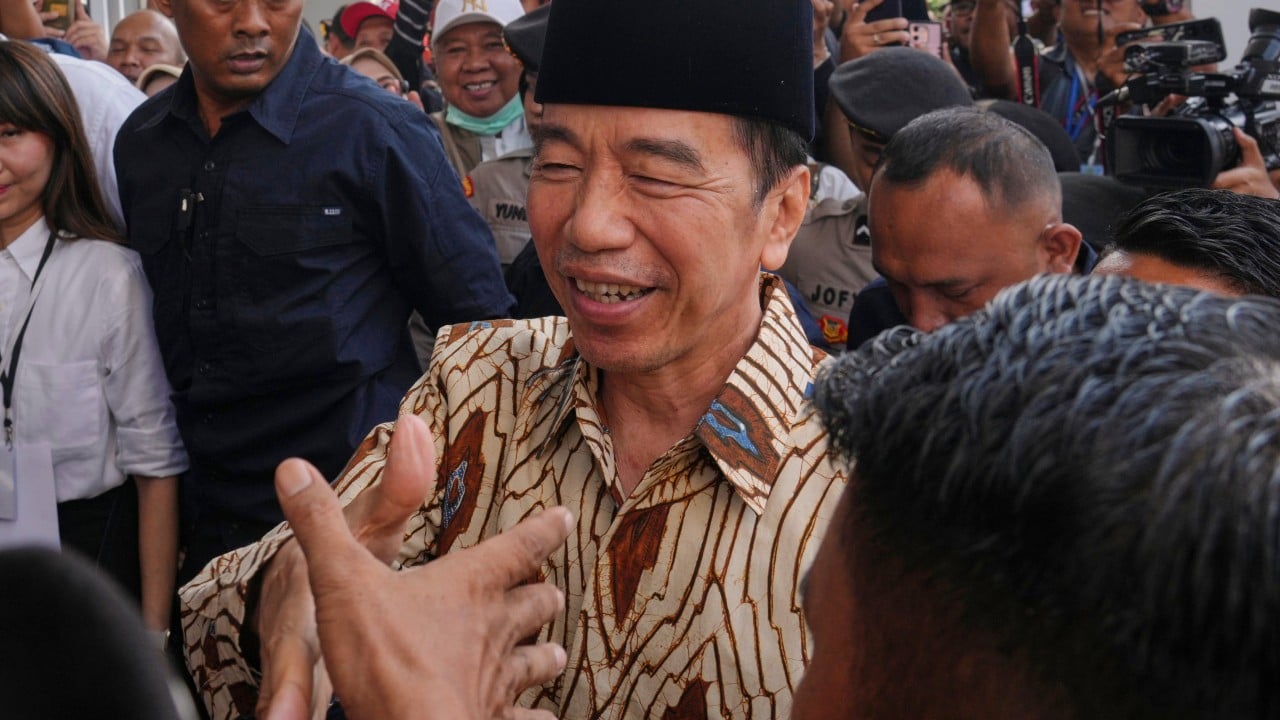
Political dynasties in Southeast Asia rarely collapse from external opposition; they degrade from internal principal-agent divergence once the founder exits formal executive office. Joko Widodo’s current predicament in Indonesia is not a simple narrative of lost friendships or shifting loyalties, but a textbook manifestation of institutional friction following the loss of state patronage distribution. Without direct control over cabinet appointments, state-owned enterprise (SOE) boards, and law enforcement instruments, the transactional glue holding his coalition together is dissolving. Rebuilding a durable political machine requires transitioning from an executive-patronage model to an institutionalized party-apparatus model—a structural pivot that faces severe constitutional and logistical bottlenecks.
The Mechanics of Patronage Decay
To understand the erosion of Widodo’s influence, one must separate personal popularity from institutional power. During his two terms, Widodo operated as a non-party-owner president, relying on the Indonesian Democratic Party of Struggle (PDI-P) as a electoral vehicle while constructing a parallel network of volunteer organizations (relawan) and co-opting rival party elites through cabinet inclusion.
This architecture suffered from a fatal design flaw: asset specificity. The political capital Widodo accumulated was tied directly to the presidency itself, not to a transferable organizational asset like a party chairmanship. Once executive authority transferred to Prabowo Subianto, the cost-benefit calculus for Widodo’s former allies shifted immediately.
- The Patronage-to-Loyalty Exchange Rate: In Indonesian coalition politics, elite loyalty is rented rather than purchased. Cabinet ministers, regional governors, and party chairs align with the sitting president to secure regulatory favors, budget allocations for their constituencies, and insulation from anti-corruption probes. When a predecessor loses the ability to supply these goods, rational actors reallocate their allegiance to the new executive center.
- The Principal-Agent Divergence with Prabowo Subianto: During the 2024 election cycle, Widodo’s interests aligned with Prabowo’s because Widodo needed a successor to protect his legacy projects (such as the Nusantara capital city, IKN) and shield his family’s political ascent. Once inaugurated, Prabowo’s primary incentive shifted from honoring pre-election pacts to consolidating his own unchallenged hegemony. Retaining Widodo’s loyalists in critical bottlenecks—such as the police force, the attorney general’s office, or key economic ministries—creates a dual-power risk that no rational executive tolerates indefinitely.
- The Alienation of the PDI-P Infrastructure: By breaking with Megawati Soekarnoputri to back Prabowo and install his eldest son, Gibran Rakabuming Raka, as Vice President, Widodo severed ties with Indonesia’s most disciplined grassroots party machine. He traded a permanent, ideologically anchored institutional base for a temporary, transactional alliance.
Auditing the Remaining Capital Base
Assessing whether Widodo can reconstruct a dynastic foothold requires auditing his remaining assets against the liabilities accrued during his exit from office.
Asset 1: The Vice Presidency as a Non-Executive Platform
Gibran Rakabuming Raka occupies the second-highest office in the republic, providing constitutional proximity to power and high media visibility. However, the Indonesian vice presidency possesses zero independent constitutional authority; its portfolio is entirely delegated at the discretion of the president. If Prabowo restricts Gibran’s operational scope to ceremonial duties or politically toxic assignments—such as managing stagnation in eastern Indonesia or overseeing underfunded social programs—the office becomes a reputational liability rather than a springboard for 2029.
Asset 2: Dynastic Footholds in Regional Executives
Widodo’s network retains sub-national nodes, notably through his son-in-law Bobby Nasution in North Sumatra and aligned regional heads across Java. In a decentralized archipelago, control over provincial budgets and local bureaucratic machinery offers a baseline capacity to mobilize votes. Yet, regional governors are uniquely vulnerable to central government fiscal transfers and central audit agencies (BPK). Without protection from Jakarta, regional dynastic outposts can be starved of infrastructure funding or subjected to selective legal scrutiny.
Asset 3: Latent Electoral Approval in Central and East Java
Widodo’s personal approval ratings remained historically high upon leaving office, driven by tangible infrastructure delivery and targeted cash transfers (bansos). This sentiment represents latent electoral capital. The operational problem is conversion: popular affection does not automatically translate into legislative seats or presidential nominations without a formal party structure to register candidates, fund campaigns, and monitor vote tabulation across 800,000 polling stations.
The Institutional Bottleneck: The Party Ownership Problem
In Indonesia’s electoral system, political parties are the sole legal gatekeepers to executive power. Under current electoral laws, only political parties or coalitions meeting specific legislative thresholds can nominate presidential and vice-presidential candidates. Individual popularity cannot bypass this cartelized structure.
Widodo currently lacks ownership of a major party, creating an acute vulnerability. His youngest son, Kaesang Pangarep, assumed the chairmanship of the Indonesian Solidarity Party (PSI), a youth-oriented party that failed to clear the four percent parliamentary threshold in 2024. Scaling PSI from a niche urban entity into a national legislative force capable of anchoring a dynasty requires massive capital expenditure and five years of continuous grassroots expansion—a timeline that leaves the family exposed during the interim.
The alternative strategy—acquiring control of an established, legacy party such as Golkar—encounters fierce internal resistance. Golkar operates as a sophisticated corporate-style political cartel with entrenched internal factions. While Widodo’s allies successfully engineered leadership transitions within Golkar prior to his exit, maintaining control over the party’s regional branches (DPD) without the persuasive leverage of the presidency is notoriously difficult. As Prabowo consolidates his influence over Golkar’s leadership, the party’s natural instinct is to gravitate toward the sitting president, squeezing out Widodo’s proxies.
The Risk Matrix of Dynastic Reconstruction
Attempting to rebuild political infrastructure from outside the presidency introduces three distinct failure modes that complicate any recovery strategy.
- The Legal Exposure Trap: Indonesian politics relies heavily on selective law enforcement as a tool of coalition discipline. During his administration, Widodo’s allies benefited from institutional shielding. Now out of office, figures closely associated with his inner circle—including former cabinet ministers, family associates, and business backers—face heightened exposure to investigations by the Corruption Eradication Commission (KPK) or the Attorney General’s Office. Every corruption probe into a former Widodo ally degrades his network’s financial capacity and deters new financiers from underwriting his post-presidential projects.
- The Fiscal Starvation of Legacy Projects: Widodo’s political brand is inextricably linked to physical development, specifically the relocation of the capital to Nusantara (IKN). As the new administration reallocates fiscal space toward its own signature initiatives—such as nationwide free nutritious meal programs—capital expenditure for IKN faces severe budgetary compression. If IKN stalls and visibly degrades into an incomplete megaproject, it undermines the core competence narrative that sustains Widodo’s public approval.
- Intra-Dynastic Coordination Costs: Managing a multi-node political family introduces internal friction. Gibran’s national ambitions, Kaesang’s party-building efforts, and Bobby Nasution’s regional governance require distinct resource allocations and messaging strategies. If these nodes compete for the same finite pool of donors and political real estate, they risk cannibalizing each other’s support bases.
Strategic Imperatives for Post-Executive Survival
To prevent complete marginalization prior to the 2029 electoral cycle, Widodo’s operational network cannot rely on nostalgia or informal volunteer groups. The survival of his political enterprise depends on executing a disciplined structural transition across three fronts.
First, abandon the pursuit of a mega-party takeover in favor of a targeted institutional vehicle. Attempting to wrestle control of Golkar or another legacy cartel away from a sitting president is a capital-intensive war of attrition that favors the incumbent executive. Instead, Widodo’s financial backers must concentrate resources on institutionalizing the PSI or acquiring a mid-sized, financially distressed party that already possesses national infrastructure. The immediate objective is not winning the presidency in 2029, but securing a reliable 5 to 7 percent legislative bloc. In Indonesia’s fragmented parliament, a disciplined minority bloc provides sufficient blocking power to guarantee survival and force inclusion in future governing coalitions.
Second, convert Gibran’s vice presidency from a political liability into a technocratic shield. Because Gibran cannot outshine Prabowo without triggering an immediate political purge, his operational team must adopt a posture of strict deference while focusing exclusively on narrow, solvable administrative bottlenecks. By avoiding grand ideological debates and positioning Gibran as an apolitical problem-solver on localized bureaucratic efficiency, he minimizes the threat perception among Prabowo’s inner circle while preserving baseline viability for future cycles.
Third, de-risk the network’s financial architecture. Dynastic politics requires off-balance-sheet financing. With state-linked contracts and SOE procurement now controlled by the new administration, Widodo’s aligned business conglomerates must insulate their capital flows from state interference. Shifting political financing toward independent, private-sector revenue streams—while aggressively pruning high-risk, legally exposed operatives from the inner circle—is mandatory to survive the inevitable anti-corruption audits that accompany power transitions in Jakarta. Without an independent, scandal-insulated financial engine and a dedicated legislative vehicle, Widodo’s dynasty will follow the trajectory of previous Indonesian post-presidential networks: gradual absorption into the new incumbent’s machine, leaving the founder with symbolic respect but zero operational leverage.


