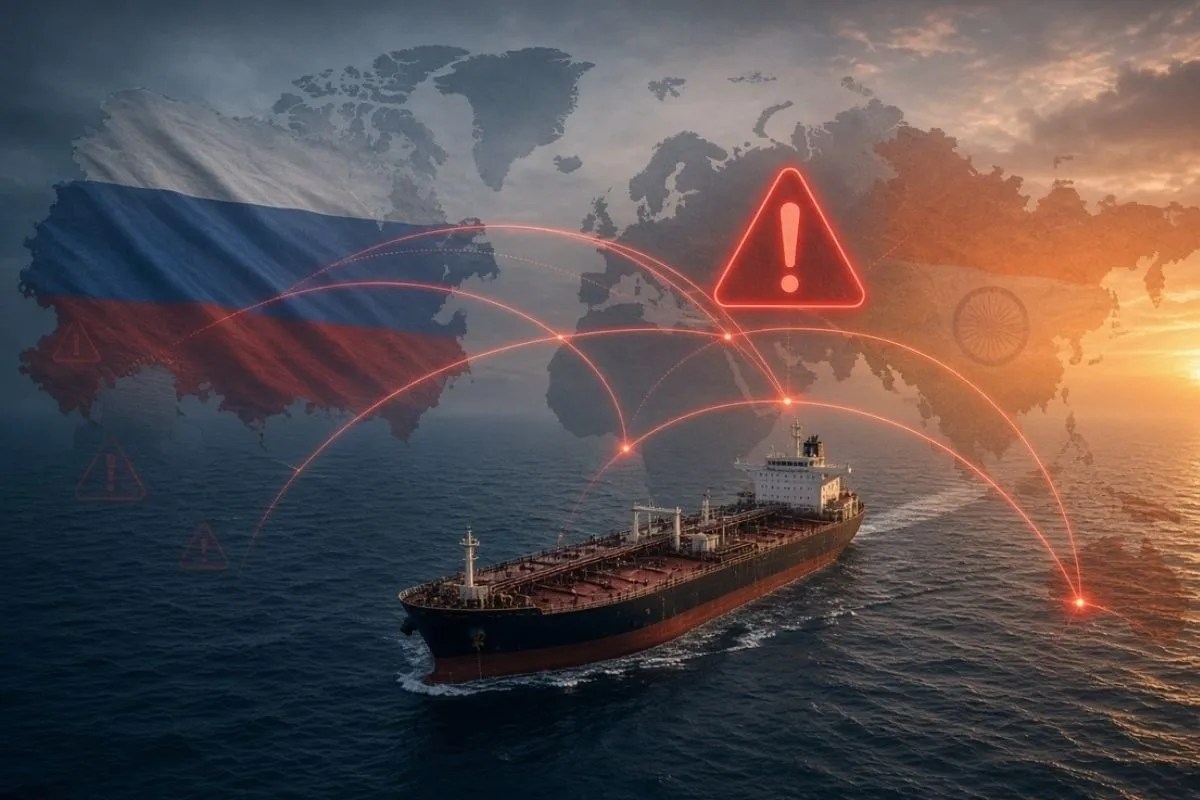
Sovereign economic optimization rarely occurs in a vacuum of bilateral diplomacy. When legislative bodies enact extraterritorial penal mechanisms targeting cross-border commodity flows, importing nations face a stark divergence between immediate balance-sheet gains and long-term systemic exposure. The enactment of the Lindsey O. Graham Sanctioning Russia and Iran Act exemplifies this friction, granting executive authorities the statutory capacity to impose punitive duties of up to one hundred percent on nations maintaining hydrocarbon trade relationships with sanctioned economies. For major importing economies like India, this legal instrument restructures the cost-benefit calculus of crude procurement, forcing a fundamental reassessment of national energy security strategies against external trade vulnerabilities.
The Legislative Architecture and Executive Discretion
Understanding the operational risk profile of the new statute requires examining its statutory design rather than its rhetorical presentation. The law establishes a statutory ceiling of a one hundred percent duty on goods imported into the United States from covered jurisdictions identified as primary buyers of Russian petroleum and natural gas. Rather than functioning as an automatic, indiscriminate tariff imposition, the framework delegates broad discretionary powers to the executive branch.
This delegation introduces a unique volatility vector into international trade. The mechanism relies on periodic reassessment windows, mandating administrative evaluations of targeted trade partners at fixed intervals. This structural design transforms commercial trade policy into an instrument of continuous geopolitical compliance. Importers and sovereign planners cannot model future liabilities using static tariff schedules; instead, they must price in the probability of sudden administrative reclassifications.
The architectural vulnerability of this law lies in the tension between congressional intent and executive implementation. Legislative architects designed the provisions to constrain foreign purchases of Russian energy by weaponizing access to the American consumer market. However, the inclusion of broad waiver authorities grants the administration wide latitude to suspend enforcement based on domestic economic priorities, such as managing consumer price inflation or stabilizing global commodity supplies. This dynamic creates a regulatory regime characterized by dormancy rather than elimination, where legal exposure remains codified while enforcement is temporarily suspended.
Trade Exposure Asymmetry Across Sectors
To quantify the risk vector facing the Indian economy, analysts must separate total trade volume from sectoral vulnerability indices. The United States remains a primary destination for Indian merchandise exports, absorbing tens of billions of dollars annually across diverse product categories. Electrical machinery, pharmaceuticals, specialized chemicals, and engineering goods constitute the backbone of this export volume.
When a secondary tariff threat is introduced, the economic damage does not distribute evenly across the exporting nation's industrial base. Commodities with high price elasticity of demand experience severe volume contraction under a one-hundred-percent tariff burden. Conversely, specialized medical products or highly engineered components with low near-term substitution elasticity may absorb higher tariffs temporarily, but at the cost of compressed profit margins for domestic manufacturers or passed-through inflation for American buyers.
[Primary Energy Sourcing] ---> [Refining and Domestic Processing] ---> [Finished Goods & Export Vectors]
                                                                              |
                                                                     [US Market Exposure]
                                                                              |
                                                                     [Statutory Tariff Risk]
This transmission mechanism highlights the core asymmetry: energy procurement decisions are centralized within state-guided refiners and private conglomerates, while the punitive tariff blowback disperses across thousands of fragmented export-oriented manufacturing firms. A penalty applied at the national border based on barrel imports penalizes sectors that have no operational connection to upstream hydrocarbon extraction or maritime crude shipping.
The Microeconomics of Crude Sourcing and Refining Arbitrage
To understand why major developing economies continue purchasing discounted Russian crude despite secondary legislative threats, one must analyze the microeconomic cost function of domestic petroleum refining. Following the restructuring of global energy trade routes, Russian Urals and related grades traded at substantial discounts relative to Brent benchmarks. For complex refining hubs equipped to process heavy sour crudes, this discount represents a structural margin expansion.
The refiner's optimization problem balances two competing cost centers:
- Upstream Procurement Cost: The landed price of crude oil per barrel, incorporating freight, insurance, and financing costs under expanded regulatory scrutiny.
- External Trade Penalty Risk: The probabilistic expected value of future tariff liabilities applied to downstream manufacturing exports entering Western markets.
When the discount on Russian crude exceeds the expected value of trade sanctions, commercial logic dictates continued procurement. However, as secondary tariff legislation increases the probability weight of regulatory penalties, the risk-adjusted cost function shifts. Refiners face rising compliance overhead, higher costs for maritime insurance and non-Western tanker fleets, and tightening access to international trade finance channels.
The substitution cost compounds this friction. Diversifying away from discounted crude toward Middle Eastern or Atlantic Basin alternatives introduces immediate cash-flow compression for refining margins. For an economy balancing domestic inflation targets with industrial competitiveness, absorbing higher feedstock costs directly impacts retail fuel pricing and downstream petrochemical production costs.
Regulatory Dormancy and Political Timing
The practical trajectory of these economic pressures depends heavily on political calendars and administrative priorities. The issuance of executive waivers suspending the immediate enforcement of the statute illustrates the role of domestic economic management in mitigating international trade shocks. Broad tariff hikes on major trading partners carry direct inflationary consequences for domestic retail markets, a political outcome that executive administrations seek to avoid during sensitive electoral cycles.
Yet, treating a waived sanction as a repealed sanction represents a fundamental analytical error. Dormant statutes function as perpetual compliance swords. They alter corporate behavior through preemptive risk aversion long before a formal tariff notice is published in the Federal Register. Importers, logistics providers, and financial institutions begin pricing in tail-risk scenarios, leading to defensive portfolio adjustments, credit tightening, and pre-emptive contract renegotiations.
Furthermore, legislative actors retain mechanisms to review administrative waivers once electoral cycles pass, returning the issue to the forefront of bilateral friction. This structural uncertainty impedes long-term capital expenditure planning within both the energy sector and the export manufacturing ecosystem. Corporations cannot commit multi-year capital to supply chain infrastructure when the regulatory regime governing cross-border market access is subject to biannual political review.
Strategic Hedging and Diversification Velocity
Faced with the structural reality of extraterritorial tariff legislation, sovereign economic planners and corporate strategists must deploy disciplined hedging frameworks. Relying solely on diplomatic appeals or expecting permanent executive waivers constitutes an unmanaged operational risk.
Three operational levers define an effective sovereign mitigation strategy:
- Procurement Velocity Adjustment: Building dynamic sourcing models that can pivot feedstock volumes across multiple geographic baselines without incurring prohibitive margin destruction.
- Bilateral Trade Architecture Expansion: Deepening non-dollar settlement mechanisms and alternative bilateral trade agreements to insulate core manufacturing sectors from unilateral Western trade weaponization.
- Value-Chain Upgrading: Shifting export mix toward complex, proprietary goods where foreign demand inelasticity provides a defensive buffer against external cost shocks.
The objective is not the complete elimination of geopolitical risk—an impossibility in modern global trade—but the reduction of system vulnerability through structural agility.
Strategic Execution
Do not wait for formal tariff notifications to restructure supply chain dependencies. Corporate export strategies must immediately decouple manufacturing margin projections from the assumption of continuous, friction-free access to Western consumer markets. Concurrently, national energy procurement frameworks must treat discounted commodity inflows as a temporary arbitrage window rather than a permanent structural baseline. Accelerate long-term bilateral supply diversification agreements and institutionalize stress-testing models that simulate a one-hundred-percent tariff shock across all major non-energy export verticals.
This video provides additional context regarding the legislative mechanics and international policy discussions surrounding US tariff proposals on nations importing Russian crude.