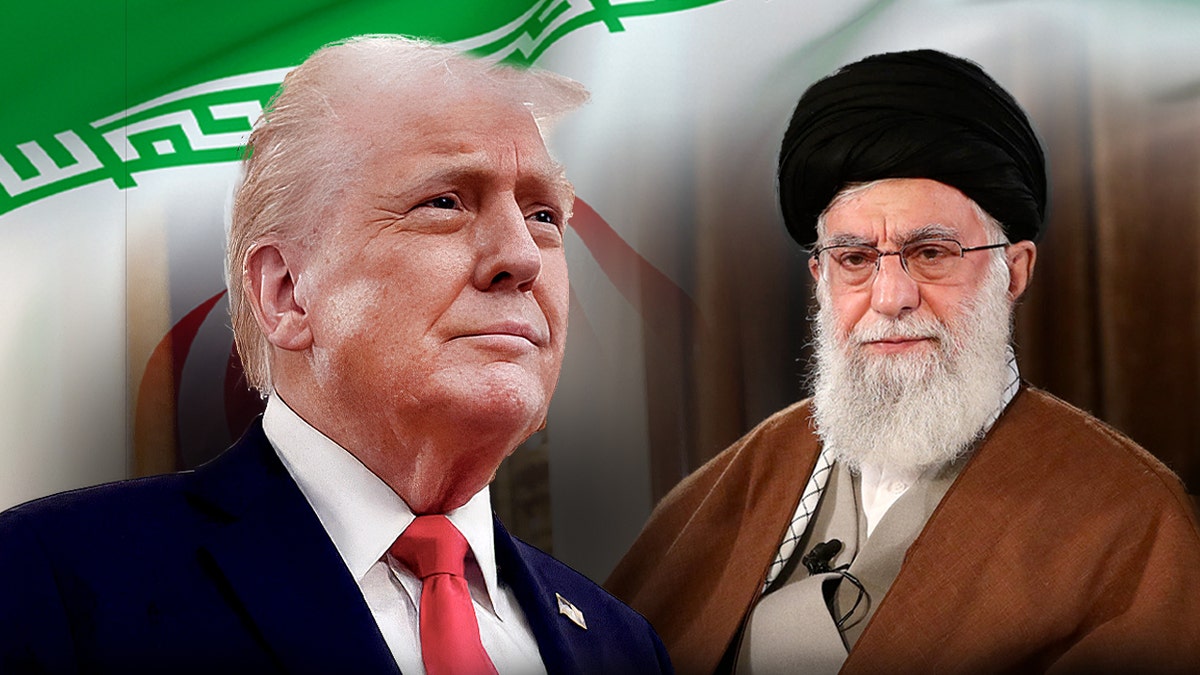
The extension of the ceasefire between the United States and Iran signals a deliberate shift from kinetic escalation to managed hostility. This transition is not a resolution of underlying geopolitical friction but a reordering of the cost-benefit analysis for both state actors. To understand the current trajectory, one must view the cessation of direct hostilities as a temporary alignment of incentives, governed by distinct domestic constraints and international economic variables rather than a genuine shift in diplomatic objective.
For the observer, the ceasefire functions as a pause button in a complex, multi-variable equation. The objective here is to deconstruct this equation, identifying the structural forces that sustain the status quo and the precise conditions that would force a collapse. Meanwhile, you can explore other developments here: The Map That Isn't There.
The Calculus of Restraint
State actors initiate or extend ceasefires when the marginal cost of continued kinetic engagement exceeds the expected utility of further conflict. In the current iteration, this calculus is driven by three primary variables: domestic economic stability, the exhaustion of military assets, and the strategic repositioning of regional proxies.
Domestic Economic Constraints
The Iranian regime operates under a distinct set of fiscal imperatives. Sanctions-driven isolation creates a ceiling on state revenue, particularly regarding petroleum exports. A kinetic conflict necessitates a reallocation of resources toward military readiness and rapid asset replenishment, which directly competes with the funds required to maintain internal social stability. When the regime calculates that the internal risk of unrest outweighs the external gain of kinetic activity, the utility of a ceasefire becomes positive. To understand the complete picture, we recommend the excellent article by Associated Press.
The United States, under the Trump administration, faces a mirror-image constraint. While the executive possesses broader operational latitude, the domestic appetite for sustained, high-intensity conflict in the Middle East is historically low. Extending the ceasefire allows the administration to maintain "maximum pressure" via non-kinetic means—sanctions and diplomatic signaling—without the political capital drain associated with direct military involvement.
The Mechanics of Sanction Enforcement
Sanctions are the primary tool of modern statecraft when direct conflict is paused. Their effectiveness, however, is a function of enforcement velocity and evasion detection.
- Velocity: The speed at which new trade restrictions are implemented determines the fiscal shock to the target nation.
- Evasion Detection: Modern intelligence capabilities allow for the tracking of shadow fleets and illicit financial transfers.
The current ceasefire is maintained as long as the United States perceives that sanctions are eroding the opponent's military budget faster than the opponent can adapt via black-market channels. If Iranian revenue channels stabilize despite sanctions, the US will lose the primary incentive to maintain the ceasefire, creating a structural instability in the agreement.
The Asymmetry of Proxy Management
The greatest risk to any ceasefire between the US and Iran is not a direct collision of state forces, but the actions of regional proxies. This is a classic principal-agent problem.
The Principal-Agent Dilemma
The Iranian Revolutionary Guard Corps (IRGC) utilizes a network of non-state actors throughout the Levant and the Arabian Peninsula to project power. The logic of using these proxies is two-fold:
- Plausible Deniability: The state can engage in hostile acts without triggering a direct, proportional response from the US.
- Cost Transfer: The kinetic and financial cost of local operations is borne by the proxy, not the state.
However, the incentives of the proxy are rarely perfectly aligned with the state. Proxies operate based on local survival needs, sectarian conflicts, and internal prestige. When a proxy decides that an attack on US assets or regional allies serves its local interests, it may ignore central command orders to stand down. This creates a "rogue variable" that can trigger an escalation ladder regardless of the ceasefire agreement signed at the state level.
Monitoring the Escalation Ladder
Strategic analysts track these regional dynamics using an escalation ladder—a framework that categorizes conflict intensity from diplomatic rhetoric to full-scale war.
- Level 1 (Sub-kinetic): Cyber-attacks, disinformation campaigns, and seizure of commercial vessels.
- Level 2 (Limited Kinetic): Drone strikes on remote assets, harassment of military patrols.
- Level 3 (Tactical Conflict): Direct targeting of military installations or strategic infrastructure (e.g., desalination plants, oil processing facilities).
The current ceasefire occupies the space between Level 0 and Level 1. The strategic danger is that one of these "low-level" activities crosses a threshold of visibility that forces an American response, effectively nullifying the ceasefire and forcing both sides up the ladder, regardless of their original intent.
The Bottleneck of Energy Markets
A central, often overlooked factor in the current ceasefire is the global energy market. The United States and its regional allies depend on the secure transit of petroleum through the Strait of Hormuz.
Iran possesses the geographic capability to act as a choke point. The ceasefire is implicitly bought with the tacit agreement that these shipping lanes remain open. If Iran detects that the economic pain caused by US sanctions is reaching a threshold that threatens regime survival, the "rational" move is to disrupt the flow of oil, thereby driving global prices up and causing economic shockwaves that they calculate will force the US to the negotiating table.
This creates a self-regulating loop:
- Constraint: Sanctions increase.
- Reaction: Iran increases harassment of shipping.
- Response: The US increases naval presence.
- Correction: Both sides retreat to the ceasefire to avoid the catastrophe of a global energy crisis.
The ceasefire holds only as long as this loop remains predictable.
The Failure Modes of the Current Agreement
Ceasefires are fragile by definition. They fail when one side perceives a "window of opportunity" where the cost of striking exceeds the cost of waiting. Several indicators signal that a breakdown is imminent:
- Intelligence Drift: When intelligence agencies on either side observe the other moving assets—specifically anti-ship missiles or advanced air defense systems—into forward positions, they assume an offensive posture. Even if the intent is defensive, the perception of a threat necessitates a preemptive or deterrent maneuver.
- Proxy Desperation: As mentioned, if a proxy group faces an existential threat (e.g., losing territory in a civil war), they will abandon their restraint protocols to force their state sponsor into a more aggressive posture.
- Domestic Crisis Acceleration: If either regime experiences a sharp, sudden decrease in internal legitimacy (e.g., widespread domestic protest or severe economic collapse), they may pivot to "rally around the flag" tactics. A small-scale external conflict is a proven method for consolidating internal support during times of crisis.
Strategic Forecast: Durable Instability
The current ceasefire is not a precursor to a long-term peace agreement; it is a tactical management strategy. The structural reasons for the conflict—regional hegemony, ideological opposition, and nuclear non-proliferation objectives—remain unresolved.
Expect the following trajectory:
- Information Asymmetry: Both sides will continue to test the boundaries of the ceasefire through non-kinetic means. The US will continue to tighten financial enforcement, while Iran will continue to refine its asymmetric proxy network.
- Technological Competition: Expect both parties to shift focus from mass-military buildup to high-tech, low-cost weaponry. Swarm drone technology, cyber warfare, and AI-driven predictive logistics for conflict are the new fronts. This is cheaper than traditional warfare and fits within the "gray zone" of the current ceasefire.
- The "Wait and See" Metric: Monitor the frequency of intercepted shipments and regional skirmishes. A steady increase in the frequency—even if the scale remains small—is a leading indicator of an impending breach.
The strategic play for any entity tracking this conflict is to ignore the rhetoric of "peace" or "diplomatic breakthrough." Instead, focus on the flow of money, the movement of long-range surveillance assets, and the internal stability of the Iranian regime. When the internal cost of stability exceeds the perceived benefit of the ceasefire for Tehran, the agreement will cease to exist. Until that moment, the status quo of managed, limited, and expensive hostility will prevail.