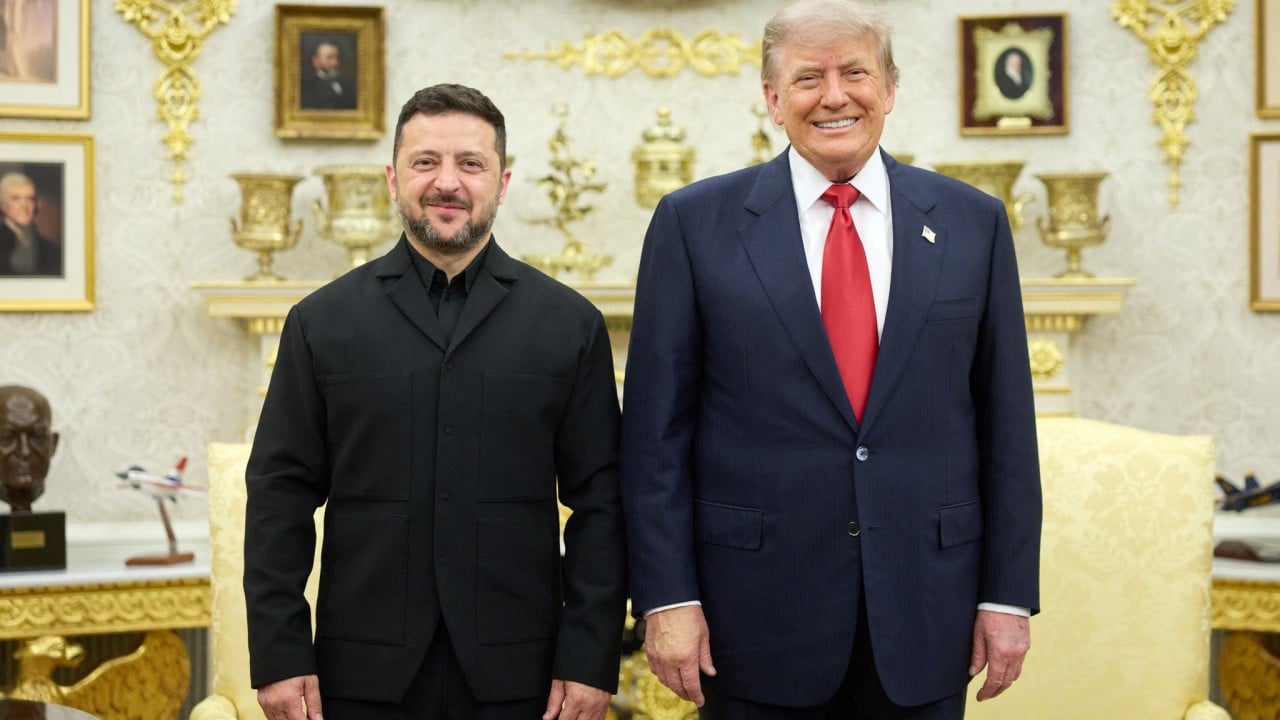
Shifting geopolitical friction points into transactional defense contracts requires a complete restructuring of sovereign military capacity. When United States leadership authorized a licensing framework for Ukraine to co-produce Patriot PAC-3 interceptor missiles domestically, the underlying mechanics of bilateral aid transformed. This transition moves past traditional grant-based military assistance into an industrial co-production model. Evaluating this operational pivot demands a granular look at manufacturing constraints, supply chain bottlenecks, and the structural cost functions governing modern anti-ballistic defense.
The Cost Function of Interceptor Scarcity
The economic reality of air defense involves severe unit-cost imbalances. Each Patriot interceptor missile requires millions of dollars in advanced guidance systems, high-grade rocket propellants, and precision-engineered control surfaces. Multiply this unit cost by the sheer volume of incoming ballistic and hypersonic threats, and the global inventory curve flattens rapidly.
Traditional military aid relies on drawing down existing Pentagon stockpiles. This creates three distinct structural failures:
- Inventory Depletion: Stockpile transfers degrade United States readiness metrics by drawing down assets faster than prime contractors like Lockheed Martin and Raytheon can replace them.
- Logistical Latency: Long shipping routes, fragile transport security, and complex customs protocols introduce severe time delays between procurement authorization and frontline deployment.
- Fiscal Friction: Direct funding bills face constant legislative gridlock, turning long-term defense planning into a series of reactive, short-term budget extensions.
By authorizing domestic co-production, leadership effectively externalizes the manufacturing burden. Ukraine transitions from a passive consumer of finite American inventory to an active production node. This alters the risk equation: manufacturing happens closer to the point of consumption, reducing transit vulnerability while forcing domestic defense contractors to scale industrial output through foreign partnerships.
The Industrial Mechanics of Co-Production
Shifting from finished-good transfers to licensed manufacturing requires solving complex technological transfer barriers. Advanced air defense systems cannot be assembled in makeshift facilities. They demand stringent quality control, clean-room environments, and certified sub-component supply chains.
The recent engagement between Ukrainian delegations and Raytheon leadership establishes the framework for this industrial migration. Co-production operates across three distinct operational tiers:
- Component Sub-Assembly: Initial phases focus on building non-critical structural elements, electronic housings, and mechanical sub-assemblies to test local quality assurance standards.
- Technology Integration: Intermediate phases introduce software synchronization, radar telemetry integration, and guidance system calibration under the direct supervision of American prime contractors.
- Final Integration and Testing: Advanced phases allow full-scale assembly of PAC-3 interceptors, utilizing a mix of locally manufactured components and specialized imported microelectronics.
This phased architecture protects proprietary intellectual property while expanding total manufacturing capacity. Because global demand for Patriot interceptors vastly outstrips baseline factory output in the United States, decentralizing assembly lines serves a dual purpose. It relieves pressure on domestic factories while granting front-line nations the autonomy to maintain continuous defensive output.
Transactional Diplomacy and Security Architecture
Diplomatic alignment between Washington and Kyiv has evolved from ideological backing to rigid conditionality. The shift toward co-production coincides with strict performance metrics imposed by the United States administration. Rather than offering open-ended financial commitments, policy has pivoted toward self-sustaining industrial integration.
This transactional approach addresses domestic political resistance in donor nations. By framing military support as an industrial licensing agreement rather than a direct cash transfer, political leaders can justify ongoing cooperation through the lens of manufacturing expansion and allied burden-sharing. Ukraine assumes direct responsibility for its defensive resilience, satisfying demands for localized accountability.
Concurrently, integrating defense production alters long-term deterrence calculations. A nation capable of manufacturing its own high-end interceptors possesses an industrial defense base that remains viable even if external financial aid fluctuates. The economic incentive shifts toward protecting these newly established production nodes from kinetic disruption, embedding foreign direct investment directly into the host nation's manufacturing sector.
Strategic Execution and Industrial Outlook
Sustaining this co-production model requires immediate alignment between diplomatic channels and corporate supply chains. Foreign ministries must clear regulatory hurdles, secure raw material imports, and finalize intellectual property waivers without bureaucratic delay.
Defense manufacturers must dispatch technical engineering teams directly to regional facilities to audit production lines and certify sub-contractors. The bottleneck no longer lies in political will alone, but in the speed of technical integration. Accelerating the deployment of domestic interceptor manufacturing systems provides the only viable mathematical solution to high-volume ballistic threats.


