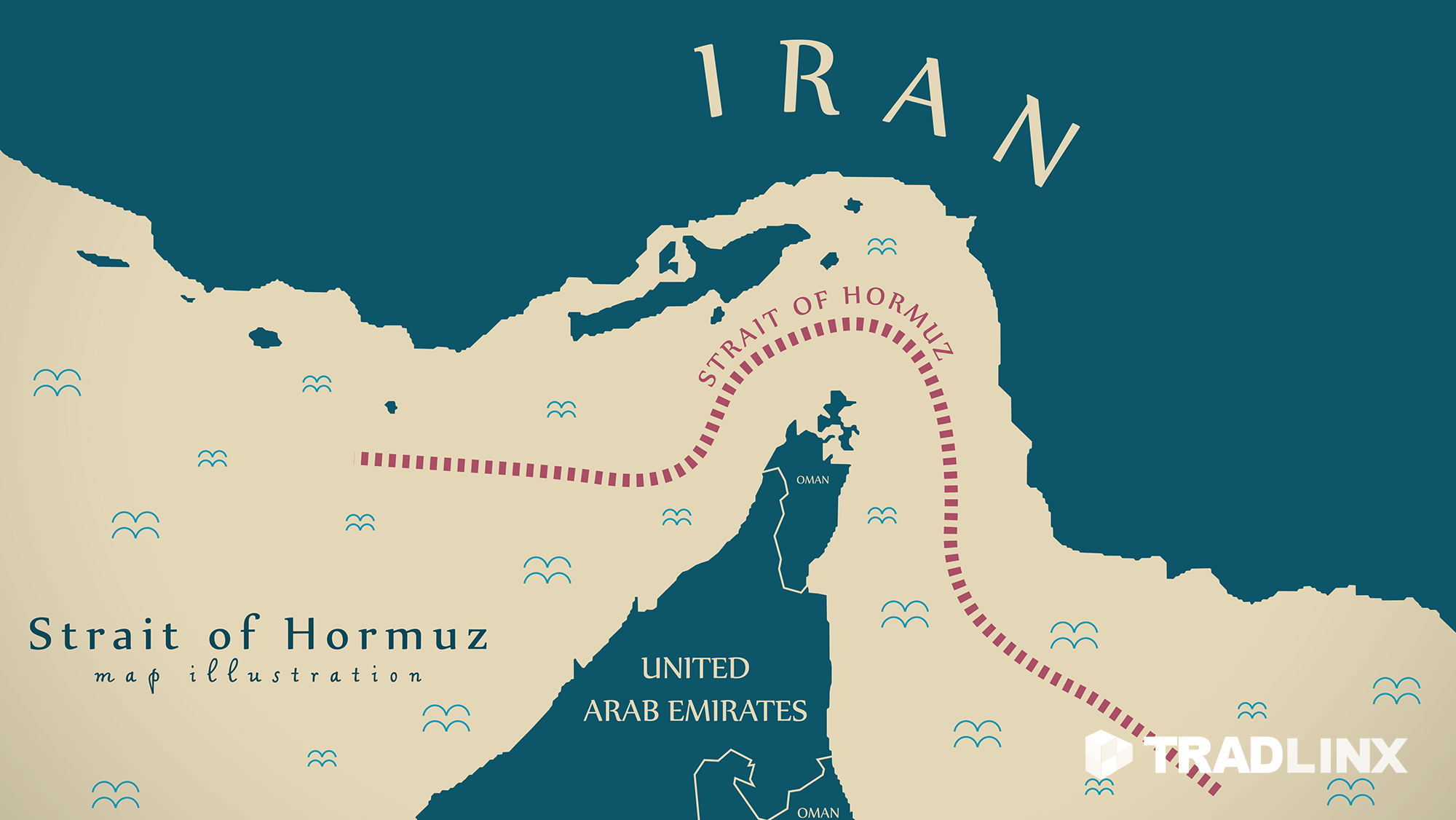
The recent synchronization of travel restrictions across the United Arab Emirates, Bahrain, Kuwait, and Saudi Arabia—aligned with existing Western protocols—represents more than a localized security measure; it is the implementation of a strategic containment framework designed to decouple the economic stability of the Gulf Cooperation Council (GCC) from the volatility of the Levant and the Iranian plateau. This policy shift signals a move from reactive border control toward a permanent "Risk-Averse Corridor" model. By restricting movement to and from Iran, Lebanon, and Iraq, these states are executing a defensive maneuver to prevent the "spillover effect," where regional kinetic conflict translates into domestic security breaches, intelligence infiltration, or the disruption of high-value tourism and financial hubs.
The Mechanism of Preemptive Disconnection
The decision to issue comprehensive travel bans operates on a three-tier logic of containment: physical security, economic insulation, and diplomatic signaling.
- Security Hardening: The primary driver is the mitigation of asymmetric threats. In a high-friction environment, human travel becomes a vector for non-state actors and intelligence operatives. By closing these channels, GCC states create a "friction barrier" that forces any hostile intent through more detectable, clandestine routes, effectively raising the cost of entry for regional adversaries.
- Economic De-risking: Global investment into the UAE and Saudi Arabia depends on the perception of "Exceptionalism"—the idea that these markets remain stable even when their neighbors are in turmoil. A formal ban serves as a structural insurance policy, communicating to foreign direct investors that the state is willing to sacrifice regional connectivity to preserve domestic tranquility.
- Unified Diplomatic Front: This alignment reflects a hardening of the "Abrahamic Realignment" or the broader Western-GCC security architecture. Coordination with U.S. travel advisories ensures that there is no "weak link" in the regional surveillance and movement-tracking grid.
The Triad of Regional Instability: Iran, Lebanon, and Iraq
To understand the necessity of these bans, one must analyze the specific risk profiles of the targeted nations. Each represents a different failure of the traditional state-actor model.
The Iranian Vector: State-Sponsored Infiltration
Travel bans targeting Iran are rarely about the individual traveler and almost always about the state’s use of civil aviation and shipping for the transport of specialized personnel. The restriction functions as a surgical strike on Iranian mobility, hampering the "gray zone" operations that rely on the cover of routine commercial travel.
The Lebanese Vector: Institutional Collapse
Lebanon represents a unique threat of "entropy export." As the state’s central authority weakens, its airports and borders become porous. For the GCC, the risk is no longer just Hezbollah; it is the lack of a reliable vetting partner on the other side of the flight path. When a host country cannot guarantee the integrity of its own manifests or passport controls, the only logical response for a high-security state is a total cessation of traffic.
The Iraqi Vector: Proximity and Porosity
Iraq serves as a physical bridge between the Iranian influence and the GCC borders. The bans here are tactical, aimed at preventing the use of Iraq as a transit point for third-country nationals who might attempt to bypass direct Iranian bans. It is a "moat-building" exercise designed to create a buffer zone between the volatile north and the stable south.
The Cost Function of Isolationism
While these measures provide immediate security benefits, they introduce significant friction into the regional economy. The "Cost of Security" is quantifiable across several sectors:
- Aviation Revenue Loss: Major carriers like Emirates, Etihad, and Qatar Airways (when applicable) lose high-frequency routes. However, the strategic calculation is that the loss of ticket revenue is negligible compared to the potential loss of "Brand Safety" if a security incident were to occur at a major global hub like DXB.
- Labor Market Disruption: The GCC relies on a tiered labor force. Restricting travel from Lebanon and Iraq removes highly skilled Levant-based professionals and lower-cost Iraqi labor from the pool. This forced shift necessitates a pivot toward South Asian or Southeast Asian labor markets, fundamentally altering the demographic trajectory of the host nations.
- Logistical Redundancy: Supply chains that previously utilized overland or short-haul air routes through these territories must now be rerouted. This increases the "Transit Alpha"—the premium paid for moving goods through longer, safer, but more expensive corridors.
Strategic Symmetry with Western Interests
The alignment of GCC travel bans with United States State Department "Level 4: Do Not Travel" advisories suggests a synchronized intelligence-sharing ecosystem. This is not a coincidence of policy but a convergence of objectives. For the U.S., these bans simplify the task of monitoring regional movement. For the GCC, they provide a "multilateral cover," allowing them to implement harsh restrictions while citing global security standards rather than purely sectarian or local political motivations.
This synchronization creates a "Zone of Exclusion." Inside the zone, the rules of global commerce and standardized travel apply. Outside the zone—in Iran, Iraq, and Lebanon—travel becomes a high-stakes, irregular activity. This bifurcation is the hallmark of the "New Middle East," where geography is less important than alignment with the global security architecture.
The Failure of Traditional Diplomacy
The shift toward travel bans signals a realization among Gulf strategists that traditional diplomatic engagement with "failed" or "hostile" states has reached a point of diminishing returns. When the cost of maintaining a diplomatic opening (in the form of open borders) exceeds the intelligence value of that opening, the border closes.
The mechanism here is "Degradation of Access." By removing the ability for citizens of these countries to enter the GCC, the Gulf states are effectively devaluing the passports of the targeted nations. This exerts a form of "soft pressure" on the populations of those countries, highlighting the cost of their governments' geopolitical stances without resorting to traditional economic sanctions that might trigger a humanitarian crisis or international backlash.
Technical Limitations of Border Containment
No ban is absolute. The effectiveness of these measures is limited by three primary bottlenecks:
- Third-Country Transit: The "Shadow Route" problem persists. Travelers from banned zones often utilize neutral hubs—such as Istanbul or Muscat—to obfuscate their origin. To counter this, GCC states are increasingly relying on Biometric Veracity checks and Advanced Passenger Information Systems (APIS) that track the original point of departure regardless of the boarding pass issued for the final leg.
- Digital Infiltration: Physical bans do not stop cyber-espionage or information warfare. While the "body" is kept out, the "signal" remains. The ban must be paired with a robust cyber-defense framework to be effective.
- Diplomatic Immunity: Official channels often remain open for a subset of actors, creating "leakage" in the containment wall. The management of these exceptions is where the real intelligence work occurs, as these individuals become the primary focus of surveillance.
Structural Realignment of Regional Tourism
The "Travel and Tour" sector is undergoing a fundamental recalibration. The loss of regional religious and business tourism is being offset by an aggressive pivot toward "Global North" markets and emerging economies in East Asia. The strategy is to replace "volatile proximity" with "stable distance."
- The Luxury Pivot: UAE and Saudi Arabia are doubling down on ultra-high-net-worth (UHNW) tourism from Europe and North America. These travelers demand a high level of perceived safety. The travel bans on neighboring "conflict zones" are, paradoxically, a marketing tool used to reassure these demographics that the conflict is "over there" and will not reach the resort.
- The Diversification of Hubs: Saudi Arabia’s "Vision 2030" projects, such as NEOM and the Red Sea Project, are being built with an inherent "Security by Design" philosophy. They are geographically removed from the northern borders and are being marketed as self-contained ecosystems where the regional chaos is irrelevant.
The Strategic Forecast
The implementation of these bans marks the end of the "Pan-Arab Connectivity" era and the beginning of the "Fragmented Security" era. Expect the following shifts to materialize over the next 24 months:
The GCC will move toward a "White-List" travel system. Rather than banning specific countries, they will move toward a model where entry is only permitted for citizens of countries that share a unified biometric and security database. This effectively creates a "Schengen-style" zone within the Gulf while permanently ostracizing the Iranian-influenced Levant.
Intelligence agencies will increasingly use travel data to build "Risk Personas." A history of travel to Iraq or Lebanon will become a permanent "Yellow Flag" in the automated visa processing systems of the UAE and Saudi Arabia, even if a total ban is eventually lifted. This creates a lasting "Social Credit" barrier to regional mobility.
The current "Chaos" described by media outlets is not an accident but a transition phase. The strategic play is to allow the "Conflict Zone" to remain isolated while the "Stability Zone" integrates further with the global economy. The travel bans are the physical manifestation of this decoupling.
The final move in this strategy is the formalization of a "GCC-Plus" security umbrella that treats the northern borders as a hard limit. States that cannot or will not secure their own territory will be systematically excluded from the regional prosperity engine. The bans on Iran, Iraq, and Lebanon are the first line of a new, invisible wall that will define Middle Eastern geopolitics for the next decade. Success for the GCC depends on maintaining this wall without letting it become a cage—ensuring that while the threats are kept out, the global markets remain entirely accessible.