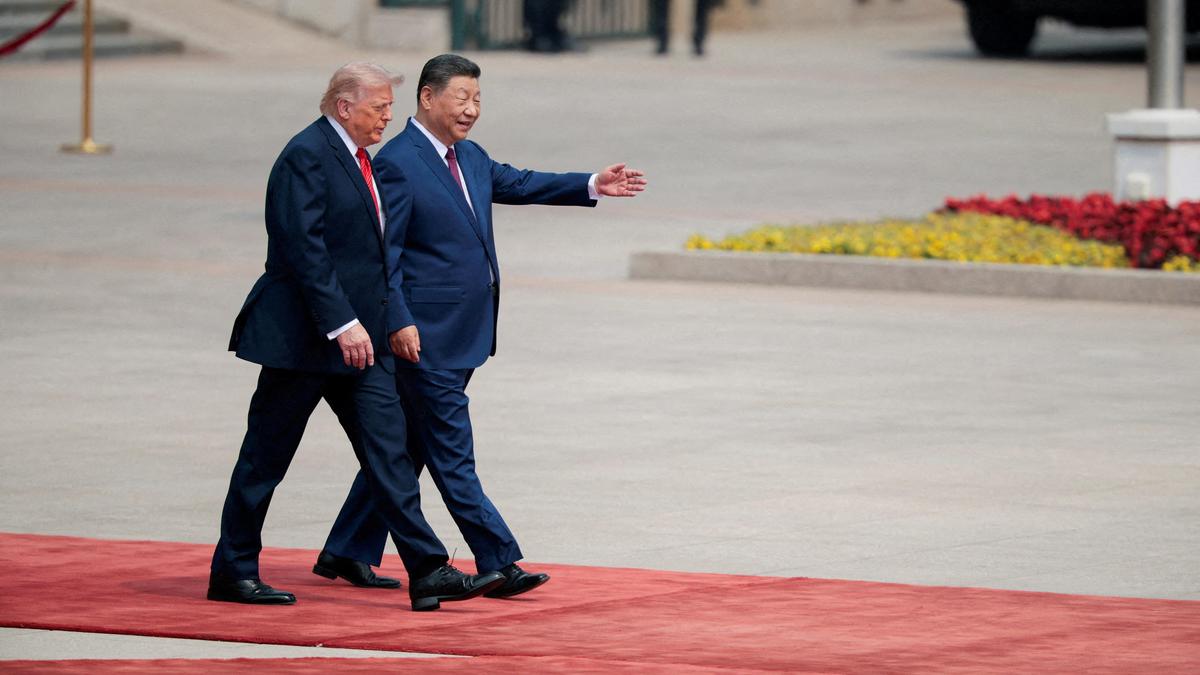
The recent high-level diplomatic engagement between the United States and China represents a calculated tactical pause rather than a fundamental shift in the structural rivalry defining the 21st century. While surface-level narratives focus on the optics of cooperation, a rigorous analysis reveals a bilateral strategy of risk-mitigation designed to prevent accidental escalation while maintaining the underlying economic and technological decoupling. The primary objective for both states is the management of a "Managed Competition" framework, where the goal is not resolution, but the establishment of guardrails that permit aggressive competition without kinetic or systemic collapse.
The Tripartite Framework of Current Bilateral Engagement
To understand the current state of U.S.-China relations, one must look past the diplomatic pleasantries and examine the three specific pillars of their current interaction. These pillars define the boundaries of what is possible within the current geopolitical constraints.
1. High-Friction Deconfliction
The resumption of military-to-military communication channels serves a singular mechanical purpose: reducing the probability of a tactical error escalating into a strategic crisis. In high-density environments like the South China Sea and the Taiwan Strait, the absence of direct communication creates an information vacuum. This vacuum increases the risk of miscalculating an opponent's intent. By restoring these links, both sides are installing a pressure-valve system. This does not signal a reduction in military presence; it signals an agreement to talk while the standoff continues.
2. Asymmetric Economic Interdependence
The economic relationship is undergoing a transition from "globalized efficiency" to "securitized resilience." The U.S. strategy of "de-risking" focuses on two critical variables:
- Supply Chain Elasticity: Moving critical mineral processing and semiconductor assembly away from single-point-of-failure geographies.
- Technological Sovereignty: Restricting the flow of high-end compute (GPUs) and AI training capabilities to maintain a multi-generational lead in dual-use technologies.
China’s counter-strategy focuses on "Internal Circulation," aiming to decouple its domestic consumption and critical technology manufacturing from Western export controls while maintaining its role as the indispensable provider of green-transition hardware, such as lithium-ion batteries and photovoltaic cells.
3. Global Governance Optics
Both powers recognize that the Global South is observing their ability to act as "responsible stakeholders." Cooperation on fentanyl precursor regulation and AI safety standards provides the necessary evidence of functional diplomacy. These are low-cost, high-visibility wins that allow both administrations to claim success to their domestic audiences without sacrificing core national interests.
The Cost Function of Continued Escalation
The pivot toward stabilization is driven by an objective assessment of the economic costs associated with unmanaged decoupling. For the United States, an abrupt severance of ties would trigger an inflationary shock that the current fiscal environment cannot easily absorb. For China, the structural headwinds of a slowing property sector and demographic contraction make a stable external environment a prerequisite for domestic social stability.
The cost function of the current relationship can be expressed through three primary bottlenecks:
- The Capital Bottleneck: Foreign Direct Investment (FDI) into China has faced significant downward pressure. Stabilization efforts are a direct attempt to signal to global markets that China remains an investable "alpha" market, despite regulatory uncertainties.
- The Talent Bottleneck: Academic and research collaboration in "hard sciences" has chilled. This slows the global rate of innovation, as the bifurcation of research ecosystems forces a duplication of effort and prevents the cross-pollination of ideas in fields like quantum computing and biotechnology.
- The Energy Bottleneck: The global energy transition is physically impossible without Chinese manufacturing capacity. Conversely, China’s energy security is tied to the stability of US-guaranteed maritime trade routes. This mutual vulnerability creates a temporary floor for the relationship.
Mapping the Logic of Tactical Concessions
When analyzing the outcomes of the summit, it is a mistake to view concessions as signs of weakness. They are tactical trades.
The agreement to curb the export of fentanyl precursors is a prime example of a non-kinetic concession with high political ROI. For China, the enforcement of these regulations costs very little in terms of GDP but gains significant leverage in broader diplomatic negotiations. For the U.S., it addresses a critical domestic health crisis that has become a major political liability.
Similarly, the dialogue on Artificial Intelligence safety is a preemptive strike against a shared existential risk. Both nations understand that the uncontrolled proliferation of autonomous lethal systems or AI-driven cyber warfare could lead to a "Flash War" scenario where human decision-making is bypassed by algorithmic escalation. Establishing a baseline of AI safety standards is not about friendship; it is about ensuring that neither side loses control of the escalatory ladder to a machine.
Structural Divergence in Technological Ecosystems
The most significant takeaway for strategic planners is the permanence of the technological divide. Regardless of the diplomatic tone, the "Small Yard, High Fence" policy remains the operational reality. This policy is built on the following logic:
- Identification of Foundational Technologies: Technologies that provide a decisive military or intelligence advantage (e.g., Sub-5nm logic chips, Quantum Key Distribution).
- Enclosure of the Ecosystem: Using export controls, entity lists, and investment screenings to prevent the transfer of these specific capabilities.
- Domestic Subsidization: Massive capital injection through vehicles like the CHIPS Act (U.S.) and the Big Fund (China) to build redundant, domestic versions of these critical stacks.
This creates a "Splinternet" effect that extends far beyond the web, affecting hardware standards, satellite navigation systems (GPS vs. BeiDou), and eventually, the very architecture of the global financial system as digital currencies and alternative payment rails (CIPS) gain traction.
Limitations of the Stabilization Strategy
No "Masterclass" in analysis would be complete without acknowledging the inherent fragility of this stabilization. Several exogenous and endogenous factors could collapse this framework:
- The Taiwan Proximity Risk: The margin for error in the Taiwan Strait is narrowing. As both sides increase the frequency and sophistication of their maneuvers, the technical safeguards (radio contact, hotlines) may not be sufficient to overcome a high-speed kinetic accident.
- Domestic Political Volatility: In both Washington and Beijing, hardline factions view any form of stabilization as appeasement. The political pressure to appear "tough" often overrides the strategic logic of "managed competition," leading to reactive policy-making.
- Third-Party Disruptions: Conflicts in the Middle East or Eastern Europe force both powers to take sides, or at least manage the fallout of their proxies, which inevitably bleeds back into the bilateral relationship.
Strategic Recommendations for Global Market Participants
Organizations operating at the intersection of these two superpowers must shift from a "Globalist" mindset to a "Bifurcated" mindset. This involves three specific actions:
- Audit for Cross-Border Dependencies: Identify every point where a Chinese component exists in a U.S. defense-adjacent supply chain, and vice versa. Assume these will eventually be regulated out of existence.
- Develop "China for China" and "West for West" Operational Stacks: Build separate IT, data, and manufacturing ecosystems that can operate independently if the "High Fence" policy expands.
- Monitor "Middle-Ground" Hubs: Nations like Vietnam, Mexico, and India are becoming the primary conduits for "triangular trade." These hubs offer a temporary buffer, but they will eventually face pressure to align with one side or the other as the technological divide deepens.
The current thaw is a period of re-arming and re-positioning, not a return to the status quo. The "Managed Competition" era requires a higher level of analytical rigor because the signals are often obscured by the noise of diplomatic theater. The strategic play is to use this period of stability to harden systems, diversify risks, and prepare for the next inevitable phase of friction. Organizations that mistake this tactical pause for a permanent peace will find themselves ill-equipped for the structural shocks of the next decade.